

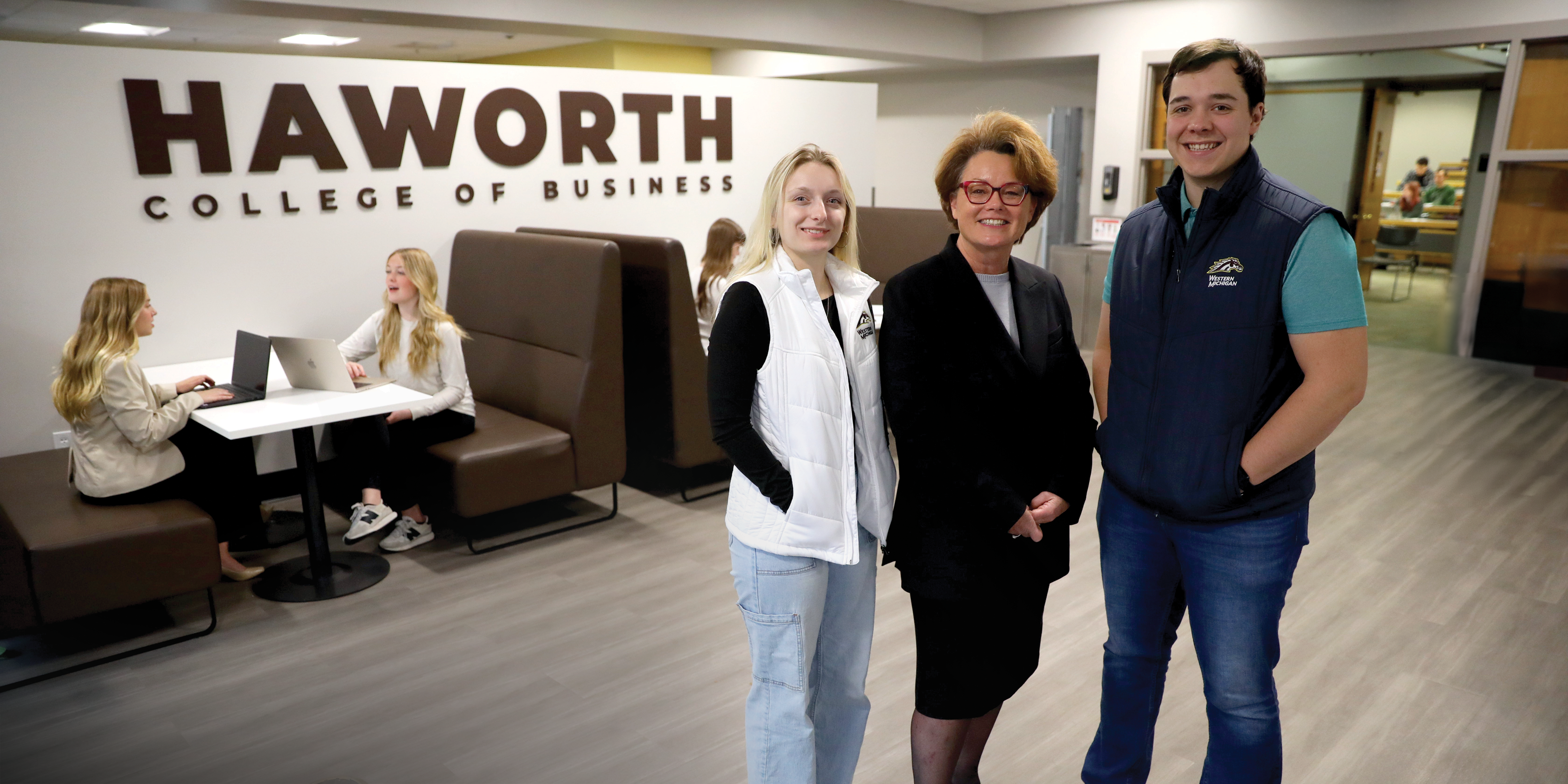
Bringing a business plan to life—that was the goal for Tamara Davis, instructor of management and longtime regional director of the Michigan Small Business Development Center, when she wanted WMU students to learn what it means to operate a business.
"In the past, students had multiple opportunities to write business plans, but few ever brought those plans to life for a number of reasons," says Davis.
Enter the Bronco Experiential Entrepreneurship Program, an entrepreneurship journey conceived of by Davis that unfolds over multiple courses, taking students' business ideas from concept to reality.
When researching a fun, realistic and varied experience for students interested in entrepreneurship, Davis landed on student-led teams who would develop WMU-branded products. Working with the Office of Marketing and Strategic Communications and WMU's trademarks and licensing consultant, she was able to devise a series of courses where students would be able to experience both the creative work of being a maker and the strategic framework needed to bring a product to market. And students see the results in real time.
The Bronco Experiential Entrepreneurship Program encompasses three different but related learning opportunities:
- In the Exploring Entrepreneurship course, student teams conceptualize WMU-branded items, conducting customer discovery and determining feasibility. The most compelling item from all teams is produced.
- In the Entrepreneurial Finance class, students write a business plan as part of developing a complete commercial loan package that is presented and reviewed by commercial loan officers.
- In the Small Business Management course, students commercialize their WMU-branded item and implement the plans developed in the prior courses.
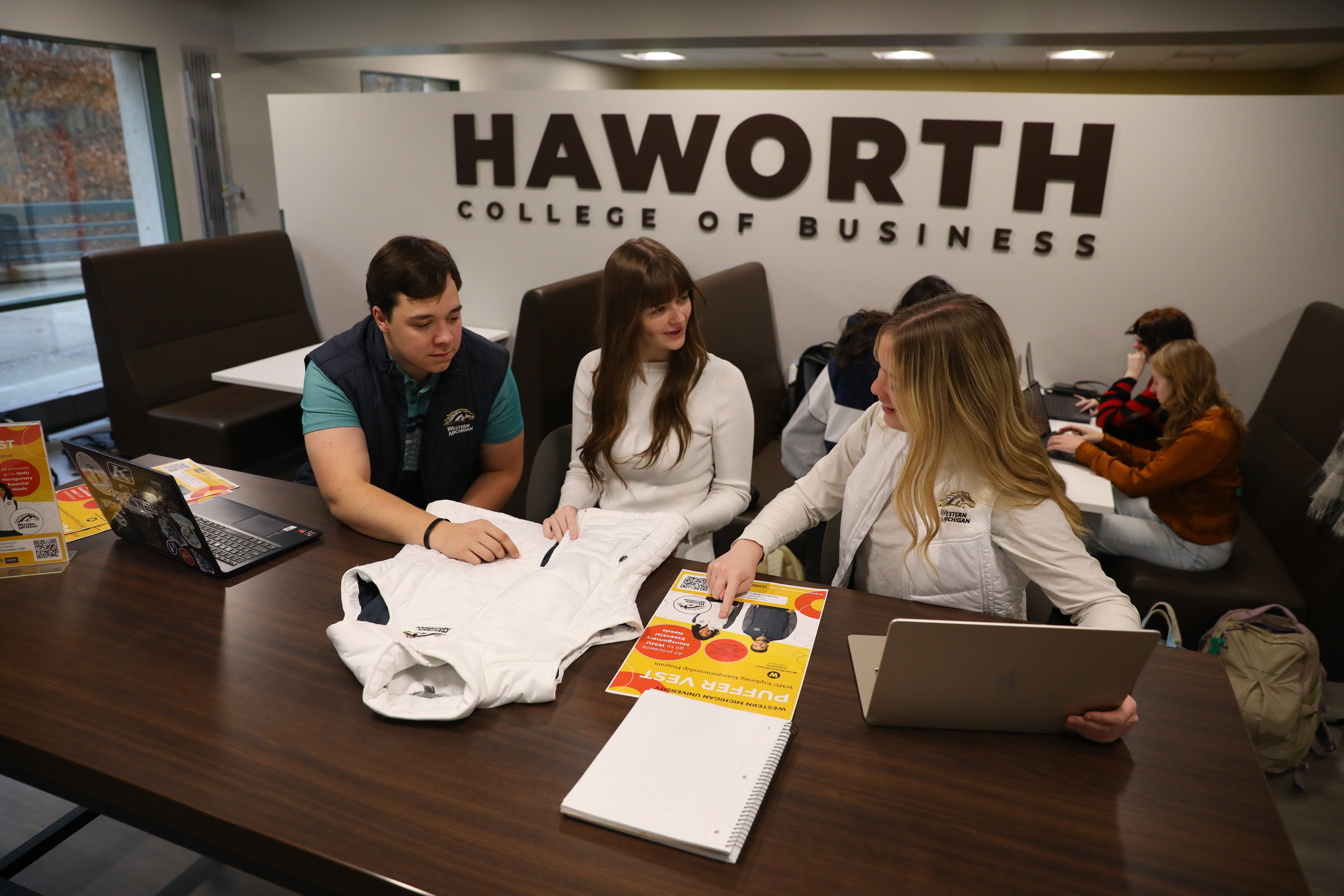
Along the way, students are mentored by industry professionals who provide valuable feedback and support. Proceeds from the sale of the WMU-branded items are donated to the Montgomery Essential Needs program, which helps WMU students with unmet needs in a variety of areas including food, menstrual products, unexpected costs, books and regalia for graduation.
Both Advia Credit Union and Arbor Financial Credit Union are partners of the Bronco Experiential Entrepreneurship Program. "The initiative connects with the institutions' core values of addressing education, food insecurity and financial literacy," says Davis. "When I approached the credit unions, their interest in partnering with the Haworth College of Business on this program was instantaneous! Both organizations have been actively involved, and their engagement with the students is well received, exposing them to career pathways that they may not have known about."
"The biggest takeaway from this whole experience is how much you learn when you actually have to do something instead of just talking about it in class," says Savannah Piggins. "Nothing was just for a grade. It was all real. We had to work as a team, create a product, market it and convince people to buy it. I learned about sales, marketing, teamwork and communication. You cannot hide behind busywork. You step up. You adapt. You problem solve. And you learn how to work with people who care just as much as you do."
This course showed us what it really takes to manage a small business, from costs to teamwork to keeping the vision alive.
Caring for others is built into the program through the annual donation to the Montgomery Essential Needs program.
"Giving back to Montgomery Essential Needs makes the project feel bigger than just a class assignment," says Will B. Harten. "I want to help however I can, and if this project can support fellow students, I'll go all in. Late-night brainstorming becomes more than just homework when you know the outcome helps someone in the campus community. That sense of purpose motivates students to push harder, because success isn't just about grades or sales—it's about impact. For me, it's proof that entrepreneurship can be about people as much as profit, and that's a lesson worth carrying forward."
For Harten who hopes to own his own spa one day, the coursework helped him gain the skills to turn his ideas into something tangible and to embrace the process. "My biggest takeaway is that failure isn't something to fear—it's a friend that teaches you faster than success will. This course showed us what it really takes to manage a small business, from costs to teamwork to keeping the vision alive."
And the learning curve has not just been on the students' side. "I've been refining my approach each semester," says Davis. "Commercializing a WMU-branded item means understanding the complex licensing process in place to safeguard the WMU brand. Structuring the three courses so students systematically experience the steps of launching a new business without being overwhelmed takes time and effort. Continuous improvement keeps the program fresh and evolving."
Davis notes that small business is an important economic driver in the U.S. with over 99.6% of all businesses in Michigan classified as small businesses. "WMU graduates are likely to work for or start their own small business. Equipping our students with an entrepreneurial mindset and practical tools ensures they are prepared to make sound decisions and thrive in this environment."