

Evaluation Cafe 2025-26

Michele Girard
Founder
Ivanhoe Development
Program Maturity for Community-Based Organizations: How finance, evaluation, and design intertwine
Ivanhoe Development serves as the first introduction to “evaluation” for many of our organizations (communities have been evaluating since the dawn of time). Our talk will discuss our clients' perceptions, barriers, and complications regarding evaluative projects, emphasizing organizations with limited financial resources. Our team will walk through case studies from Native, Latinx, Immigrant, and Black-led organizations that work nationally in homelessness, addiction, land trusts, legal aid, and more. Finally, we will walk through a few of our tools, such as Risk Tolerance and Evaluation Triage, that aid in assessing internal capacity and assumptions regarding evaluation.

Mary Gayen, MBA, MSW
Manager, Evaluation team
Corewell Health

Alana Bartley, MPH
Evaluation Specialist
Corewell Health

Julio Cano Villalobos, B.A.
Evaluation Specialist Senior
Corewell Health
The Evaluation Journey: Insights, Growth, Failures, and Value
This presentation will explore the evolving role of evaluation within the healthcare system, reframing it from a static endpoint to a dynamic process of ongoing learning, improvement, and growth. Rather than serving merely as a judgment, evaluation is presented as a means to uncover meaningful change—both measurable and transformational—across individual, community, organizational, and societal levels. By emphasizing value over simple metrics, the evaluation team prioritizes shifts that impact organizational practice, and wider community well-being. The team’s approach centers on surfacing key learnings, failures, naming transformations, and leveraging insights to inform future actions, positioning evaluation as an essential tool for achieving health equity and catalyzing systemic progress.

Koren A. Dennison, M.A.
Managing Evaluation & Communications Specialist
UBUNTU Research & Evaluation
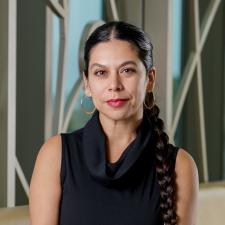
Dr. Carolina S. Sarmiento
Associate Professor
University of Wisconsin - Madison

Aurealia-ShaVaun L. Johnson
Employment Services Coordinator and Instructor
The YWCA Madison
Liberation Through Evaluation: Community-Centered Approaches
This session explores evaluation as a tool for liberation within communities, emphasizing our collective responsibility to foster equitable solutions. Participants will learn how everyday evaluative skills can strengthen relationships and address diverse community needs.
The presentation introduces storytelling methodologies like photovoice and journey mapping, which center community voices and lived experiences. These approaches position storytelling as a powerful evaluative practice for understanding complex community realities.
A case study featuring the UBUNTU-YWCA partnership demonstrates these methodologies in action through their Basic Tech Skills course evaluation. This collaboration enabled program participants to share insights, contributing to understanding the program's community impact while generating valuable data for future initiatives.
Participants will reflect on their responsibility to communities they serve and gain practical tools for implementing inclusive evaluation methods that amplify marginalized voices and drive meaningful change. The session highlights evaluation's role in strengthening collective ties and empowering community members as active agents

Andrea Allen
Principal Consultant
AC Insights
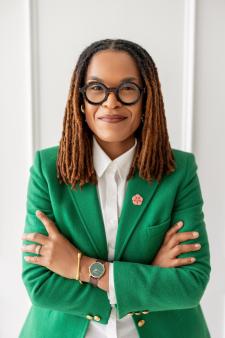
Kenlana Ferguson
Executive Director
Michigan Transformation Collective
Trust-Based Philanthropy, Learning, and Evaluation
Trust-Based Philanthropy (TBP), originally co-created by the Whitman Foundation and its grantees back in 2014, gained in popularity during the pandemic and continues to provide a strong foothold for carrying out equitable, antiracist, and generative change. At the onset, however, this approach did not explicitly address evaluation and learning. Fortunately, we – as evaluators – already had at our fingertips multiple, highly participatory social justice approaches that strongly complement a TBP. This presentation will describe the conceptual framework of TBP, the place of learning and evaluation in a trust-based context, and key examples of how funders have operationalized evaluation in their trust-based initiatives.
Carl E. Hanssen
Owner
Hanssen Consulting, LLC
Evaluation in Corporate Contexts: Making the Transition from Education to Training
With a decline in federal and state funding for educational evaluation in recent years many evaluators may be seeking new channels. Fortunately, the corporate marketplace has long been moving in the direction of data-driven decision-making which is a perfect fit for evaluator skills. This session will explore some of the key differences between evaluating educational programs and learning programs in corporate contexts. Topics to be discussed include common evaluation models, needed skills and education, terminology, and what to expect when working in corporate settings.
The presenter has over 30 years of experience evaluating educational programs and corporate training and was a staff member at The Evaluation Center in the 1990's and early 2000's.

Goele Scheers
Independent Consultant
Goele Scheers Consultancy
A special presentation, hosted by The Centre for Research on Educational and Community Services (CRECS, uOttawa), and the Claremont Evaluation Center (CEG, CGU).
Making the Invisible Visible: How Outcome Harvesting Deepens Our Understanding of Change
This presentation will focus on Outcome Harvesting, a monitoring, evaluation, and learning approach that has been around for quite some time and has witnessed the growth of a vibrant community over the years. Outcome Harvesting serves the needs of managers, donors, and evaluators attempting to solve intractable problems and unexpected challenges in development and social change.

Kurt Wilson
President
Effect X, LLC
Human Centered Evaluation: Introduction to an Emerging Evaluation Lens Providing Practical Guidance to Address the Messy Complexity of Humanity
The strengths associated with prioritizing objectivity (and associated definitions of rigor) in established evaluation approaches carry a serious weakness: they ignore or directly undermine core dimensions of human life. Dimensions of rich inner-lives (e.g., love, trust, hope, motivation) that inform and inspire life are generally ignored, along with the subjective experiences and judgments that shape relevance and fuel engagement. This Eval Café will provide an overview of the newly developing lens of “Human Centered Evaluation” (HCE) and practical guidance and methodology to help evaluators engage the dynamic and living complexity of program participants. Bring your experiences, frustrations and questions to contribute to a lively discussion!

Aaron W. Kates, PhD, LCSW
Lead Evaluation Consultant
Effect X, LLC
Trauma-Informed Evaluation: Evidence, Theory, and Practice
As co-author of the forthcoming Trauma-Informed Evaluation and Research: A Practical Guide, Dr. Kates will introduce the trauma-informed evaluation lens and its relevance for contemporary evaluation practice. Rather than calling for a complete overhaul of the field, Dr. Kates and co-author Dr. Martha Brown advocate for integrating trauma-informed principles within existing evaluation frameworks. This presentation will explore how trauma has been addressed in the evaluation literature, summarize the empirical foundations of trauma-informed inquiry, and outline key theoretical perspectives and practical guidelines for applying trauma-informed approaches in evaluation practice.
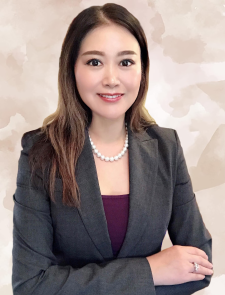
Guili Zhang
Professor and Department Chair
East Carolina University
American Evaluation Association President
This event was in-person and was not livestreamed.
Presentation: Evaluation Across Boundaries
This presentation explores how evaluation can move beyond traditional limits—across national borders, generations, disciplines, and methodological divides. It emphasizes openness to new ideas, diverse perspectives, and collaboration across fields and sectors. By blending evaluation models and techniques—qualitative and quantitative, academic and applied, traditional and emerging—evaluators can respond more effectively to today’s complex challenges. The approach values contributions from both experienced and early-career evaluators, fostering mutual learning and innovation. Crossing boundaries enables evaluators to address global issues, adapt to changing contexts, and expand the reach and relevance of evaluation, maximizing its impact wherever it is needed.
Panel Session: Navigating Professional Pathways and Boundaries in Evaluation
Following Dr. Zhang's presentation, there was an engaging conversation with Dr. Zhang and a panel of local evaluation professionals. The facilitated dialogue explored how evaluation educators, practitioners, researchers, and entrepreneurs navigate the terrain of evaluation as a discipline, profession, and business. Panelists shared personal stories and practical insights about building a career in a field with fuzzy boundaries where professional demands vary widely from one context to another.
Panelists
- Nathan Browning, Principal Consultant at Kiaer Research; Chair of the American Evaluation Association’s Independent Consulting Topical Interest Group
- Jan Fields, Program Evaluator, Michigan Public Health Institute and Michigan Department of Health and Human Services
- Megan Lopez, Senior Research Associate at The Evaluation Center at WMU; Executive Director of Move Conmigo; Adjunct Professor at Grand Valley State University
- Lenore Yaeger, Director of Assessment, Marketing, and Communications for Student Affairs at WMU
- Guili Zhang, Professor of Evaluation and Research at East Carolina University, President of the American Evaluation Association

Malitsitso Moteane
Postdoctoral Research Associate
Winston Salem State University

Jaylin Nesbitt
Research Associate
WestEd
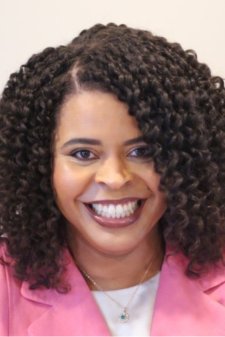
Brianna Hooks Singletary
Senior Research Associate
Western Michigan University
Who Counts? Rethinking Validity, Voice, and Power in Educational Measurement and Evaluation
Program evaluation relies on sound and solid measurement. Yet the constructs we define, the measures we choose, the data we prioritize, and the ways we interpret results all shape the conclusions we draw and the decisions that follow. Validity is often treated as a technical concern, but it is also fundamentally shaped by whose voices are included, whose knowledge is recognized, and whose experiences are reflected in the data. In 2026, as debates about what counts as rigorous evidence intensify and the scholars and communities most affected by evaluation decisions remain too often absent from the conversations that produce them, this question is anything but settled.
This session draws on an ongoing program of research inspired by Hood's (2001) "Nobody Knows My Name" project, which works to surface and honor the contributions of Black evaluation scholars. Building on that foundation, we set out to identify Black measurement scholars and their contributions to the field, while also examining the experiences of Black students and professionals in measurement contexts.
These findings open up broader questions for evaluators: how do we determine what counts as credible evidence, and whose perspectives are centered or marginalized in our evaluation processes? Participants will leave this session thinking more critically about the tools they choose, the measures they trust, and who those choices ultimately serve.