

Broncos on the beat: WMU Cold Case Program grads are building their careers around public service
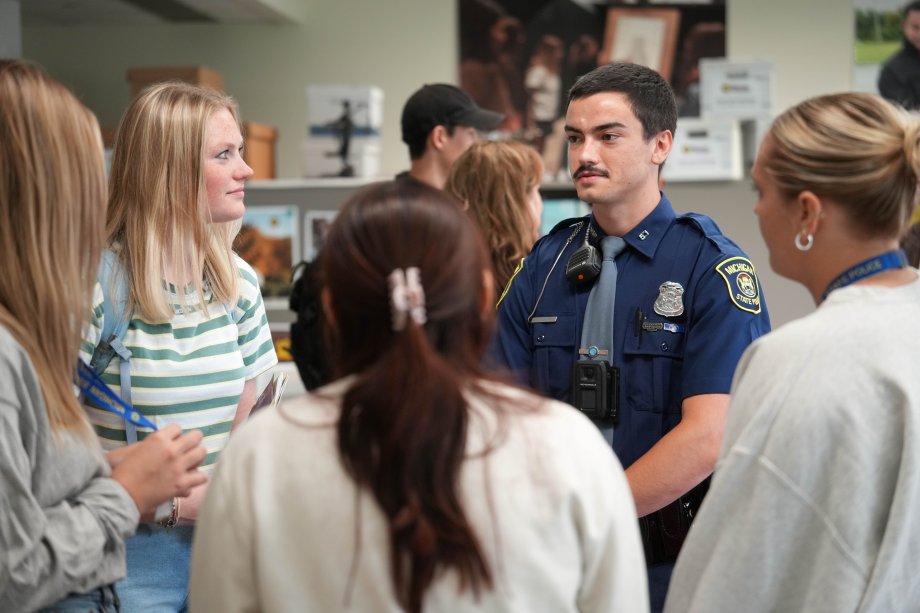
KALAMAZOO, Mich.—Just two weeks into her patrol assignment with Michigan State Police (MSP), Trooper Shelby Wilmot, BS ’24, responded to a homicide call, arriving first on the scene. Despite her rookie rank, Wilmot calmly and confidently began her investigation.
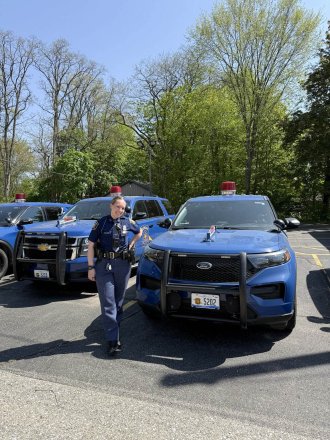
“I knew how important it was to be detailed in my reports and take holistic photographs of the scene, because I’ve seen what can happen when there’s not enough,” she says.
It’s a reality she witnessed firsthand in Western’s Cold Case Program, when she worked alongside detectives on unresolved homicide and missing persons cases as an undergraduate student. That experience prepared her for the rigors of law enforcement.
“I do a lot of background research, and I have to be as knowledgeable as possible going into interviews,” Wilmot says. “The Cold Case Program definitely helped me figure out how to do that most effectively and come up with good systems for organization.”
She isn’t the only graduate of the program who feels that way.
“The Cold Case Program set me up for success in my current job because it familiarized me with software I use every day and showed me everything that needs to go into police reports—especially major investigations like a cold case,” says Trooper Sean Montroy, BS ’24, who graduated from MSP’s 147th Trooper Recruit School in November 2024 alongside Wilmot and Trooper Rachel Moore, BS ’24.
A model program
Since its launch, the Cold Case Program has become a pipeline for criminal justice professionals. Seven program alumni have graduated from MSP Trooper Recruit School. Others have gone on to become law enforcement officers at other police agencies, file clerks, lab specialists, and FBI and Department of Homeland Security officers and lawyers.
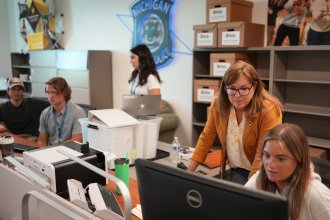
“Our students learn from detectives what a good investigation looks like,” says Dr. Ashlyn Kuersten, professor of sociology, who founded the program with Detective 1st Lt. Chuck Christensen of the Michigan State Police. “They are able to learn from lab experts, medical examination professionals, evidence technicians and others within this field. That gives our Broncos an amazing opportunity to gain real-world skills alongside professionals.”
In addition to investigative skills, the Cold Case Program gives students the opportunity to interact with victims’ families and learn how to navigate difficult conversations with empathy.
“Being in the program really helped me speak with other people around me and get to know them, and that definitely translated into my job,” Moore says. “When you have to speak with a victim, sometimes they don’t really want to talk about what happened. But understanding the importance of that human aspect and letting people know we’re here for them and want to listen, it just comes easy now.”
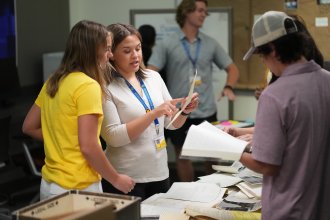
To date, students in the Cold Case Program have completed more than 35,000 hours of work for MSP and 13 additional police agencies in 92 cases across the state. The collaboration has resulted in the resolution of eight cold cases, and multiple others will soon be going to trial.
“Detectives working at posts and other agencies are often overwhelmed with their existing caseload and would not be able to devote the time necessary to organize these case files while increasing case solvability factors,” Christensen says. “All detectives who have worked with students in the program say that their cases are more solvable after the students worked on those cases.”
The Michigan State Police believes so strongly in the program’s effectiveness that the agency secured state funding to support it.
“This funding has allowed the program to flourish and handle an increasing number of cases every year,” Kuersten says.
Purposeful pursuit
The Cold Case Program transforms curriculum into a calling. Students find purpose in helping families find justice for loved ones and assisting police agencies strapped for resources.
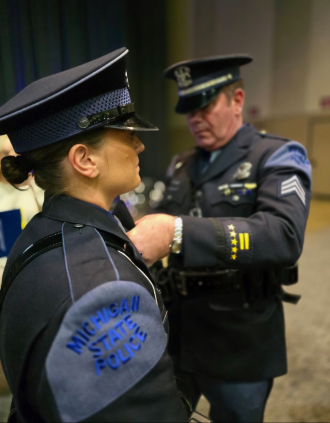
“Often, Broncos have not considered a career in law enforcement, but after working with a detective, they see what a career working for the public good looks like,” Kuersten says.
That’s certainly true for Moore. Despite being a third-generation law enforcement officer and seeing the impact her father and grandfather had on their communities, she never really thought about becoming a trooper until joining the Cold Case Program.
“I remember I started college with no idea what I was doing; I was just making my way through classes and getting the credits I needed,” she says. “But once I got into the Cold Case Program, I enjoyed going to work and actually had a goal. I finally knew what I wanted to do with my life.”
Detectives also become mentors, giving students career advice and staying connected long after graduation.
“Detective Lt. Todd Workman pushed me to go on ride-alongs and learn more about becoming a trooper, which is ultimately what led me to make the decision to go to recruit school,” says Wilmot, who kept in touch with Workman throughout the grueling 20-week training process. She says his weekly phone calls kept her from giving up when things got tough.
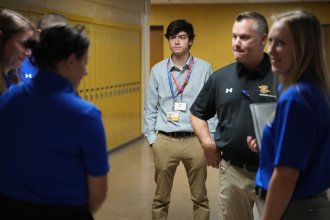
“We still keep in touch about cases I have going on. In fact, I’m working a case right now that he worked back in 2019, so it’s cool to see his name pop up and be able to give him a call and ask him questions.”
A force for good
Since beginning with just four students five years ago, the Cold Case Program has exploded into a sought-after program that accepts about 25 students each semester and receives international recognition for its unprecedented success. Law enforcement entities and educational institutions from around the globe have reached out to express their interest in using the Cold Case Program as a model to start similar programs.
“It’s really cool to see how many more lives the program has touched since I’ve been there, and I’m so glad it’s grown to where it has now,” Moore says. “There are so many detectives—even beyond MSP—who are getting connected with the Cold Case Program, and it’s going to help so many people and ultimately make our world a little bit safer.”
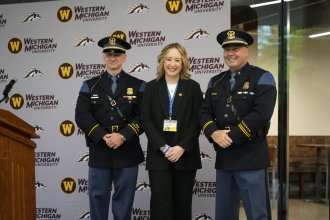
Promoting security for the communities they serve is at the heart of why these Broncos-turned-troopers are proud to be on the beat.
“It’s all about making an impact,” Moore says. “My goal when I speak with someone is when I leave for them to at least feel a little bit better and to get some type of closure.”
“It makes me emotional because I never thought that this was even an option,” Wilmot agrees. “But the Cold Case Program opened up so many possibilities.”
For more WMU news, arts and events, visit WMU News online.