
Super Bowl-winning coach John Harbaugh reflects on his start at Western: ‘The greatest three coaching years of my life’
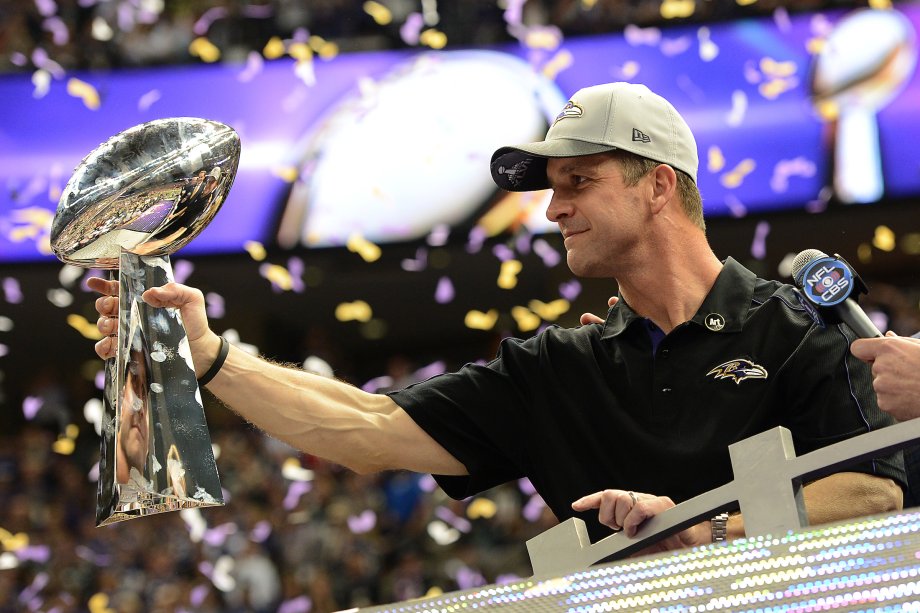
BALTIMORE—On Feb. 3, 2013, the NFL’s Baltimore Ravens won Super Bowl XLVII, defeating the San Francisco 49ers 34-31. The Ravens, a four seed, triumphed as underdogs in three of four playoff games, including the championship game, which featured a coaching duel between brothers Jim and John Harbaugh.
As the clock hit zero and confetti rained down, John Harbaugh raised the Lombardi Trophy as victor to a cheering crowd with his wife Ingrid and daughter Alison by his side. Addressing the 71,024 in attendance and the more than 160 million viewers at home, he said, “It wasn’t pretty. It wasn’t perfect. But it was us.”
The mantra was adopted by the team throughout the season, born of a belief battle-tested by their coach who had spent decades in the trenches learning and competing. Standing on that field as a Super Bowl-winning coach, it was the pinnacle of Harbaugh’s career—a career that began with his first coaching job at Western Michigan University.
Coaching in his blood
Harbaugh’s coaching career began in 1984 with little fanfare or attention. His father Jack had been the head football coach at Western for four years, and Harbaugh, a recent student-athlete and graduate of Miami University in Oxford, Ohio, was plotting his next move.
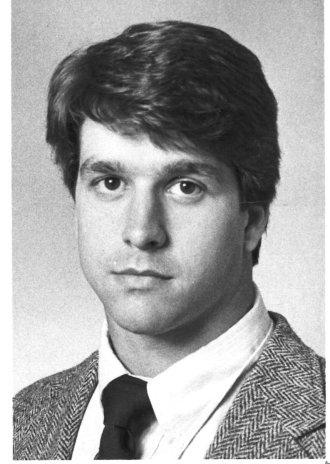
Keenly aware that a top-notch education was available to him at no cost through WMU’s tuition remission for family members of faculty and staff, Harbaugh thought graduate school at Western made a lot of sense. But as the football season neared, something would happen that forever changed the trajectory of his life.
“I was just going to be there for school and that was it. But it got into the summertime and my dad said they didn’t have enough coaches; they only had five. So, he was like, ‘Can you help?’” Harbaugh says.
He continues, recalling his father's advice, “‘You know what I need you to do. Just have good relationships with the guys, push them and do what the (other) coaches teach you to do. Teach what they teach you.’”
He was no stranger to Kalamazoo, spending the previous few summers living and working in the area. He knew the players, he knew the community, and he—alongside his brother, Jim—was wired to love football. So, fresh off his playing career at Miami, 21-year-old Harbaugh joined Western as the new running backs coach while pursuing a graduate degree.
As fate would have it, Harbaugh’s debut with the Broncos saw him facing a familiar foe.
“That year, the very first game was against Miami. That was my team, all my guys. I knew every player, every coach,” he says. “It was tough because the last two years I played for Miami against Western.”
WMU won the home opener, defeating Miami 17-13, and the team’s running back, Otis Cheatham, rushed for over 200 yards. It was a good day for the Broncos and their newly minted coach.
Though it wasn’t all successes and triumphs. Harbaugh was young and still finding his coaching style and temperament. Decades later, one particular instance stands out as a teachable moment between father and son.

“Right at the end of a game, we’re called for two back-to-back holding penalties on the offensive lines, and I thought they were bad calls. So I take my headset, rip it off my head and I flick it. And it starts rotating through the air. I can see it in slow motion and, honestly, I can't believe how far it's going. I turn around, and my dad is in my face, like an inch away, and says ‘Go get it.’ And I'm like, ‘Excuse me,’ and he says ‘Go get it.’ So now I’ve got to put my head down and do this jog of shame to get the headset. I’ve never lived that down to this day.”
It was the first of many profound lessons he would learn while coaching at Western—lessons he would carry with him for the rest of his career.
“The problem with young coaches is you think you know more than you do, and the good thing is: I had Dad. I had a great first step,” he says. “We were driving to work every day, talking football and then driving home together every night. We lived it together.”
Harbaugh learned the game and grew into the role, receiving valuable lessons from his father and others on staff like Steve Szabo, Brady Hoke, Dan Ferrigno and Greg Mattison, as well as Bronco baseball coach Fred Decker and associate athletic director, J. Patrick Clysdale.
“All those guys were difference-makers because they took me under their wing and taught me how to teach and how to do all the detailed work.”
Off the gridiron
Academically, Harbaugh, M.A.’89, initially planned to continue his studies in political science.
“I was going to go to law school. That was the plan, but once I did the first semester, I knew I wanted to be a football coach,” he says.
So, he made the switch to physical education and was able to earn credit hours for his coaching, playbooks and graduate assistantship. He credits Hal Ray, professor emeritus and former chair of the Department of Human Performance and Health Education, for taking him under his wing while he pursued his studies.
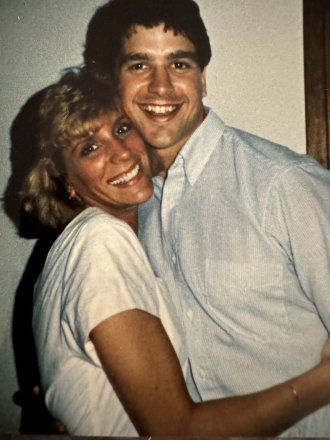
As a young coach and student pursuing an advanced degree, Harbaugh had limited time for socializing. But when it came to matters of the heart—he made time. Western is where he met his wife in what could only be described as a Bronco love story.
Ingrid, who was an undergraduate student working in the baseball office, first came onto Harbaugh’s radar after some of his fellow coaches encouraged him to talk to her. Months later, he finally asked her out.
For their first date, they had dinner at Carlos Murphy’s and then saw “Rocky IV” at the local multiplex. Not wanting the night to end, the pair walked the long stretch of campus from her room in the Valleys all the way to Waldo Stadium in subzero temperatures.
“It's freezing cold and there’s nothing open, so we go to Dairy Queen. We ate ice cream while walking back, and finally, I had the nerve to hold her hand. She had to put our hands in the pocket of my coat because it was cold, and that's kind of one of those moments that we remember.”
Winning after Western
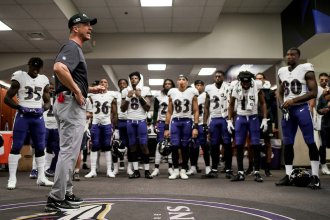
Harbaugh’s rise to the top was not meteoric. It took equal parts tenacity, grit and patience. He moved from Western to the University of Pittsburgh, then to Moorhead State, the University of Cincinnati and Indiana University, refining his craft at each stop. Each role brought more responsibility and higher stakes.
From there, he transitioned to the NFL, serving as special teams coordinator and later the defensive backs coach for the Philadelphia Eagles over nine seasons. In 2008, after 24 years as a positional coach and coordinator at the collegiate and professional levels, he was named head coach of the Baltimore Ravens.
It wasn’t pretty. It wasn’t perfect. But it was him.
Since his Super Bowl victory, Harbaugh and the Ravens have continued their winning ways. As of the start of the 2025-26 NFL season, he ranks 13th all-time among coaches—and third among active coaches—with 185 combined regular-season and playoff wins. He holds the record for most road playoff victories, with eight, and in 2019, he was named the AP NFL Coach of the Year.
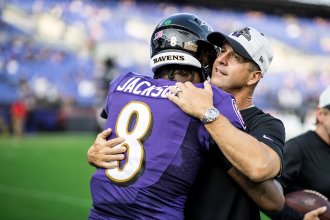
And it all began at Western. When reflecting back on his start at WMU. Harbaugh remembers the times fondly.
“The key with anyone coaching is who you start with. It’s being around the right people with the right values. These are the people that mold you and set the direction when you're 21, 22 or 23 years old.
“I just fell in love with it. The guys, the coaches and the game. I learned so much about football at Western,” he says. “It was the greatest three coaching years of my life.”
For more WMU news, arts and events, visit WMU News online.