

Current state of financial and administrative operations
Today, many routine tasks—processing forms, arranging travel, and completing certain HR, finance and other administrative work—are distributed across campus and handled in highly variable ways. This level of dispersion creates inconsistency, limits scalability, leads to coverage gaps and results in uneven workloads. The University will assess current practices, stakeholder needs and service expectations to determine which future model would best support WMU.
In practical terms, this effort starts with understanding what work is being done, where it is performed, how it is experienced by those who rely on it, and where shared services or clearer ownership could improve outcomes. The findings will inform a possible design of a future shared-services model for financial and administrative functions.
Benefits
For the University
- Clear visibility into how finance and administrative work is currently distributed and where process redesign could improve systems, scalability and service quality.
- Clearer decisions about which services should remain within individual units, which could be shared and where standardization could reduce unnecessary variation and risk.
- Stronger alignment between administrative structures and institutional priorities by using data, stakeholder input and service-design principles rather than informal workarounds.
For colleges and departments
- More consistent support for common administrative work through clearer processes, service definitions and ownership of routine transactions.
- Clearer service expectations over time, including turnaround standards, escalation paths and accountability for common requests.
- Less reliance on one-off practices within individual units, broader shared support, improved service continuity, and reduced disruption when workloads shift or vacancies occur.
For affected teammates
- Clearer expectations around administrative work, how it connects to other functions and where process improvements could ease daily work.
- More consistency in how common services are defined and delivered across units, helping campus partners know what to expect.
- A deliberate approach to service improvement that begins with listening, data collection and service analysis before major design decisions are made.
Planning approach
Leadership: Dr. Chris Cheatham, provost and executive vice president for academic affairs; Keith Hahn, senior vice president for institutional integrity and general counsel; Nicole Kalmbach, senior director of business operations for student affairs; Erica Martinez, senior director of business operations in academic affairs; Colleen Scarff, associate vice president for business and finance; and Jan Van Der Kley, vice president for business and finance, will serve as the steering committee. Western is partnering with Huron for this 7-month, assessment-oriented and evidence-based effort.
Timeline and phases
Assessment (5 weeks)
Assess the current state by establishing a quantitative baseline of how work is distributed today. The team will gather stakeholder input from supervisors, divisional leaders, affected employees and campus partners through interviews and focus groups. The goal will be to understand needs, dependencies and service expectations; define which activities are in and out of scope of the effort; and identify where current processes create inconsistency, undue effort or risk.
Design (8 weeks)
Translate findings into a future-state design, including workflow analysis, organizational structure evaluation and determination, service catalog, service-level agreements and key performance indicators. Map the current organizational chart and job descriptions to the new design.
Implementation (16 weeks)
Implement the new design into operation and focus on stabilizing services over time.
Update
The University’s Financial and Administrative Operations Assessment project remains on track in Phase 1 as of Sept. 4, 2026. Key efforts have focused on completing the Huron Administrative Activity Study (HAAS), conducting stakeholder interviews and gathering transaction data to support the current-state assessment. HAAS is an online tool used to identify the administrative functions and activities performed by employees who participated in the study.
Seven interviews were conducted and the HAAS survey participation was completed on Sept. 2. Huron received 222 responses from the total population of 225, representing a 98.7% participation rate. We thank everyone who completed the survey, recognizing the time and effort it took during the busy start to the semester.
The project steering committee, along with representatives from the other Administrative Redesign projects, met with the Faculty Senate Executive Board on Aug. 28 to update the board on the project’s current status and to answer questions from the board.
Over the coming weeks, the team will finalize analysis of HAAS data; complete remaining interviews and focus groups with business managers, key staff managers and University leaders; and develop the Phase 1 current-state assessment report. This work will help inform recommendations ahead of the anticipated launch of Phase 2 within the next four to six weeks.
Recent communications
Dear Colleagues,
Thank you to everyone who attended the recent information sessions on the Finance and Administrative Redesign initiative and shared your perspectives with President Kavalhuna and the initiative leaders. We appreciate the candor and care many of you brought to those conversations.
One message came through clearly: Employees want more opportunities to share their experiences and ideas, beyond what the Huron Administrative Activity Study (HAAS) captured. We heard you. The study gave us an essential quantitative baseline of how finance and administrative work is distributed across the University today, but we know many of you have more to share. The people who do this work every day understand it best, and your perspective is an important part of getting this right.
To provide that opportunity, we invite you to complete a brief, optional survey to share your perspectives. We encourage you to provide thoughtful, candid and specific responses based on the work you perform, focusing on services, roles, processes and ways of working rather than individual colleagues. Your input will help us better understand how administrative work happens today and where WMU may have opportunities to improve service delivery, role clarity, coordination and support.
Survey responses will be collected and reviewed by Huron. Responses may be shared with members of the Steering Committee to support the redesign effort, but individual responses and comments will not be attributed to respondents in materials shared more broadly with the University.
If you would like to participate, please fill out and submit the survey on a site created by Huron by Thursday, Oct. 22.
Thank you for your time and your continued commitment to WMU. If you have any questions, please contact any member of the Steering Committee. We will continue to engage with you and share updates as the work progresses.
Thank you,
The Steering Committee
Dear Colleagues,
Thank you to everyone who participated in the Huron Administrative Activity Study, interviews, focus groups and related assessment activities during Phase 1. We are excited to officially close Phase 1 and move forward into design.
As the Finance and Administrative Redesign initiative moves from assessment into design, we will continue to keep the Western Michigan University community informed along the way. Phase 2 will build on initial findings and continued campus input to explore how finance, administrative support and human resources operations can function in the future. Following is a summary of key themes from Phase 1 and what to expect from Phase 2.
Phase 1 summary: Building the current state
What we did
Phase 1 was designed to develop a fact-based understanding of the finance, HR operations and administrative support work performed across Western, including where responsibilities are clear, where work varies, and where employees experience process or service challenges. Phase 1 used multiple sources of information to understand how finance, HR operations and administrative work happen today:
- The Huron Administrative Activity Study (HAAS) provided details on the types of functions and activities within those functions that employees perform and the effort associated with that work. Phase 1 established a strong baseline, with 223 of 225 participants completing the study. We thank you for taking time to complete the study to help this be a data-informed process.
- Stakeholder interviews and focus groups provided perspectives from colleagues who perform, manage and receive these services. Our Huron partners met with 34 colleagues during Phase 1 interviews and focus groups and will continue campus engagement in Phase 2. These interviews and focus groups included stakeholders such as University leaders, deans, business managers, administrative assistants, executive assistants and staff managers.
- Additional transaction data and process documentation helped further inform the current-state analysis.
What we learned
Among the 223 HAAS respondents, 73% of reported effort fell within the HAAS general administration, finance, procurement and HR functions. The data showed that many common finance, administrative and HR activities are performed by employees across a wide range of departments and roles:
- Shopping, requisitioning and purchasing: 152 respondents
- Event coordination and scheduling: 152 respondents
- General accounting: 149 respondents
- Travel expense and processing: 146 respondents
- Billing and receivables: 126 respondents
- New hire processing and onboarding: 121 respondents
Employees in the same role reported variation in both the tasks they performed and the amount of time dedicated to those tasks. The themes below reflect patterns that emerged consistently across the HAAS, interviews and focus groups, providing a shared fact base for the design work ahead. They also align with President Kavalhuna’s broader vision for the Administrative Redesign: addressing siloed systems; duplicated efforts; and processes that divert focus and resources from students, scholarship and research, and community impact.
- Roles and responsibilities are fragmented and inconsistent. HAAS respondents reported performing an average of 20 activities each, while interviews and focus groups indicated that employees with the same job title often perform substantially different work. For example, the 74 administrative assistant II respondents collectively reported performing 123 unique activities.
- Common activities are distributed broadly across the University. Sixteen activities were reported by more than 50% of HAAS respondents, reinforcing interview and focus group feedback that similar work is performed across many roles and units.
- Processes are often manual and disconnected. Interviews and focus groups identified work-arounds and handoffs across travel, procurement, HR and voucher processes, consistent with HAAS findings that these activities span multiple roles and functions.
- Training and service delivery rely heavily on local knowledge. Interviews and focus groups highlighted the importance of experienced colleagues and established relationships while also identifying a need for more consistent onboarding, training and actively maintained procedures.
- There is momentum and enthusiasm for positive change. Colleagues expressed interest in improving how work is done, and openness to doing things differently, reinforcing a theme also heard during the president’s listening tours.
Phase 2 Overview: Moving into design
Phase 1 identified opportunities and challenges in the current state. It did not evaluate or select a future operating model. Phase 2 will translate the Phase 1 findings into proposed future-state service delivery options. We will consider the needs of students, faculty and staff who use these services; the expertise required to perform the work; the importance of local knowledge; and opportunities for clearer ownership and more consistent support.
Design Team sessions: A Phase 2 priority
Ten WMU colleagues (identified at the end of this message) representing different areas and perspectives across the University will participate in four facilitated design sessions. Careful consideration was given to our colleagues’ selection to represent multiple campus areas and a variety of work responsibilities. Their firsthand perspectives will help bring practical context from different areas of the University into the design process and inform recommendations for Steering Committee review.
The four design sessions are:
- Understand the work: Define the work to be done in finance, HR operations and administrative services.
- Explore services: Consider the skills level of coordination different work requires.
- Evaluate potential models: Explore how services could be delivered to improve role clarity, processes and support.
- Prioritize a path forward: Identify opportunities and implementation considerations, including service continuity and workforce support.
Additional Phase 2 activities
In parallel with the Design Team sessions, Phase 2 will include targeted engagement and analysis related to priority process redesign, governance considerations, workforce support planning and implementation strategy.
What to expect
- Focus on people and process: As we move through Phase 2, the Finance and Administrative Redesign will focus on the people and process elements of the operating model, including roles, responsibilities, service delivery and how work moves across WMU. Technology considerations will be evaluated as appropriate to inform the initiative’s recommendations and decisions, although technology changes are not a primary focus of this effort.
- Keeping you informed: The WMU community will receive additional information as proposed designs are developed and reviewed. As Phase 2 progresses, WMU will share updates on the design process, emerging themes and opportunities for colleagues to stay informed. Your input is an important part of helping us better understand finance and administrative work across the University, and we appreciate your support throughout this process.
We welcome your questions, feedback, and ideas as this work continues. Please feel free to contact any member of the Steering Committee, including Chris Cheatham, Keith Hahn, Nicole Kalmbach, Erica Martinez, Carlos Rodriguez, Colleen Scarff and Jan Van Der Kley. You may also share feedback through the project webform.
Design Team members
- Nicole Kalmbach (Steering Committee liaison), Senior Director of Business Operations, Student Affairs
- Erica Martinez (Steering Committee liaison), Senior Director of Business Operations, Academic Affairs
- Courtney Buckmaster, Administrative Assistant Senior
- Kelly Dey, Business Manager for College of Arts and Sciences
- Kendra Drewyor, Controller
- Ben Holland, Budget Analyst Senior
- Melissa Knapp, Manager, HR Service Center
- Anna Kniffin, Business Manager for College of Fine Arts
- Jeff Long, Senior Director of Business Operations
- Michelle Louis, Associate Director of Business Operations for Student Affairs
Appreciatively,
The Steering Committee
Dear Colleagues,
Thank you for your participation in the Finance and Administrative Redesign Huron Administrative Activity Study, as a direct respondent or supervisor. We recognize that the study fell during a busy time of the academic year. Even so, we achieved a remarkable 99.1% response rate!
Your input provided invaluable insight into the daily operations of Western Michigan University and affirmed our understanding of how finance and administrative work is distributed today.
The overall initiative remains on schedule. Phase 1, assessment, is now complete. A more detailed summary resulting from the Phase 1 work will be shared in the first week of October.
We are now beginning Phase 2, an eight-week design phase. This work will focus on translating findings into a future-state design, including service delivery approaches and opportunities to improve consistency, support and accountability across the University. The information you provided in completing the study provided us with critical quantitative baseline information as we move into design.
As we continue our work, we encourage you to attend one of the upcoming Administrative Redesign Information Sessions with President Russ Kavalhuna and the initiative leaders to hear where work currently stands, ask questions and share perspectives about the work underway:
- Tuesday, Sept. 22: 3:30 to 5 p.m. in Brown Hall, Room 2028
- Monday, Sept. 28: 10:30 a.m. to noon in Sangren Hall, Room 1920
Thank you again for your participation in this important effort. If you have any questions in the meantime, please don’t hesitate to contact any member of the steering committee. We will continue to engage with you and provide informational updates.
Dear Colleagues,
As part of Western Michigan University’s Finance and Administrative Redesign, we launched the Huron Administrative Activity Study (HAAS) overview webinar yesterday, Aug. 25. This overview webinar, hosted by our steering committee and Huron Consulting Group, provided a live demonstration of how to complete the study. Thank you for the wonderful participation. We know you are very busy welcoming back our students and preparing for many fall activities and have many demands on your time and talent.
For those of you who were unable to attend, or if you did participate and want to review certain sections, you can access a recording of the webinar.
Again, thank you for your engagement. If you have any difficulties accessing the webinar, please reach out to the Huron Administrative Activity Study support team. If you have general questions about the project or a thought you would like to share, please reach out to any member of the Western steering committee. Thank you for your participation in this important effort!
Dear Colleagues,
As part of Western Michigan University’s Finance and Administrative Redesign, we have launched the Huron Administrative Activity Study (HAAS). To help support your completion, we invite you to attend an overview webinar, hosted by our steering committee and Huron Consulting Group, that will provide a live demonstration of how to complete the study.
The webinar will be held on Tuesday, Aug. 25, from 1 to 2 p.m.
Attendance is encouraged, and we ask that you please register in advance. If you are unable to attend, the webinar will be recorded.
What happens next
- After you register, you will receive a confirmation email containing your personal link to join the webinar. Please keep this email, as it is unique to you.
- In your confirmation email, please select “Add to calendar” so the webinar and your join link will be saved directly to your calendar.
- If you do not see the confirmation email in your inbox shortly after registering, please check your spam or junk folder.
- On the day of the webinar, simply click the join link from your confirmation email to attend.
We understand this is a busy time of year, and we are grateful for the time you are setting aside to take part in this important step. If you have any questions about registration, please reach out to the Huron Administrative Activity Study support team. If you have general questions about the project or a thought you would like to share, please reach out to any member of the Western steering committee.
Thank you for participation in this important effort!
Dear Colleagues,
As indicated in last week’s communication, Western Michigan University has launched Phase I of the Financial and Administrative Operations initiative to understand how finance, human resources operations and administrative work are currently organized across the institution. Our goal is to improve and clarify processes, provide more consistent support and establish shared service approaches where appropriate. You can visit the Administrative Redesign webpage to learn more about this initiative.
Our first step to gather information is the Huron Administrative Activity Study (HAAS), conducted by Huron Consulting Group. HAAS is an online tool used to discover what administrative functions and activities you perform. Your participation in completing this study is required and will provide essential insight into opportunities for greater alignment and operational improvement. If you are unable to complete the study by Sept. 2, your supervisor will complete it on your behalf. We recognize this is a busy time of year, and we are grateful for the time you set aside to take part in this important step of Phase I.
Timeline: The Huron Administrative Activity Study will be conducted from Aug. 20 through Sept. 2. A unique link will be emailed to you on Aug. 20, and your response is required by Sept. 2. You will be asked to estimate the time you spend on a variety of administrative functions and activities over the course of a given year.
What to know before you begin
- Respondents: The Huron Administrative Activity Study is being sent to you because we believe you perform administrative and/or finance activities as part of your routine responsibilities. While you will be asked to note any time spent on direct teaching, research or clinical care activities, the focus of this study is on administrative and/or finance functions.
- Best judgment: Please use best judgement and rely on your initial instinct to estimate how your time is spent. Depending on the number of “hats” you wear, this study should take 30 to 60 minutes to complete. Supervisors are copied on this email for awareness of staff participation.
- Additional context: The study includes a place where you can provide any additional context as needed, allowing you to note anything that helps explain how your time is spent.
- Purpose: This study is NOT intended to measure or be associated with an individual’s job performance or ability to complete their job duties efficiently and effectively. The results of this study will be combined with other quantitative and qualitative analysis being conducted as part of this project. The study is but one tool to help us better understand what you do.
- Confidentiality: Individual responses will not be published as part of the project; information will only be presented in aggregate.
Resources to review ahead of time
Please review the following resources ahead of the study to make the process as simple and seamless as possible:
- HAAS Catalog: Please review the full catalog of administrative and/or finance functions, activities and examples to which you will be assigning your time.
- Note: The HAAS is meant to gather data on actual functions/activities performed, regardless of department. For example, an employee in a finance department may certainly note time spent performing activities that fall under HR in the catalog.
- HAAS FAQs: Please review all relevant information and answers to common questions here before beginning your HAAS.
If you have questions about the study, please contact the Huron Administrative Activity Study support team. If you have general questions about the project or a thought you would like to share, reach out to any of your Western colleagues.
We recognize that the Huron Administrative Activity Study requires time and thoughtful participation. Your input is an important part of helping us better understand finance and administrative work across the University, and we appreciate your support throughout this process.
Dear Colleagues,
The first phase of the Financial and Administrative Operations Assessment has now officially started. Welcome! We expect Phase I to last five weeks, and its sole focus is on assessment. During this phase, the purpose is to gather information. We need to understand what you do, how and why you do it, and with whom you interact during the workday to be successful.
Here is what you can expect in the weeks ahead:
- Opportunities to share your perspective through surveys, interviews or small-group conversations
- Questions aimed at understanding needs, dependencies and service expectations
- A focus on listening and understanding
At this time, we would like to introduce you to your Western team members who are serving as the steering committee to oversee the successful completion of this initiative. You may know many of us, but we thought a photo and a few brief points of information would be helpful.

Dr. Chris Cheatham earned degrees in exercise science and exercise physiology from Miami University, Ball State University and Kent State University, followed by a postdoctoral fellowship at the John B. Pierce Laboratory affiliated with Yale University School of Medicine from 2001 to 2003. He joined the University in 2003 as an assistant professor, was promoted to full professor in 2014, and later served as Associate Dean of Academic Services in the College of Education and Human Development. Since 2018, he has held several senior academic leadership roles, including Associate Provost and Vice Provost, and he currently serves as Interim Provost and Vice President for Academic Affairs.
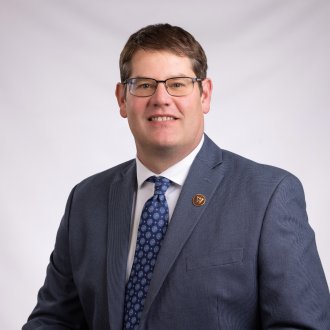
Keith Hahn earned his bachelor’s degree in political science from the University of Michigan and his law degree from the University of Toledo College of Law. Following graduation, he practiced private law, specializing in municipal litigation, insurance defense litigation and general municipal law. He later served as in-house counsel for a national insurance company before joining Oakland University as Assistant General Counsel in 2008. He was appointed General Counsel to WMU in 2022.

Erica Martinez earned both her bachelor’s and master’s degrees from Western Michigan University and is currently pursuing a Ph.D. in organizational change leadership. She has 15 years of experience in higher education, with roles spanning administrative support, business management, financial services and personnel operations. For the past three years, she has served in the Office of the Provost, specializing in budget, personnel and operational leadership.

Nicole Kalmbach earned her bachelor’s and master’s degrees from Western Michigan University. She has spent more than 20 years in the financial services sector, with a career that has included roles in public accounting and higher education. For the past 18 years, she has worked in Student Affairs Business Operations.

Colleen Scarff earned her bachelor’s degree from Creighton University. She started her career at Western in 1997. Prior to serving the University, she held positions at TASUS Corp. in Bloomington, Indiana; Coopers & Lybrand in Lincoln, Nebraska; and Price Waterhouse in San Diego. She also serves as Assistant Treasurer for the University.

Jan Van Der Kley earned her bachelor’s and master’s degrees from Western Michigan University in 1980 and 1983, respectively, and started her career at Western in 1983. Before assuming the vice-presidential role, she held positions in Advancement and Internal Audit. She also serves as Treasurer of the University and related foundations.
The Huron Team
Western is partnering with Huron throughout this project. Many of you may have interactions with the Huron team members, so we also want to introduce them to you:
- Brett Dalton, Principal
- Susan Basso, Managing Director
- Chris Powers, Director
- Kate Schifferli, Manager
- James Arms, Senior Associate
- Dawn Burt, Senior Associate
We look forward to working with you in the upcoming months. Please feel free to reach out to any of your Western colleagues if you have a question or a thought you would like to share. For your convenience, we provided our email addresses linked to our names in this message. Although this is our first communication, we plan to continuously communicate with you throughout this approximately seven-month effort. We are looking forward to the dialogue.
Connect with Administrative Redesign leadership
Other Administrative Redesign initiatives
IT redesign
Campus technology teams are coming together under unified leadership to strengthen security and simplify support.
MarCom organizational design
Marketing and communications functions are consolidating into one team to sharpen WMU's competitive edge.
Strategic sourcing and spending
A new approach to procurement and contracts aims to stretch every non-personnel dollar further.
Space utilization
Classroom scheduling and investment decisions are shifting to match how space is actually used.