

Preserving History and Canopy: Collaborative Progress at The Oaklands Residence
KALAMAZOO, Mich.—A thoughtful transformation is underway at Western Michigan University’s historic Oaklands Residence. As part of the University's ongoing campus improvements, WMU's Department of Planning, Design, and Construction (PDC) is spearheading a dual-focused initiative: a comprehensive interior renovation of the historic residence and the installation of a new, permanent vehicular access drive via the Student Center Loop Road.
Because the Oaklands is nestled within a grove of heritage white oak trees, protecting the campus canopy has been at the forefront of our planning. To safeguard the grove, PDC has partnered closely with WMU's Landscape Services, including their arborists, and the WMU Tree Committee.
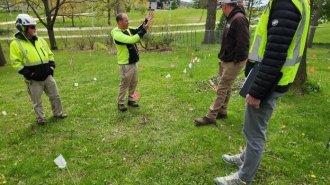
The collective team went above and beyond standard design practices to ensure the long-term health of the grove. The WMU Geology Department was brought in to conduct ground-penetrating radar (GPR) scanning, generating specialized imaging models to map out the exact location of critical tree roots beneath the surface. In addition to the structural impact to the root systems, environmental stressors like winter de-icing salinity and seasonal oak wilt risk were brought to the forefront. Guided by this data, the Tree Committee, arborists and PDC pivoted to an alternative design approach as part of upholding optimal tree-protection zones.
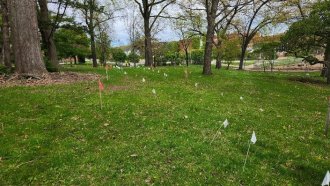
While design work on the access drive progresses, a separate project to update the interior of the Oaklands Residence into welcoming and accessible accommodations and event space is also launching. To support this renovation and isolate heavy equipment from sensitive root systems, Elite Companies has established a temporary gravel construction drive. This temporary route will be fully restored post construction activities.
As part of the protective site adjustments, Landscape Services will also carefully remove a single black walnut tree positioned too close to the structural foundation and leaning over the historic home, causing a physical hazard.
The design for the permanent access route is currently being finalized through continued collaboration between the project team and campus stakeholders. An upcoming site review and route walk-through will provide an opportunity to confirm that the proposed design thoughtfully balances long-term access needs with the preservation of the surrounding historic landscape and heritage white oak trees.
By balancing historical preservation with environmental stewardship, this initiative stands as a proud example of what can be accomplished when campus experts pull together. WMU looks forward to sharing a beautifully preserved Oaklands Residence and a thriving, protected white oak canopy with generations of Broncos to come.