
Job outlook
98%
of College of Health and Human Services graduates working full time have a job related to their degree
98%
of College of Health and Human Services undergraduate students had instructors who made them excited about learning
95%
of College of Health and Human Services graduates participated in experience-driven learning
Pursue a B.S. in Public Health
The Public Health program prepares you to improve health outcomes at the local, national and global levels. You'll explore the social, behavioral, environmental and policy factors that influence health while learning how to design, implement and evaluate programs that support healthier communities. The curriculum combines public health theory with practical application, helping you develop the critical thinking, communication and leadership skills needed to address complex health issues. Through a cohort-based learning model, you'll build strong connections with classmates and faculty while preparing for careers in public health and related fields.
What you'll learn
You'll study epidemiology, health behavior, health education, community health promotion, environmental health and public health policy. Coursework emphasizes program planning, evaluation, grant writing, advocacy and evidence-based decision-making. You'll learn how to assess community needs, develop health initiatives and evaluate the effectiveness of public health interventions. The curriculum also prepares students to pursue the Certified Health Education Specialist (CHES) credential and graduate study in public health and related disciplines.
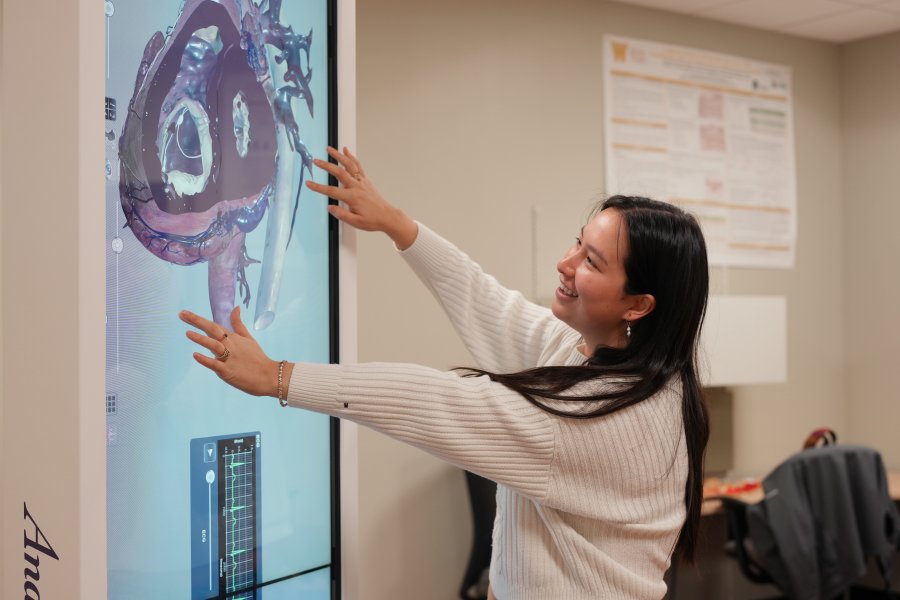
After graduation, I obtained a job working in the Department of Medical Education at Western Michigan University Homer Stryker M.D. School of Medicine.
Where you'll be after graduation
Public health graduates work to improve health outcomes through education, prevention programs, advocacy and community partnerships. The program prepares students for careers in government agencies, nonprofit organizations, healthcare systems, public health departments and community-based organizations. Many graduates also continue their education through master's and doctoral programs in public health, health administration and related healthcare fields.
Career pathways
- Community Health Educator
- Public Health Specialist
- Health Promotion Coordinator
- Program Coordinator
- Health Outreach Specialist
- Health Policy Advocate
- Public Health Research Assistant
- Graduate Study in Public Health
What others have achieved
What others have achieved
Every student in our public health program completes an experiential capstone project and real-world internship. These experiences are designed to prepare students with skills necessary to implement programs within the context of community and public health. Emphasis is placed on applying skills from the major responsibilities of a health education specialist, as defined by the National Commission on Health Education Credentialing.
Making the most of your learning experience
Real-world experience is built into the public health curriculum at WMU. Our majors have worked in public health departments and non-profit agencies while in school, so by the time you graduate, you’ll have hundreds of hours of practical public health experience on your resume.
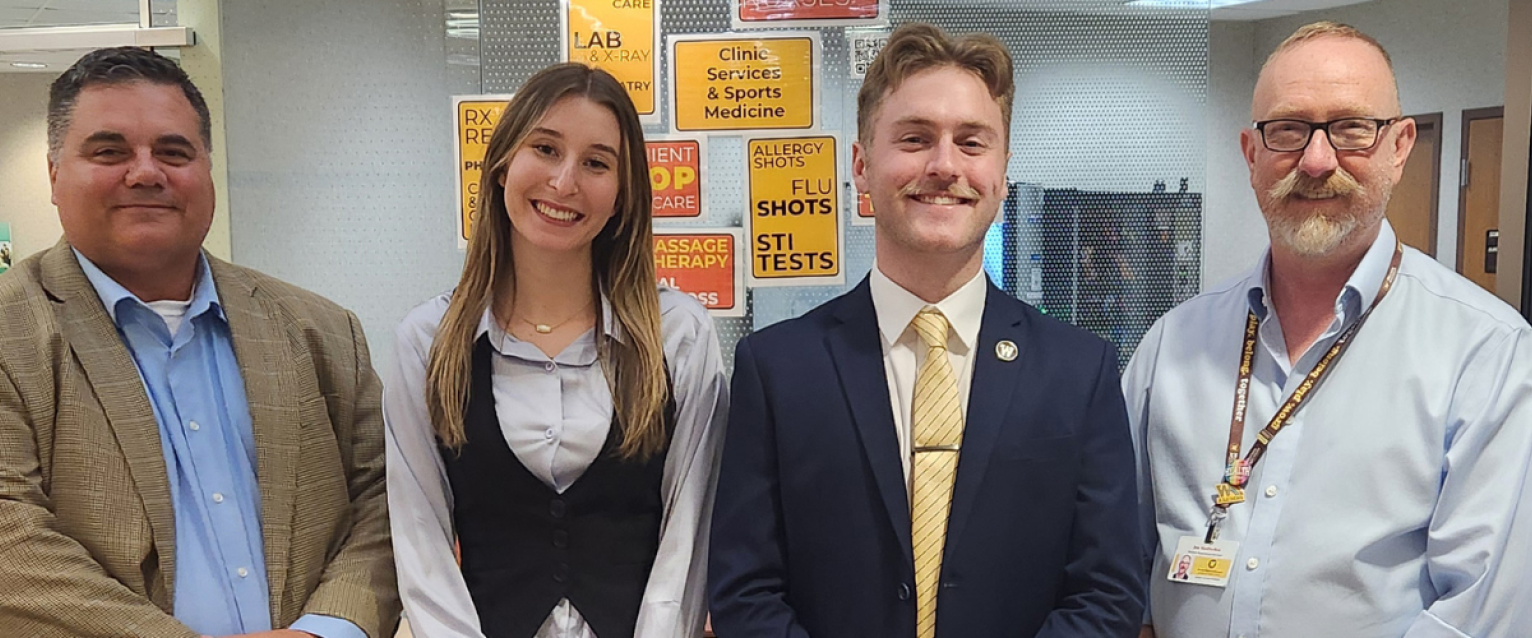
Recently, seven of our public health students were welcomed to share communication plans that address current public health topics with epidemiologist, Kim Kutzko, at the Kalamazoo County Health and Community Services Department. To read more about what the students did in this great opportunity, please follow the link: Bridging academia and public health: A semester of collaboration | Western Michigan University.
What scholarships are available for the Bachelor of Science in Public Health?
Additional admissions requirements
General information necessary for admission includes:
- Completion of the Public Health Undergraduate Application
- Submission of all academic transcripts
- Supplemental (personal) Statement
All applications are submitted to the Public Health Coordinator in the School of Interdisciplinary Health Programs. Deadlines for submitting applications are January 15, May 15, and October 1 of each year. Selection of students to be admitted to the program occurs after review of all applications by the Admissions and Student Services Committee composed of public health faculty. This is a competitive admissions process with a specific number of students admitted each year. Specific criteria for selection candidates are based upon:
- Competitive overall grade point average
- Participation in community services, leadership activities, and volunteer experience
- Written communication skills, personal qualifications, and knowledge of the profession as evidenced in the supplemental statement
Frequently asked questions
Other degrees of interest

International perspective


WMU’s B.S. in Public Health will take you places. Our faculty have lived, taught, or worked in different countries around the world, from Europe to Africa to Central America.
Knowing how public health works around the world helps us teach an international perspective on public health here at WMU. We offer several study abroad opportunities so that you can see firsthand how public health concepts play out globally. One such travel abroad opportunity is a 3-week immersion into exploring public health and healthcare systems in South Africa taught by one of our public health professors.