
pride points
98%
of College of Engineering and Applied Sciences undergraduates participated in experience-driven learning
$80K - $90K
median starting salary for recent chemical and paper engineering graduates working full time
99%
of College of Engineering and Applied Sciences graduates working full time are satisfied with their job
Pursue a bachelor's degree in chemical engineering
From food and beauty items to fuel and electricity, chemical engineers work in most industries, pursue research or apply to medical or dental school. As a chemical engineering student, you can choose a focus that matches what you’re most interested in, such as energy, bio-engineering, environmental sustainability, or pulp and paper.
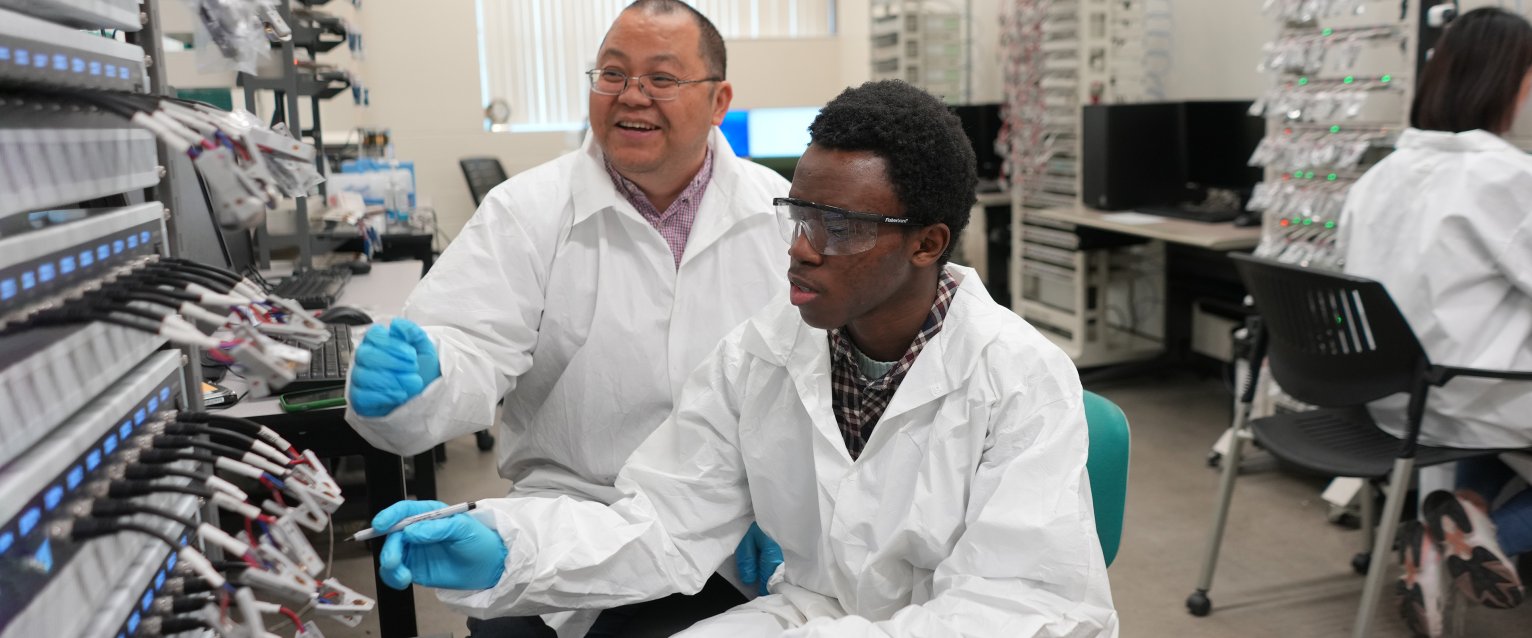
You will participate in hands-on projects with local industry and engage in research. With professors who are leaders in their fields and academic advisors who guide your progress, your time at WMU culminates in a Senior Engineering Design project where you will be part of a team completing a project for industry.
You can even earn two bachelor’s degrees—chemical engineering and paper engineering—by taking just five extra classes. And if graduate school is in your future, you can save time and money with our accelerated master's program.
What you'll learn
As a chemical engineering student at WMU, you will study concepts and practice skills in the classroom that impact the world. Then, you will apply that knowledge to hands-on projects with local industry and engage in research.
Unique features
- Adding just 5 courses to your program will earn you a double major in both chemical and paper engineering.
- Choose an emphasis area: energy management; life sciences; pollution prevention and sustainability; or pulp and paper.
- Participate in career development, industry partnerships and hands-on projects by joining the American Institute of Chemical Engineers.
Core courses
- Chemical Engineering and Computation
- Molecular and Cellular Biology
- Chemical Engineering
- Thermodynamics
- Computer Modeling and Simulation
- Bioprocess Engineering
- Plant Economics and Project Design
- Environmental Engineering
Elisha Ewing
I'm leaving this program feeling like I have real relationships with a lot of different industry professionals, which has helped me a lot in deciding what I wanted to do in the industry and what opportunities are available.
Where you'll be after graduation
Chemical engineers are in demand in almost every industry. They discover, design, build and operate industrial processes that involve changes in the chemical composition, physical nature, or energy. You would be hard pressed to find anything you are using, at any time of day, that was not produced using the skills of a chemical engineer.
Recent graduates of our program are working in roles such as process engineer lab technician, chemical process engineer, pharmaceutical production technician and more.
What others have achieved


Making the most of your learning experience
- Professors and advisors will support your participation in real-world experiences that will set you apart when you launch your professional career.
- You'll make lifelong friends and apply your skills by joining student organizations such as American Institute of Chemical Engineers and Technical Association of the Pulp and Paper Industry (TAPPI).
- Internships and co-ops will all boost the knowledge you build in your coursework.
- Your time at Western culminates in a Senior Engineering Design project, where you will team you up with peers and industry to apply your knowledge to a real world project.
What scholarships are available for chemical engineering students
A number of scholarships are available for students enrolled in chemical engineering at Western. We encourage you to apply for all scholarships that match your interests, career goals and financial or academic needs.


