

Light Center for Chinese Studies funds a documentary, a biography and a multimedia online language studies platform in 2025
KALAMAZOO, Mich.— The Haenicke Institute for Global Education announces new recipients of the 2025 Timothy Light Center for Chinese Studies Research Grant. This year, awards will support three innovative projects: a documentary, a biography and a multimedia online Chinese language studies platform.
“The Timothy Light Center for Chinese Studies Faculty Research Grant reflects our mission to advance scholarship on greater China and promote public understanding of its history, culture and global impact,” says Dr. Ying Zeng, director of the Light Center. “These awards showcase the diversity and impact of China-related work at WMU, supporting research, teaching and engagement with communities both locally and globally.”
Founded in 2010, the Light Center works to support WMU faculty and graduate researchers with expertise or teaching interests in the greater China area. The Center is part of WMU Haenicke Institute for Global Education. Research grants, valued up to $4,000 each, promote interdisciplinary collaboration, enrich campus culture and foster global engagement, Zeng says. Proposals are accepted Feb. 28 and Sept. 30 annually.
The 2025 recipients are Dr. Sophie Tang, assistant professor of violin at the Gilmore School of Music; Dr. Victor Cunrui Xion, professor in the Department of History; and Dr. Xiaojun Wang, professor of Chinese in the Department of World Languages and Literatures.
Documentary: "The Stulberg and China: A Growing Legacy"

Tang plans to produce a 30-minute music documentary titled "The Stulberg and China: A Growing Legacy." The short film will celebrate the 50-year history of the Stulberg International String Competition and its growing influence in China.
It will highlight milestone moments from the 2025 Stulberg season—including the first commissioned concerto, the appointment of the first Chinese cello juror and the launch of "Countdown to Stulberg," an online livestream that reached more than 120,000 viewers worldwide.
“This moment in Stulberg’s history felt like a turning point,” Tang says. “It inspired me to capture how the competition has launched young musicians for fifty years while stepping boldly into a new era.”
The documentary will feature interviews with past winners, judges, Chinese finalists and WMU students. Tang’s research also draws from Stulberg’s archives, including reel tapes, recordings, newspaper clippings and photographs. Scheduled for release in 2026, the film will strengthen WMU’s visibility in international classical music and deepen cultural connections with Chinese conservatories, Tang says.
Book: "Emperor Li Longji: The Rise and Waning of a Golden Age"
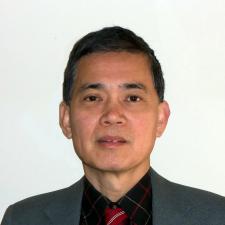
Xiong intends to publish "Emperor Li Longji: The Rise and Waning of a Golden Age," a 98,000-word biography of Emperor Xuanzong, the longest-reigning sovereign of the Tang dynasty. It will be the first full-length biography of Longji in a Western language.
The book traces Longji's reign from the cultural brilliance of the Kaiyuan Golden Age to the turmoil following the An Lushan Rebellion. Written with historical rigor and narrative clarity, it provides scholars, students and general readers with insight into leadership, ambition, and the fragility of power.
Grant funds will support publication with Airiti Press, with a release scheduled for 2026. This project contributes significantly to Sinology scholarship and promotes broader public understanding of Chinese history.
Online Learning Platform: Integrating Language, Culture and Calligraphy
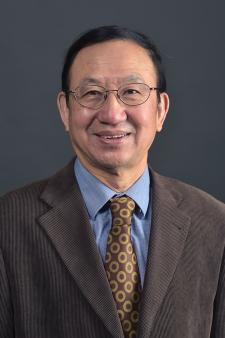
Wang’s project, "A Multimedia Approach to Integrate Language, Culture and Calligraphy," supports the development of an online learning platform centered on 50 key cultural concepts. The initiative will create interactive e-books and multimedia resources to strengthen interdisciplinary Chinese language studies.
Designed for high schools, community colleges and universities, the platform aims to modernize Chinese language education, boost student engagement and expand access for underrepresented learners.
By combining technology and humanities scholarship, Wang’s project enhances WMU’s curriculum and elevates the visibility of Chinese studies on campus and beyond.
About the Haenicke Institute for Global Education
The Diether H. Haenicke Institute for Global Education, established in 1998, fosters an environment that supports the global engagement of the Western community. Its offices assist nearly 2,000 international students and alumni at home and abroad with admissions, immigration, student success and post-graduation job training.
The institute also facilitates short- and long-term study abroad programs for students, faculty and staff. It hosts a variety of global learning activities, such as designing and promoting scholarship and academic opportunities on campus; providing K-12 outreach; hosting lectures, panels and events; and showcasing arts, entertainment and culture from around the world. Learn more about the Haenicke Institute for Global Education.
For more WMU news, arts and events, visit WMU News online.