
Three WMU faculty earn prestigious Fulbright U.S. Scholar awards
KALAMAZOO, Mich.—Three Western Michigan University faculty have been selected for the 2025-26 Fulbright U.S. Scholar Program. Dr. Lisa Paulius and Dr. Clement Burns, both professors of physics in the College of Arts and Sciences, and Igor Fedotov, professor of viola in the Irving S. Gilmore School of Music, will engage in prestigious international research and academic collaboration.
Advancing superconductivity research in France
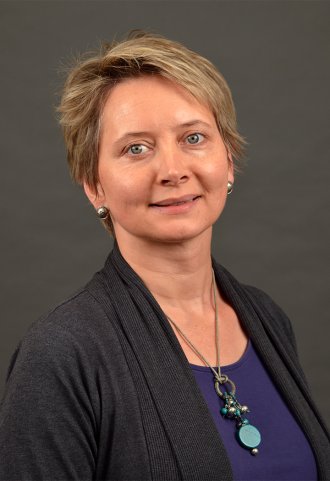
Both Paulius and Burns will travel to Grenoble, France, where they will work in one of the world’s most dynamic scientific research hubs. Grenoble is home to several of Europe’s most significant scientific facilities, including the European Synchrotron Radiation Facility, the Institut Laue-Langevin and other large-scale research institutions.
Paulius’ project will allow her to work with the magnetism and superconductivity group at the Néel Institute at Grenoble Alpes University. Her research focuses on superconductors, materials capable of carrying electricity with zero energy loss when cooled below a critical temperature.
These materials are essential to technologies such as MRI machines, particle accelerators and magnetic levitation trains. They also hold increasing promise for sustainable energy applications, Paulius says.
“My research aims to decrease the cost of making these materials and to increase how much current they can carry,” she explains.
“The new research skills and experimental techniques I learn in Grenoble will allow me to enhance laboratory offerings for students at WMU and better prepare them to engage globally at the forefront of this scientific research.”
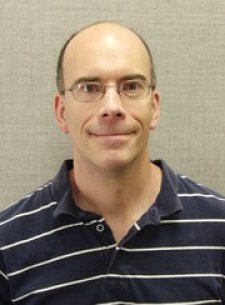
Burns will also conduct research at the Néel Institute. His project centers on experimental studies of exotic superconducting materials.
“Superconductivity is a quantum mechanical state in which electrons pair together and move without scattering, eliminating electrical resistance,” he says. “Working with some of the best scientists in the world allows me to learn new physics and techniques that I will bring back to Western.”
“The work will improve my superconductivity research at Western, which involves graduate, undergraduate and sometimes high school students,” adds Burns. “Global exchanges expose faculty to new ideas and approaches. They can lead to long-term collaborations, federal research grants and even opportunities for students to conduct research abroad.”
Expanding global music knowledge in Azerbaijan
Fedotov has been living and working in Baku, Azerbaijan, completing his U.S. Fulbright Scholar Program while on sabbatical this year. He has been teaching viola and chamber music, giving master classes and mentoring young musicians at the Baku Music Academy.
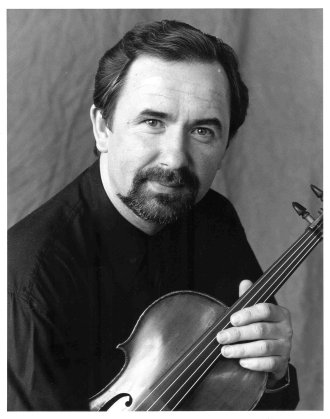
“Working directly with scholars, musicians and composers here is deeply rewarding,” he says. “It fosters personal growth and opens new areas of knowledge.”
A major component of Fedotov’s project is researching Azerbaijani classical music at the National Library of Azerbaijan, the Baku Music Academy Library and several private collections. He is gathering materials for a concert retrospective highlighting 100 years of Azerbaijani music, which he will present on April 12 at 3 p.m. in the WMU Dalton Center Recital Hall.
The performance will feature guest artists from Azerbaijan, WMU faculty and string students. “This repertoire represents an essential part of Azerbaijan’s musical heritage, blending traditional elements with contemporary compositional language in ways that are rarely encountered in Western pedagogy," Fedotov says.
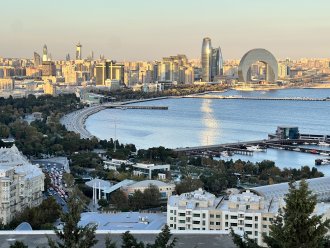
Fedotov is also planning two public performances in Baku in May 2026, one showcasing Azerbaijani and American chamber music, and another honoring past Baku Music Academy viola professors. “Such partnerships strengthen WMU’s global presence; foster cross-cultural dialogue; and create opportunities for future academic, artistic and research initiatives that benefit both faculty and students,” he says.
Fedotov plans to bring this experience directly back to WMU classrooms. “This project offers a unique opportunity to enrich our curriculum, broaden cultural understanding and inspire new artistic engagements through the integration of this rarely heard repertoire,” he explains.
Global exchanges like Fulbright are essential to WMU’s mission, says Fedotov. “They broaden our artistic worldview, strengthen international partnerships, and create opportunities that benefit both faculty and students for years to come.”
Prestigious program and global impact
Fulbright, a flagship international exchange program sponsored by the U.S. Department of State, is funded through an annual appropriation made by the U.S. Congress. The program operates in 160 countries, says Dr. Michelle Metro-Roland, associate director of external scholarships and faculty development at the Haenicke Institute for Global Education.
Its U.S. Scholar Program is among the most prestigious fellowships in academia, advancing public diplomacy and academic excellence through teaching and research abroad. Notable awards received by Fulbright alumni include 62 Nobel Prizes, 98 Pulitzer Prizes and 82 MacArthur Fellowships.
“The Fulbright mission to foster mutual understanding, advance knowledge and improve lives around the globe is now more important than ever,” says Metro-Roland.
“For nearly 80 years, Fulbright award winners have addressed critical global issues in all disciplines, while building relationships, knowledge and leadership in support of the long-term interests of the United States. Fulbright alumni include several distinguished Western faculty.”
Get involved
Are you a faculty member interested in the U.S. Fulbright program? Consultation on choosing an award and assistance with putting together a competitive application are available. The Fulbright Scholar program catalog opens in February, and applications are due Sept. 15. The Fulbright Specialist Program has rolling deadlines throughout the year.
The annual Fulbright Reception to honor WMU’s Fulbright Scholars will be held on Feb. 6 from 5 to 7 p.m. at the Richmond Center for Visual Arts. The celebration will feature live jazz, refreshments and inspiring art. Contact Dr. Michelle Metro-Roland for a formal invitation and RSVP instructions.
Learn more about Fulbright opportunities for faculty and scholars.
About the Haenicke Institute for Global Education
The Diether H. Haenicke Institute for Global Education, established in 1998, fosters an environment that supports the global engagement of the Western community. Its offices assist nearly 2,000 international students and alumni at home and abroad with admissions, immigration, student success and post-graduation job training.
The institute also facilitates short- and long-term study abroad programs for students, faculty and staff. It hosts a variety of global learning activities, such as designing and promoting scholarship and academic opportunities on campus; providing K-12 outreach; hosting lectures, panels and events; and showcasing arts, entertainment and culture from around the world. Learn more about the Haenicke Institute for Global Education.
For more WMU news, arts and events, visit WMU News online.