

New WMU dance faculty member Tyreis Hunte turns Hip Hop into a living archive
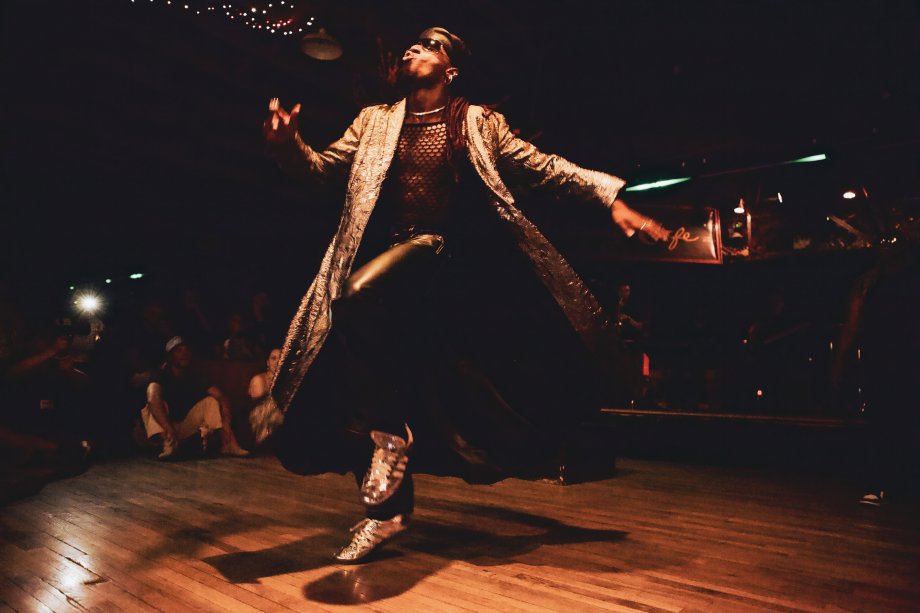
KALAMAZOO, Mich.—Hip Hop is often flattened into a single style. Tyreis Hunte, who just joined Western Michigan University’s School of Theatre and Dance as its newest faculty member, plans to spend their classroom time exploring that Hip Hop and social dances like Jazz, and House come from New York, New Orleans and Chicago respectively and can also co-exist in these contexts simultaneously. Krumping comes from Los Angeles. Jookin comes from Memphis. Turfing comes from Oakland. Each carries its own name, history and identity, and each deserves to be studied accordingly—not folded into a generic label.
That distinction sits at the center of how Hunte approaches teaching hip-hop and contemporary dance styles.
“Students investigate these nuances through their bodies as both movers and cultural historians,” Hunte says. “My hope is that they leave understanding not only how these dances move, but why they exist.”
A global foundation

Hunte’s own movement education began in Guyana, where reggae, calypso, soca, dancehall and djembe rhythms shared space with jazz, soul, funk and hip-hop. That early immersion in a culturally diverse nation shaped how they think about dance long before they set foot in a studio.
“Being in such a culturally diverse environment gifted me the opportunity to participate in and critically analyze many of the African and Caribbean diasporic contexts and stories that have influenced and birthed the cultures that sustain my livelihood and eternal thriving, not merely survival,” Hunte says.
That foundation carried them through a Bachelor of Arts with distinction in dance and Asian studies from St. Olaf College and a Master of Fine Arts in dance with an emphasis in Afrofuturism and Creative Emergent Technologies and Media Arts Practices from the University of Colorado Boulder—training that now informs a classroom built on the idea that movement, people and context cannot be separated.
Hip-hop as scholarship
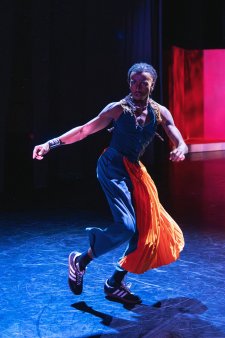
Hunte was part of the inaugural cohort of the Rennie Harris Hip-Hop University certification program, an experience they describe as foundational to how they teach the culture’s history alongside its technique.
“Hip-hop is a revolution with an academy of its own,” Hunte says, pointing to what practitioners recognize as the culture’s fifth element: knowledge. “It is our responsibility as hip-hop practitioners to create, innovate, and discover our individuality in how we embody and express this culture.”
That philosophy shapes what Hunte hopes students carry with them beyond WMU’s studios. “Hip-hop is a living archive of creativity, resilience and community,” they say. “It reminds us that movement is never separate from the people, histories and circumstances that created it.”
Finding a program in transition
Kalamazoo’s position between Chicago and Detroit—two epicenters of Black expression and Afrofuturism—was part of what drew Hunte to WMU.
“I have always been drawn to spaces and communities in transition, and the WMU dance program appears to be in such a moment,” Hunte says. The program’s existing strength in modern, ballet and jazz gives Hunte a foundation on which to build. “Jazz itself began as a community dance of Black bodies,” they note. “I hope to help students understand the importance of community dance forms such as jazz, hip-hop, Detroit jit and Chicago Footwork—not simply as techniques, but as practices of world-building, cultural memory and community survival.”
Advice for the next generation
For students drawn to hip-hop but unsure how to pursue it seriously, Hunte’s advice starts with commitment beyond the classroom.
“Study deeply. Train consistently. Be present in community,” they say. “The classroom is only one place of learning; your greatest growth will also happen in cyphers, conversations, rehearsals and service to others.”
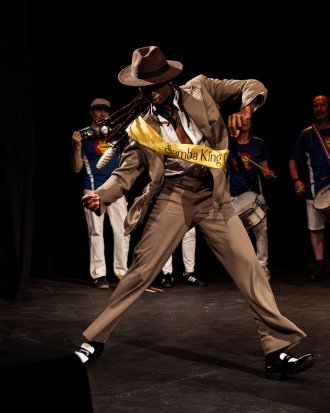
Hunte has worked with Rennie Harris Puremovement, BRKFST Dance Crew, Afoutayi Dmaco Dance Company and Arena Dance Company, among others, and was crowned Samba King Colorado in 2024. That range—from West African and Afro-Caribbean forms to street dance to samba—is exactly what they want students to see modeled.
“This, like many passions, can become both a life and a career if you approach it with curiosity, discipline, humility and joy."
For more WMU news, arts and events, visit WMU News online.