Apply-Explore Call To Action
Stats Grid
90%
90% of Freshwater graduates are actively engaged in employment or further education
93%
of Freshwater students participated in experiential learning
Pursue a B.S. in freshwater science and sustainability
You'll gain an understanding of both the core principles within and the intersections between the three pillars of sustainability: environmental, social and economic systems. You'll become a part of a community of practitioners devoted to the wise stewardship of our most precious resource.
Blend a rigorous academic core with electives that further individual career goals, whether in conservation biology, aquatic ecology, resource management, water quality, public health, environmental writing, policymaking, law or others.
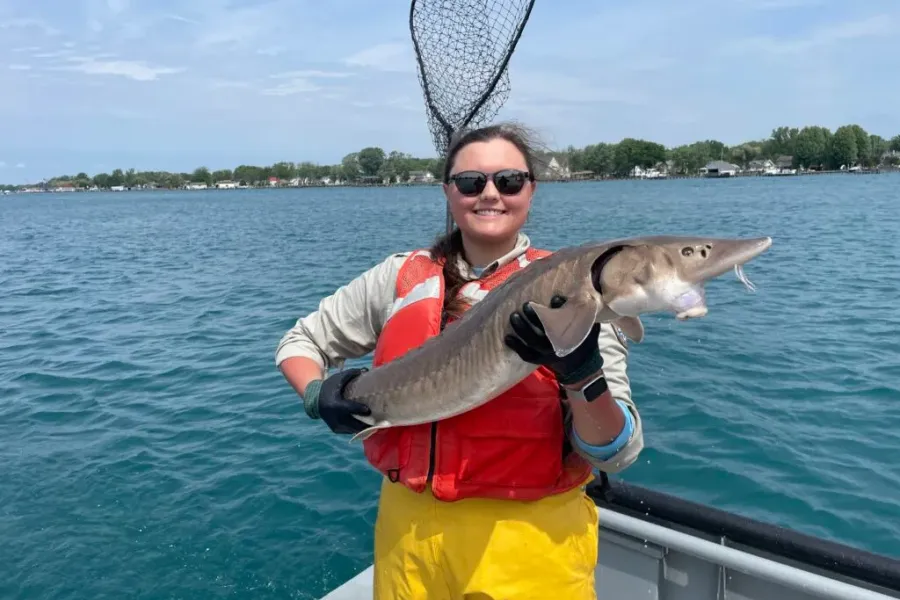
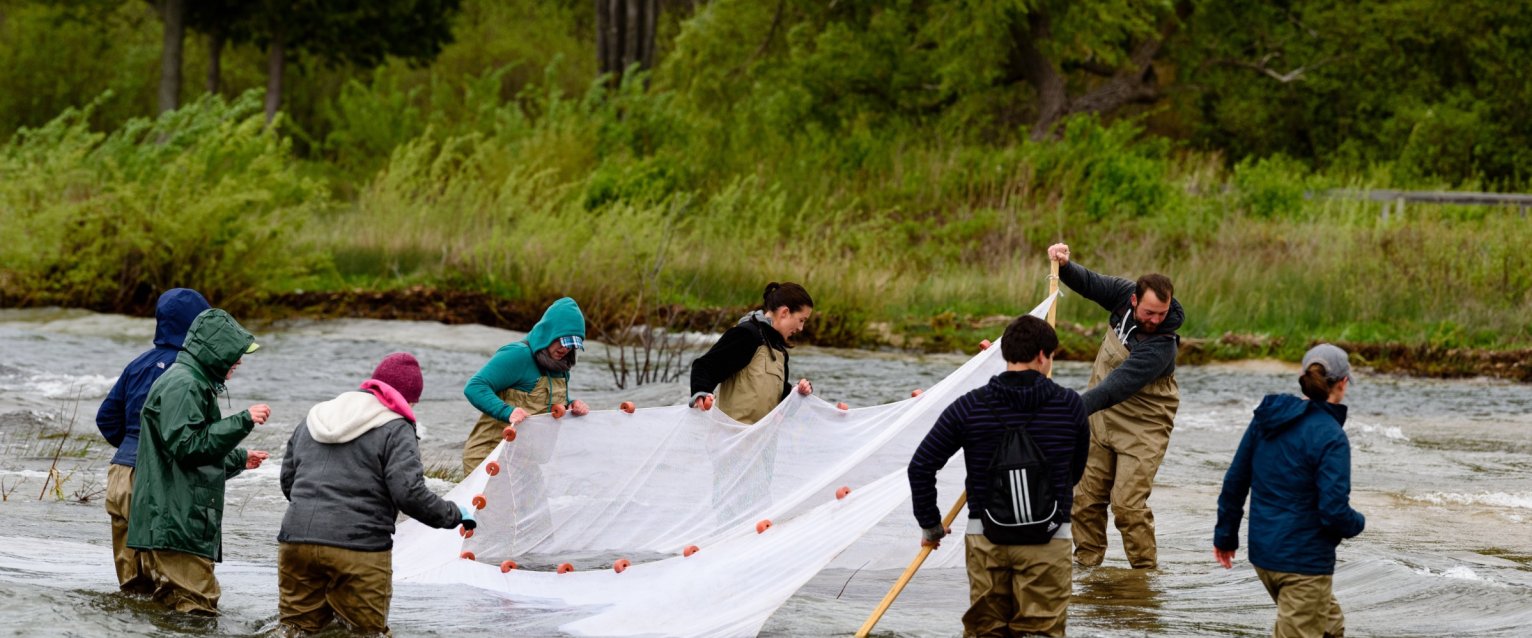
You will take courses designed for field experience and real-world applications. Examples include fish inventories with DNR biologists, stream and wetland biodiversity sampling and meetings with local and state officials to discuss urgent water issues.
Along the way, you will develop competencies that employers demand: critical thinking, complex problem-solving, creativity and imagination and effective communication.
What you'll learn
The freshwater science and sustainability major will prepare students to address complex regional, national, and global challenges related to the sustainability of freshwater resources. The program is interdisciplinary and integrative, providing you with the knowledge, training and skills to understand and research freshwater ecosystems, including biology, chemistry, hydrology and limnology, along with the scientific dimensions of freshwater resource management. You will also learn to situate freshwater science within the larger environmental, socioeconomic and cultural dimensions of sustainable management and problem-solving in freshwater systems. Because of the rigorous, interdisciplinary nature of this program and its high number of required credit hours, the program does not require a minor.
Student Quote
Faculty endeavor to go above and beyond to ensure that students are able to meet their academic goals and learn foundational knowledge that directly applies to their career goals.
Where you'll be after graduation
Your combination of socioeconomic knowledge and scientific training spanning biology, chemistry, hydrology and limnology will set you up to engage in complex problem solving related to our ecosystem and the implementation of sustainable practices. You will have an excellent foundation for graduate studies in fields such as freshwater biology, hydrology or environmental policy or for careers as:
- Aquatic biologists
- Conservation scientists
- Freshwater quality analysts
- Watershed managers
- Sustainability coordinators
- Environmental and resource managers
- Corporate social responsibility coordinators
- Environmental consultants or advocates
What others have achieved
What others have achieved
Making the most of your learning experience
In addition to the hands-on fieldwork built into your major, you can gain valuable experience outside the classroom and by taking part in cutting-edge research projects with a faculty mentor or pursuing an internship.
You can also join student organizations such as Students for a Sustainable Earth or the Biology Club to make friends in your field and dive into a wide range of interests.
Getting involved with the Office for Sustainability is another perfect way to put your coursework into action on campus. Volunteer to help with upcyling projects or join the team for events and bike trips to make WMU a more sustainable place.
What scholarships are available for a freshwater science and sustainability degree?
As a freshwater science and sustainability science student, you have access to a number of scholarships and awards through both WMU and the School of Environment, Geography, and Sustainability that recognize academic excellence, support research and travel and expand learning through study abroad experiences. The College of Arts and Sciences also offers grants to support research and travel experiences to take your learning further.