Apply-Explore Call to Actions
STATS Grid
73%
of graduates working full time are employed in Michigan
94%
of graduates are working or continuing their education
95%
of graduates working full time are satisfied with their job
Pursue a B.S. in geochemistry
Geochemistry is a unique program the equally emphasizes foundational knowledge of both chemistry and geosciences. It focuses on applications of chemistry to modern Earth problems such as identifying and characterizing critical minerals, understanding how contaminants move in groundwater or understanding how the atmosphere interacts with water and rocks through geological time. Laboratory work emphasizes current analytical instruments and techniques for characterizing minerals, rocks and water from scanning electron microscopy, to x-ray fluorescence, to mass spectrometry. Coursework can be tailored to your interests in both chemistry and geoscience. The program is an outstanding foundation for graduate work in environmental geochemistry, aqueous geochemistry, biogeochemistry or economic geology. It can also lead to a wide range of careers in geological or environmental consulting, industry or regulation.
What you'll learn
The geochemistry major emphasizes basic coursework in both chemistry and geology, supported by additional courses in math and physics. Upper division geology coursework provides applications of geochemistry to understanding the properties of rocks and minerals, soil and environmental contaminants. In your upper-level geoscience courses you will have opportunities to join field trips that visit beaches, mountains, rock quarries, fossil sites and more across Michigan, Wisconsin, Ohio and Kentucky. Your chemistry courses will teach you laboratory techniques in organic chemistry, biochemistry or physical chemistry. Through your choices of electives, you can focus your program on high-temperature geochemistry (rock-forming processes) or low-temperature geochemistry (water and soil contamination). Coursework will provide you with opportunities to learn real-word skills in scientific data collection and management that are in high demand among employers. A minor is not required for this program.
Student Quote
During my undergrad the course that prepared me the most for life post-college was Advanced Earth Materials. Aside from learning research methods that geologists use, I learned and practiced my communication and presenting skills on a weekly basis.
Where you'll be after graduation
Your degree in geochemistry will open doors to numerous environmental science careers. Our graduates are working as:
- Geochemists
- Petroleum geologists
- Soil scientists
- Water quality technicians
- Geologists
- Staff scientists
They are working for organizations such as Arcadis and Tetra Tech, as well as various engineering firms, mining companies, environmental consulting companies and government agencies.
Making the most of your learning experience
As a geochemistry major, you belong to two departments – so take advantage of events in both of your homes! The Department of Geological and Environmental Sciences offers an alumni career mentoring network designed to help you launch your geoscience career. Your alumni mentor can answer questions about career options and opportunities, how to choose classes that fit your goals and how to prepare for the job market. The Department of Chemistry offers a seminar series as well as regular networking events with their alumni and industry council. Both departments participate in several career fairs and regularly run career events each semester.
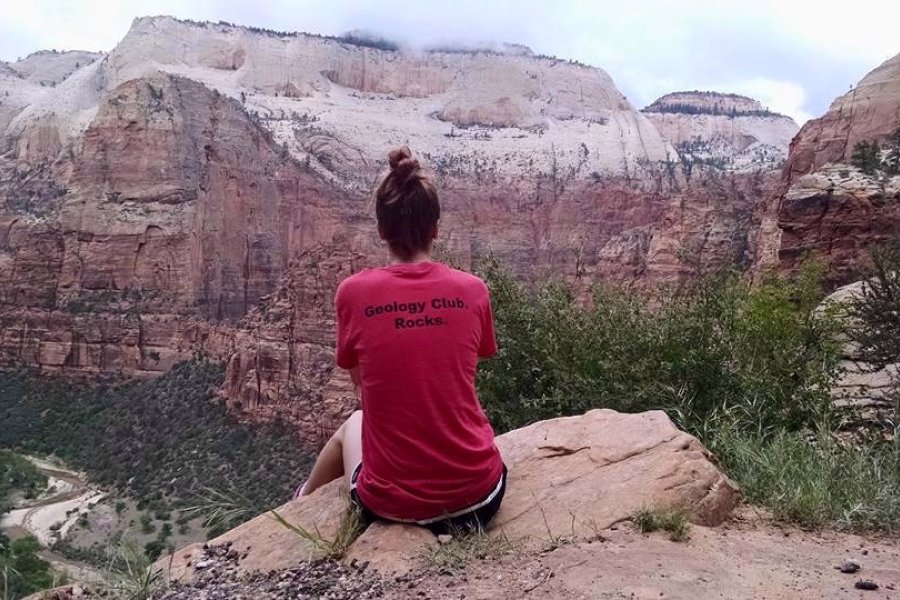
Make the most of your time at WMU by joining student organizations that support your interests and connect you with like-minded peers. The Chemistry Club of WMU offers networking opportunities with local employers as well as outreach events bringing chemistry to local youth. The WMU Geology Club, also a student chapter of the American Institute of Professional Geologists (AIGP), is a four-time winner of the AIPG national student of the year in recognition of supporting student professional development through field trips, lapidary workshops, participation in events like Science Olympiad and Earth Day and career-focused events.
What scholarships are available for a geochemistry degree?
Thanks to the generosity of our alumni and friends, the Department of Geological and Environmental Sciences annually awards a range of scholarships, grants, awards and fellowships for undergraduate and graduate students. Scholarship applications are due annually by March 1 through Scholarship Universe. Students complete one application each year and based on qualifying criteria are matched to all scholarship opportunities in the department. Please apply!