Apply-Explore Call To Action
STATS Grid
94%
of graduates are working or continuing their education
9 of 10
Broncos are employed quickly, working in their field in jobs they like
93%
of graduates participated in Experience-Driven Learning
Pursue a B.S. in geophysics
Geophysics is a unique program that equally emphasizes foundational knowledge of both physics and geosciences. Our program focuses on near-surface geophysics: applications of physics to ground-based and airborne instruments that are commonly used in resource exploration, surveying, site assessment, forensic science and environmental monitoring. Geophysics emphasizes strong mathematical and computational skills, willingness to work outside, and interest in all kinds of instruments and technologies from magnetometers to electrical resistivity systems to ground-penetrating radar. Coursework can be tailored to your interests in both geology and physics. The program is an excellent foundation for graduate work in exploration geophysics, near-surface geophysics or seismology. It can also lead to a range of careers in geotechnical consulting, surveying, exploration or environmental industries.
What you'll learn
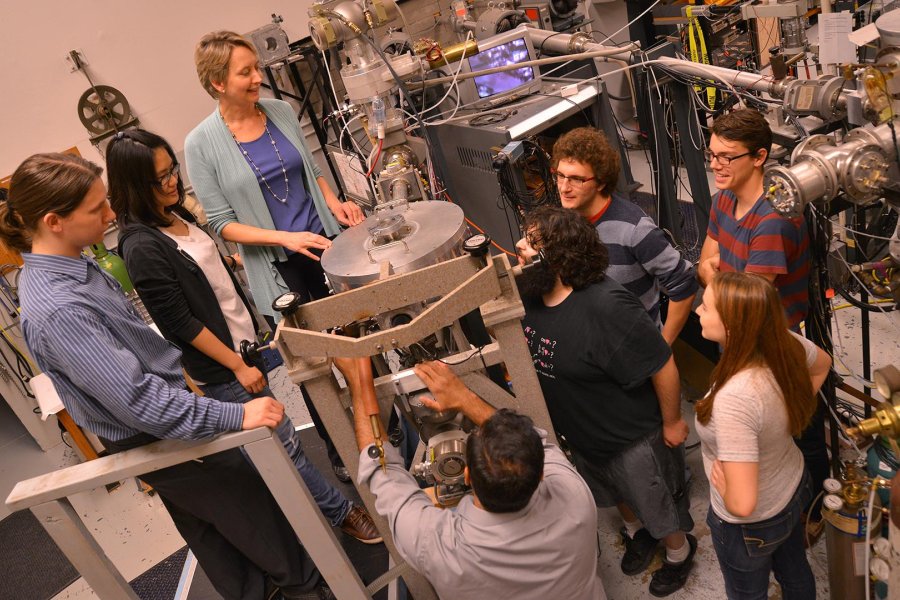
The geophysics major emphasizes basic coursework in both physics and geology, supported by additional courses in math, computer science and chemistry. Advanced physics coursework in optics, thermodynamics and electromagnetism supports your understanding of how physics can be applied to geoscience topics such as mountain-building, earthquakes and environmental contamination. Your geophysics courses include hands-on training in the field using a range of instruments for data collection, computational processing and modeling,and communicating your findings. Your coursework provides you with an opportunity to learn real-word skills in scientific data collection and management that are in high demand among employers. By completing this major you will also automatically earn a minor in mathematics.
Student Quote
I think GEOS 4350 (Sedimentation & Stratigraphy) helped me develop my skills the most as it made me more confident in my oral presentation skills, as well as my scientific writing skills.
Where you'll be after graduation
With a degree in geophysics, you can enter careers in geology, environmental science, engineering and more. Our recent graduates are working as:
- Geophysicists
- Geophysics technicians
- Glacial geologists
- Petroleum geologists
- Environmental consultants
Among their employers are environmental companies, environmental engineering companies, geophysical instrumentation consultants and government agencies.
What others have achieved
What others have achieved
Donovan Vitale, Department of Geological & Environmental Sciences Presidential Scholar in 2023, earned his BS in Geophysics and continued on to earn his MS Geosciences in 2025 with nationally recognized work on PFAS and emerging environmental contaminants. He received a prestigious National Science Foundation grant that supported his MS work and now supports his doctoral work at Cornell University.
Making the most of your learning experience
As a Geophysics major, you are considered a student in two departments – so take advantage of events in both of your homes! The Department of Geological & Environmental Sciences offers an alumni career mentoring network designed to help you launch your geoscience career. Your alumni mentor can answer questions about career options and opportunities, how to choose classes that fit your goals, and how to prepare for the job market. The Physics Department offers a seminar series. Both departments participate in several career fairs and regularly run career events each semester.
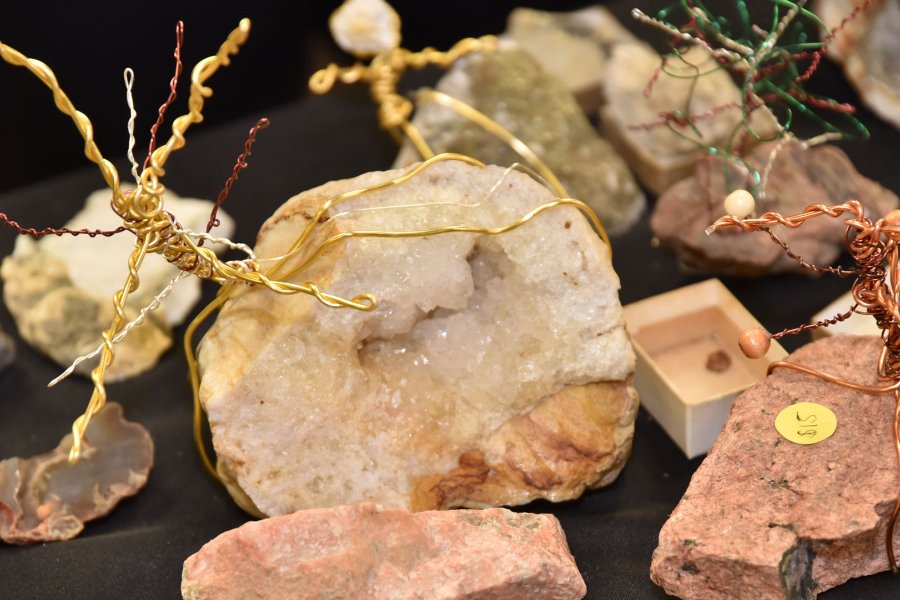
Make the most of your time at WMU by joining student organizations that support your interests and connect you with like-minded peers. The Physics Club of WMU offers opportunities to learn about physics research, explore career opportunities, tour nearby laboratories, and connect with visiting researchers. The WMU Geology Club, also a student chapter of the American Institute of Professional Geologists (AIGP), is a four-time winner of the AIPG national student of the year in recognition of supporting student professional development through field trips, lapidary workshops, participation in events like Science Olympiad and Earth Day, and career-focused events.
What scholarships are available for a geophysics degree?
Thanks to the generosity of our alumni and friends, the Department of Geological & Environmental Sciences annually awards a range of scholarships, grants, awards, and fellowships for undergraduate and graduate students. Scholarship applications are due annually by March 1 through Scholarship Universe. Students complete one application each year and based on qualifying criteria are matched to all scholarship opportunities in the department. Please apply!