Job outlook
98%
of College of Health and Human Services graduates working full time have a job related to their degree
98%
of College of Health and Human Services undergraduate students had instructors who made them excited about learning
95%
of College of Health and Human Services graduates participated in experience-driven learning
Pursue a B.S. in Healthcare Services and Sciences Clinical Practice in Health
The Healthcare Services and Sciences Clinical Practice in Health degree optimizes clinical training for students who are already licensed, certified or registered in an allied health profession. To be eligible for this program, you must:
- Have an allied health associate degree from an accredited program
- Hold a current professional license, certification or registration
- Have successfully passed a state and/or nationally recognized examination
You will be eligible for transfer credits for prior general education, sciences and electives. In addition, a prior learning assessment will determine eligibility to receive up to 30 hours of upper division credit in HSV 3100 and HSV 3200.
The Healthcare Services and Sciences bachelor's degree can be completed fully online.
Full curriculum details can be found in the WMU Course Catalog.
What you'll learn
Coursework in WMU’s Clinical Practice in Health program focuses on how healthcare systems work, how to improve quality of care and how to use data in real settings. Students may complete a capstone through an internship, project or by earning credit for their past clinical experience, helping connect what they learn to their current work.
In the program, students build skills in teamwork, clear communication, problem-solving and supporting patients from different backgrounds. These skills prepare graduates to take on greater responsibility and improve how care is delivered in their workplaces.
As a working healthcare professional, I appreciate how WMU's Healthcare Services and Sciences Clinical Practice in Health bachelor's program builds on my previous training while expanding my understanding of patient care and evidence-based practice.
Where you'll be after graduation
- Graduates are prepared for roles such as healthcare managers, clinical research specialists and patient care coordinators, with employers including Corewell Health, Henry Ford Health System and the Michigan Department of Health and Human Services.
- WMU’s Career and Student Employment Services supports students with resume building, job search guidance and connections to healthcare employers and internships, helping them move into advanced or leadership roles.
Making the most of your learning experience
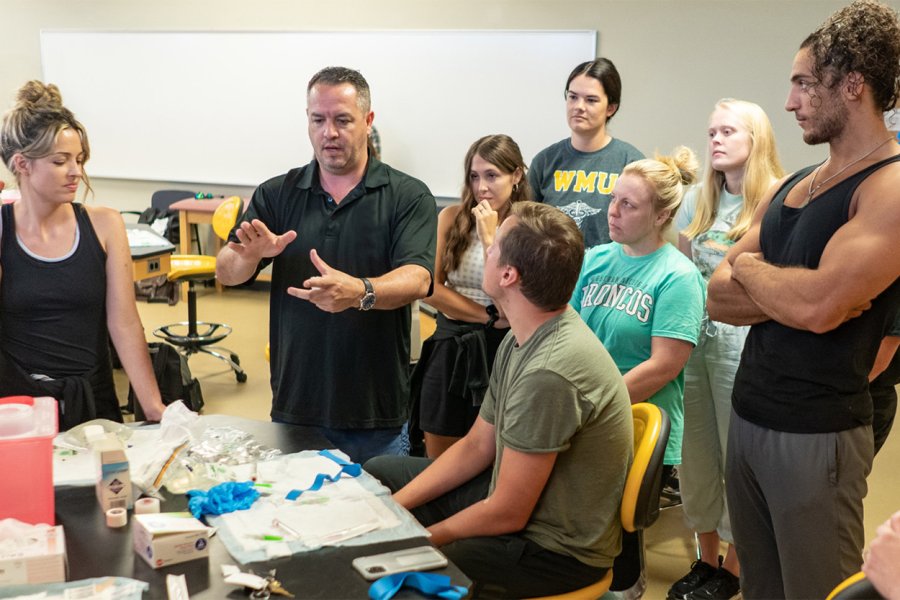
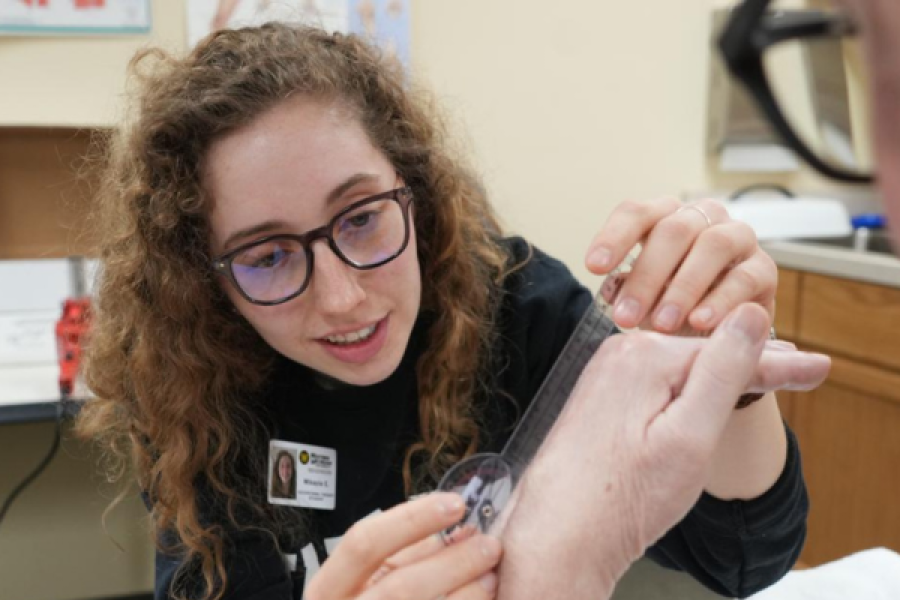
Students in this program build on their current roles through applied learning that connects coursework directly to their everyday clinical practice. Many earn credit for prior experience or complete a capstone project or internship that focuses on real challenges in their workplace, allowing them to immediately use new skills on the job.
This approach helps working professionals strengthen leadership, decision-making and care delivery skills while staying active in their field. By aligning learning with real-world responsibilities, the program supports career advancement without stepping away from the workforce.

What scholarships are available for the Healthcare Services and Sciences Clinical Practice in Health degree?
Western Michigan University offers a range of institutional scholarships and grants to help make a high-quality education affordable, including merit-based awards, need-based grants and departmental scholarships. Many students receive financial support—99% of full-time undergraduates with financial need receive aid—and scholarships and grants do not need to be repaid. The University’s financial aid team works closely with students and families to navigate options, from admissions scholarships like the Medallion program to funding identified through Scholarship Universe, WMU’s scholarship-matching tool. With personalized support, financial resources and a commitment to access, WMU helps students identify funding opportunities and manage the cost of their education.
Additional admission requirements
Admission to the program occurs when students who have previously been admitted to WMU, select Healthcare Services and Sciences Clinical Practice in Health as their major as long as the student has a 2.0 GPA and is not on academic probation. However, all students must raise their GPAs to 2.5 before taking the required capstone course. In addition, these students should meet with an advisor as soon as possible to determine the likelihood of credit toward the major based on prior learning assessment.
Students must obtain at least a “C” in all HSS Clinical Practice in Health required core courses with the Health Services (HSV) designation. Students may repeat courses to obtain the required grade of “C”. Only two repeated HSV courses will count toward degree requirements. These two repeated courses may be the same course repeated twice or two separate courses repeated once each.
If after the prior learning assessment the student is required to complete the capstone experience, they must have a 2.5 cumulative GPA when applying for the capstone course. Those who do not have a 2.5 cumulative GPA in the semester before their capstone course may take one additional semester to raise their cumulative GPA to a 2.5 or better. If after this additional semester they do not meet the 2.5 cumulative GPA requirement they will be dismissed from the program.