

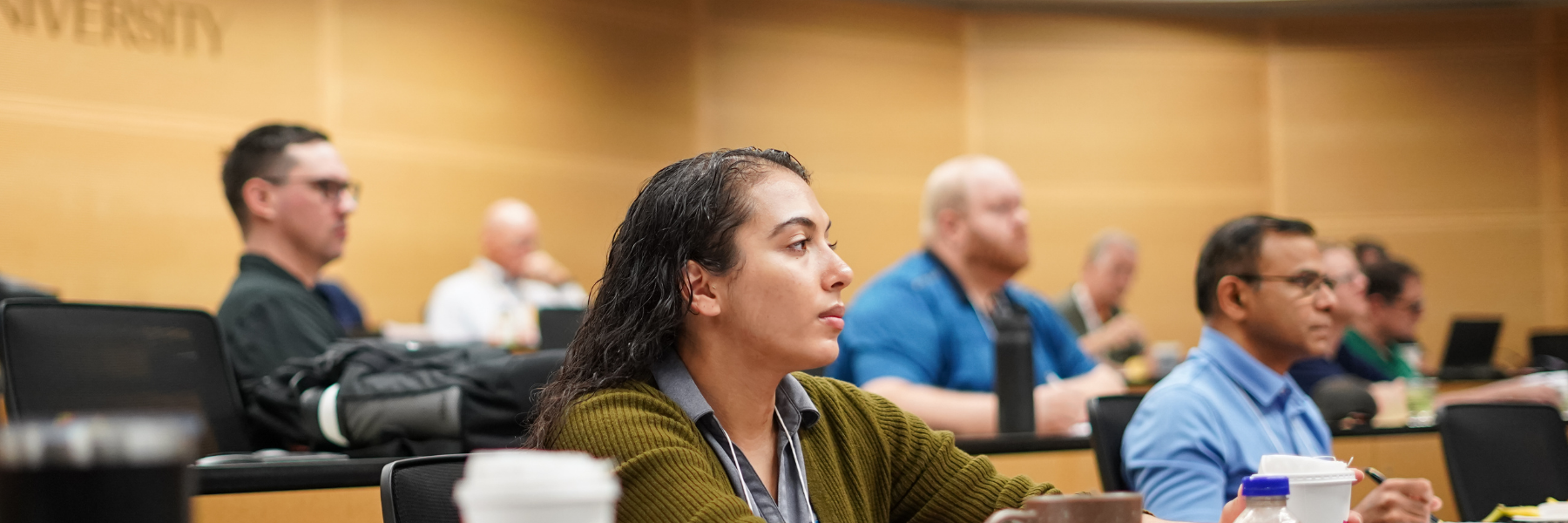
The College of Health and Human Services offers continuing education programs on evidence-based practices and emerging health issues relevant to health care and human service professionals. We offer in-person and virtual opportunities for continuing education credits.
Often these programs are led by our own faculty, leading sessions in topics in which they are expert practitioners. But we also partner with outside organizations to provide training that is relevant to the disciplines we serve - including our instructors and alumni.
We strive to provide quality CE programming that helps practitioners grow as professionals and meet CE requirements related to professional licensing.
Current CE Offerings
More links
Child Welfare In-Service Training program
Child Welfare In-Service Training program (CWIST)
Empowering the Dream Builders: Strengthening Youth Through Social and Emotional Learning, Music, and Performing Arts
Empowering the Dream Builders: Strengthening Youth Through Social and Emotional Learning, Music, and Performing Arts
Thread of Hope Records proposes a highly interactive, evidence-informed training designed specifically for Michigan’s child welfare workforce. This professional development experience will strengthen the knowledge, skills, and practical capacity of child welfare professionals serving vulnerable children, youth, and families. Building upon the success of Thread of Hope’s prior teacher workshops and internal staff development programs, this training will adapt proven social and emotional learning (SEL) frameworks to address the unique challenges faced by child welfare professionals. This innovative training integrates social and emotional learning, trauma-informed child welfare practices, equity-centered intervention strategies antiracism and anti-oppressive frameworks, resilience-building approaches, and music and performing arts as tools for youth engagement and emotional healing practices. This training’s distinctive use of music and performing arts creates a dynamic, culturally responsive training model that enhances child welfare professionals’ ability to engage youth, support emotional wellness, and improve service outcomes.
Training objectives: As a result of this training, participants will be prepared to:
- Increase practical child welfare intervention skills.
- Strengthen trauma-responsive practice capacity.
- Gain innovative engagement strategies through creative arts integration.
Instructors: Bonita Mitchell, Barbara Marcelo-King
Date: Dec. 11, 2026
Time: 9 a.m. to 12:15 p.m.
Number of CE hours: Three
Format: Live in-person
Address: WMU College of Health & Human Services, 1101 Cass Street, Kalamazoo, MI 49008
Fee: $75
Free to all MDHHS and private agency child welfare workers;
WMU faculty, staff, and instructors can apply a 25% fee adjustment before checkout.
WMU students can apply a 50% fee adjustment before checkout.
Helping Kids Heal from Sexual Abuse
Helping Kids Heal from Sexual Abuse
The high rate of children who have experienced sexual abuse guarantees therapists will be providing treatment to victims, whether they plan to or not. It is imperative that basics of sexual abuse treatment be known by all who will work with children and families. This training will provide participants with foundational information on sexual abuse, guidance for parents/caregivers, and key treatment components necessary for healing. A list of resources will be provided as well as a review of requirements for reporting abuse.
Training objectives: As a result of this training, participants will be prepared to:
- Understand the pervasiveness of child sexual abuse, how it is often disclosed, and best practices to responses to reports of abuse.
- Recognize information and guidance helpful to caregivers of children who have been sexually abused.
- Obtain practical methods and ideas to provide therapeutic treatment to children who have experienced sexual abuse.
Instructors: Cindy Bridgman, LMSW-C
Date: November 20, 2026
Time: 9 a.m. to 12:15 p.m.
Number of CE hours: Three
Format: Live in-person
Address: WMU College of Health & Human Services, 1101 Cass Street, Kalamazoo, MI 49008
Fee: $75
Free to all MDHHS and private agency child welfare workers;
WMU faculty, staff, and instructors can apply a 25% fee adjustment before checkout.
WMU students can apply a 50% fee adjustment before checkout.