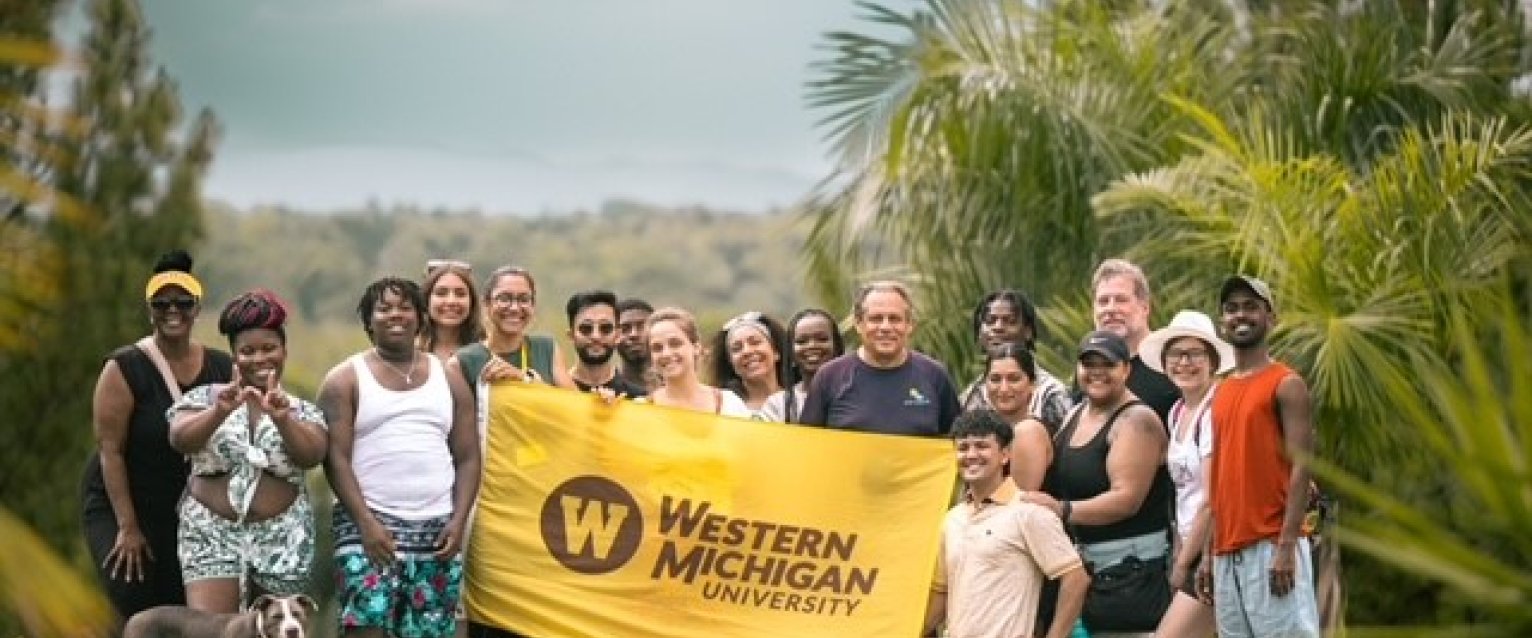
Western Michigan University supports faculty engagement in global teaching, research, and professional development through a range of competitive funding programs and international exchange opportunities.

Faculty Funding and Global Engagement Opportunities

Western Michigan University supports faculty engagement in global teaching, research, and professional development through a range of competitive funding programs and international exchange opportunities. Administered by the Haenicke Institute for Global Education, these initiatives promote international collaboration, curriculum internationalization, and cross-cultural learning experiences that advance WMU’s academic mission.

  • IEFDF (International Education Faculty Development Fund)
  • Global Classrooms Collaborative (GCC)
  • Faculty Exchange: University of Passau
  • Global Classrooms Curriculum Development Grant (GCCDG)
  • Fulbright Pre-Application Seed Grant
  • International Collaboration Seed Grant (ICSG)
“I truly enjoyed participating in the Global Classrooms Collaborative...Engaging with my global partner from Mexico was an enriching and eye-opening experience for both myself and my students. Through this collaboration, we were able to share perspectives, exchange cultural insights and work together on meaningful projects that highlight the value of global connection in education.”
— Dr. Angela Groves, associate professor in the Bronson School of Nursing , Building global connections through the classroom: WMU’s Global Classrooms Collaborative

Faculty Funding At a Glance

Universityfunding is provided through Article 40.4 of the WMU–AAUP contract and administered by the Haenicke Institute for Global Education.

The fund supports:

  • International collaboration in research and creative activities;
  • Presentation or attendance at international conferences, seminars or workshops; and
  • Scholarly international travel that directly contributes to curriculum internationalization.

Eligibility

Applicants must hold board-appointed faculty rank, be members of the bargaining unit at the time proposals are due, have not received IEFDF funding in the previous academic year, and have submitted a satisfactory final report for any prior IEFDF award.

Applicants must disclose all sources of co-funding. IEFDF funds may not be used as matching funds for external grant applications.

Funding and Deadlines

  • Maximum award: $1,200
  • Award may not exceed 50% of the total project budget

Deadlines:

  • Fall: November 1, 5:00 p.m.
  • Spring: April 1, 5:00 p.m.

Application Requirements

A complete application includes:

  • Applicant and departmental information
  • Travel dates and destination
  • Proposal summary (approximately 150 words)
  • Budget justification
  • Narrative proposal (maximum one page)
  • Supporting documentation (e.g., conference acceptance letters)

Link: IEFDF Proposal Form

Review, Reporting, and Reimbursement

Applications are reviewed competitively by a committee of three board-appointed faculty. Applicants are notified approximately two weeks after the deadline. Awards are reimbursed through the applicant’s home department following WMU travel authorization procedures.

Recipients must submit a final report and travel expense voucher within 30 days of travel and no later than September 30 of the following academic year.

Program Overview

Western Michigan University and the University of Passau invite applications for a short-term summer faculty exchange. This partnership, now in its third decade, promotes cross-cultural academic collaboration across disciplines.

Selected faculty spend one month in residence in Passau, Germany, typically between May 1 and June 30. Visiting professors deliver one or two lectures and engage in research and scholarly exchange with Passau faculty.

The University of Passau provides office space, access to facilities, and housing. German language proficiency is not required. There is no stipend.

Eligibility and Deadline

  • Open to WMU faculty from any discipline
  • Application deadline: October 31

How to Apply

Applicants should submit:

  • A short curriculum vitae
  • A letter of interest describing proposed lecture topics, a preliminary plan for the visit, and potential contacts at the University of Passau

Materials should be sent to Dr. Michelle Metro-Roland.

Link: Learn more about the University of Passau

Program Description

The Global Classrooms Collaborative supports faculty in integrating Collaborative Online International Learning (COIL) into undergraduate courses. COIL enables students to collaborate with peers around the world through structured, curriculum-embedded projects.

Participants engage in a facilitated learning community during the spring semester focused on course design, intercultural pedagogy, assessment, and technology.

What Faculty Receive

  • Support with international partner matching
  • Guided course and syllabus redesign
  • Strategies for cross-cultural facilitation and assessment
  • Alignment with WMU Global Learning Objectives

Funding

  • Grant amount: $2,500
  • Half distributed during the spring collaborative
  • Half distributed after course implementation and final report submission

Funding is provided through Article 40.4 of the WMU–AAUP contract.

Eligibility

Open to board-appointed faculty who are members of the bargaining unit. Designed for undergraduate courses, with preference for WES courses and those offered regularly.

Timeline

  • Grant opens: September 1
  • Application due: November 25
  • Participants notified: December 13
  • Collaborative meetings: Late January–April
  • Course implementation: Fall or Spring
  • Final report due: January (Fall courses) or May (Spring courses)

How to Apply

A complete application includes:

  • Applicant information and CV
  • Course syllabus
  • Short-answer responses
  • Department Chair Support Form

Links:

Previous Particpants

  • Dr. Kwangmin Lee, Assistant Professor, Special Education & Literacy Studies. Course: ESL Educational Linguistic Principles (TEL 5200).
  • Dr. Shannon McMorrow, Associate Professor, School of Interdisciplinary Health Programs. Course: Global Environmental Health Issues (PH 2320).
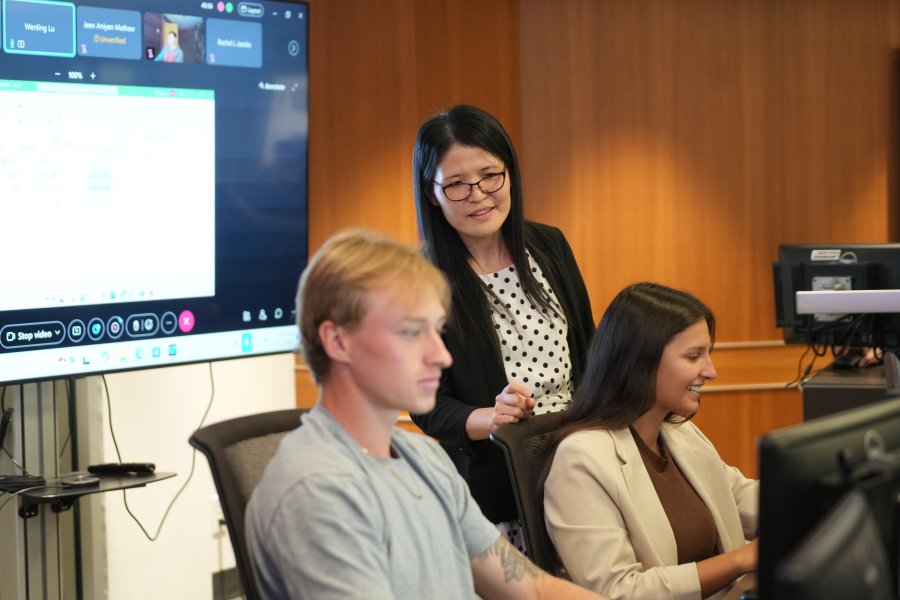
  • Dr. Wenling Lu, Associate Professor, Finance & Commercial Law. Course: Global Financial Markets (FIN 4120).
  • Dr. Jessica Cataldo, School of Interdisciplinary Health Programs, College of Health and Human Services. Course: The Health System and Its Environment
  • Dr. Yufeng Hu, Civil and Construction Engineering, College of Engineering and Applied Sciences. Course: Senior Design Project
  • Marie Moreno, Business Information Systems, Haworth College of Business. Course: Business Communication for Worldwide Sustainability
  • Dr. Anna Popkova, School of Communications, College of Arts and Sciences. Course: Intro to Public Relations.
  • Dr. Xiaojun Wang, World Languages and Literatures, College of Arts and Sciences. Course: Contemporary China.
  • Jeremy Blair, Dance, College of Fine Arts. Course: Race, Gender, and Dance
  • Dr. Angela Groves, Bronson School of Nursing, College of Health and Human Services. Course: Health Care Ethics
  • Dr. Mariam Konaté, Institute for Intercultural and Anthropological Studies, College of Arts and Sciences. Course: Forms of Black Consciousness
  • Dr. Brianne Pitts, Teaching, Learning, and Educational Studies, College of Education and Human Development. Course: Teaching Elementary Social Studies
  • Dr. Maria Roche-Dean, Bronson School of Nursing, College of Health and Human Services. Course: Concepts of Health and Wellness Throughout the Lifespan
  • Dr. Sophie Tang, Irving S. Gilmore School of Music, College of Fine Arts. Course: Applied Violin Lessons-Violin Repertoire by Asian Composers

The Global Classrooms Curriculum Development Grant (GCCDG) supports faculty in redesigning existing courses to integrating Collaborative Online International Learning (COIL) into undergraduate or graduate courses. COIL enables students to collaborate with peers around the world through structured, curriculum-embedded projects.

The GCCDG offers $1,500 to support course redesign.

Faculty should implement one or more collaborative assignments in their on-campus courses that WMU students would carry out with students abroad. This activity should be designed to connect students in active, meaningful and intentional tasks that require students to work cooperatively and collaboratively across time, distance and cultures. These Global Classrooms should give WMU students the chance to engage with students geographically distant with different linguistic and cultural backgrounds.

After implementation a final report is required. 

Eligibility

Faculty are eligible for awards who have not been previously. Both undergraduate and graduate level courses are eligible. 

Application and Directions

The GCCDG uses a fillable Word application form which can be downloaded below. 

To apply, fill out the application, including the narrative proposal and the supplemental materials, and send a copy of the completed application to @email

The application form includes:

  • Applicant information
  • Course information
  • Partner Information
  • Assignment description
  • Assessment practices
  • Required supplemental materials 

>>Download Your Application 

Previous Global Classroom Curriculum Development Grant Recipients

  • Dr. Mioara Diaconu School of Social Work, College of Health and Human Services. Courses: Global Emergency Management and Crisis Intervention. Partnering Institution: Tel-Hai College, Israel. Summer 2022.
  • Dr. Ramona Lewis, Educational Leadership, Technology, and Research, College of Education and Human Development. Courses: Foundations of Student Affairs in Higher Education. Partnering Institution: University of Toronto, Canada. Spring 2022.
  • Dr. Jennifer Harrison, School of Social Work, College of Health and Human Services. Courses: Social Work with Communities and Social Changes and Community Analysis. Partnering Institution: Universidad Autónoma de Nuevo León, México. Summer II, 2021.
  • Dr. Martha Councell-Vargas, School of Music, College of Fine Arts. Course: Applied Flute Lessons for Undergraduate Performance. Partnering Institution: Universidad de Cuenca, Ecuador. Spring 2021.
  • Dr. Dawn Anderson, Blindness and Low Vision Studies, College of Health and Human Services. Course: Expanded Core Curriculum and Assessment for Children Who Are Blind or Visually Impaired. Partner Institution: College of Orientation and Mobility, South African Guide-Dogs Association. Spring 2020.
  • Dr. Amos Aduroja, School of Interdisciplinary Health Programs, College of Health and Human Services. Course: Advocating for Health Policy. Partnering Institution: Addis Ababa University, Ethiopia. Fall 2019.
  • Dr. Pnina Ari-Gur, Mechanical and Aerospace Engineering, College of Engineering and Applied Sciences. Course: Mechanical and Space Engineering. Multiple partner institutions. Fall 2019.

Faculty can apply for travel funding to develop international collaborations in anticipation of applying for a Fulbright US Scholar Award. 

Funding up to $1,500 is available to full-time board-appointed faculty.

Submission of a Fulbright US Scholar Core award application within a year of the grant is required. 

Applications are accepted throughout the year and will be reviewed on a rolling basis. 

Fulbright US Scholar Awards are due September 15 each year. 

For more information about applying email the WMU Fulbright Scholar Liaison, Dr. Michelle Metro-Roland, michelle.metro-roland@wmich.edu

Faculty (AAUP & PIO) are invited to apply for travel funding to establish new international collaborations with colleagues at existing WMU partners. 

This can be used for the development of new relationships in the areas of research or teaching, and can include guest lecturing or professional development opportunities at the partner institution. The fund is provided for and administered by the Haenicke Institute for Global Education.

Partners

For more information about partnerships visit the current WMU University partners page.

Eligibility

  • Faculty including AAUP and PIO
  • Intended as seed funding for building of new relationships
  • Faculty with existing research connections should apply for IEFDF. 

Funding

  • Maximum award: $1,200

Deadlines

  • Rolling Deadline

Application Requirements

A complete application includes:

  • Applicant and departmental information
  • Travel dates and destination
  • Proposal summary (approximately 150 words)
  • Budget
  • Narrative proposal (maximum one page)
  • Supporting documentation
Link: International Collaboration Seed Grant (ICSG) 

Review, Reporting and Reimbursement

Applications are reviewed competitively by a committee of faculty. Awards are reimbursed through the applicant’s home department following WMU travel authorization procedures.

Recipients must submit a final report and travel expense voucher within 30 days of travel and no later than September 30 of the following academic year. 

A follow up report which, will be supplied to the awardees, will be due a year after the travel to provide updates on the collaboration. 

Questions About the Faculty Funding at the Haenicke Institute for Global Education


Contact Dr. Michelle Metro-Roland, Associate Director of External Scholarship and Faculty Development, at @email, or 269 387-3908

About the Haenicke Institute for Global Education

Your journey at Western Michigan University is a global one. Through transformative events, immersive classes and Experience-Driven Learning, the Haenicke Institute for Global Education connects Kalamazoo to the world—and the world to Kalamazoo. We assist more than 2,000 international students and alumni at home and abroad with admissions, immigration support, student success and post-graduation job training. We host 80+ study abroad programs and bring students, faculty and staff to 30 countries, on average, each year.  From fostering academic opportunities to showcasing cultural events and providing K-12 outreach, the Haenicke Institute promotes learning that transcends borders and takes you wherever you want to go.