

Top-shelf training: Next Generation Category Management
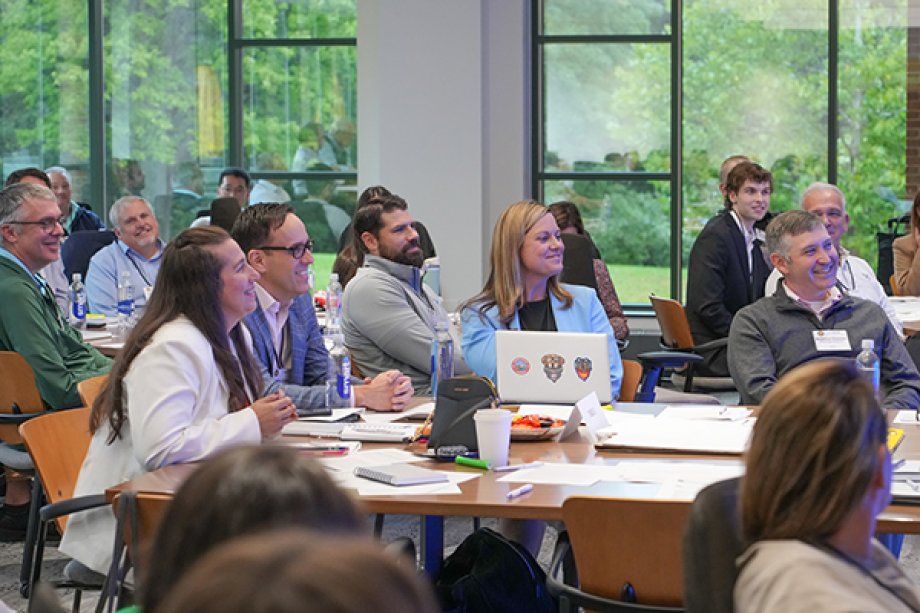
KALAMAZOO, Mich.—What’s next? It’s a constant question in any industry. For category management, the pressures on the consumer packaged goods industry—paired with the fast pace of technology—make the question ultra-relevant as the industry redefines itself, incorporating new frameworks alongside AI.
Always at the forefront of the food and CPG industry, Western Michigan University recently sponsored a first-of-its-kind training for industry professionals to closely examine what category management involves in the age of AI and how to evolve best practices.
Engaging presenters from Intent Ai, developer of the AiRICA Category Management platform, Western’s food marketing program invited professionals to get an introduction to Intent Ai’s Next Generation Category Management process and how agentic AI is guiding it.
The Next Generation Category Management training was facilitated by presenters from Intent Ai, including Dr. Brian Harris, founder and CEO of the company, who pioneered the category management discipline in the mid-1980s while a professor in the University of Southern California’s food industry management program.
“This training program is a major milestone in the history of category management,” says Harris. “For the first time, we unveiled our Next Generation Category Management process, which is enabled by our AiRICA agentic AI platform. It represents a significant upgrade of the process that has been used by the industry worldwide since I introduced the original category management approach more than 30 years ago.”
The original process was built to use the few sources of information that were available to retailers and CPG companies at that time. But now with the assistance of the proprietary AiRICA AI tool, professionals in the industry can incorporate the vast number of data sources that are available today to guide category management decisions.
“The Next Generation Category Management process integrates a wide range of consumer and shopper insights into a strategy-driven category growth plan, which identifies where the biggest opportunities for growth exist in the category,” says Harris.
Early in the training, Dave Nolen, vice president of category leadership and shopper insights for Kraft Heinz, identified a key takeaway. “Working with an agent allows us to focus more directly on the facts,” he says. “Creativity and human judgment are still essential, but reaching synthesized insights more quickly is significant.” The question of ‘what’s next?’ is a painless prompt for the AI agent, and the speed with which AI can answer questions helps companies review and operationalize plans more rapidly.
Nolen and his team are piloting Intent Ai’s platform at Kraft Heinz, providing feedback to its developers and gaining actionable insights.
To Nolen, the discipline of category management is still critical but is also merging with other areas as consumer insights become more sophisticated. “Category management needs stronger executive sponsorship,” he says. “When the discipline gained momentum in the 1980s and 1990s, it benefited from significant organizational support. Today, many CPG companies prioritize revenue growth management capabilities instead.” Nolen suggests that a rebranding may be needed. “I prefer a term like ‘retail human solutions.’ Over time, I expect category management to converge with other demand-creation functions, including e-commerce, supply chain, R&D and related areas.”
Jessica Thomas, director of category management at McCormick & Company, has similar sentiments, noting, “Throughout the years, category management’s focus has shifted from category strategy development to optimizing promotion, assortment, pricing and shelf execution. CPG is growth-challenged, and the time has come to refocus category management energy toward strategy and developing category growth plans.”
And that growth may reside in previously untapped data.
“Today’s data sources extend beyond what is humanly possible to analyze and systematize,” says Thomas. “AI can enable category management teams to synthesize large data sets in minutes versus days, weeks or even months.” She adds that there are “growth potential segments” for every category and every customer, which is exciting given tools like the ones presented in the Next Generation Category Management training.
“The information shared in the training was perfectly timed as we recently began our journey to put AI into daily practice at McCormick,” says Thomas. “The training sparked enthusiasm to bring the revised process to my team and start putting it into practice as it reinforces the importance of strategy and incorporates AI technology as an enhancement versus resource replacement.”
Thomas remarks that many category reviews have become systematic and hyper-focused on assortment and shelf recommendations rather than looking at holistic plans for growth. “This training incorporates the strategic plan and category growth pillars upfront, which then leads to a strong execution plan that will drive growth. This approach is very complementary to the storytelling approach that McCormick has been using to deliver clear, insight-driven category recommendations.”
Thomas has already challenged her team to identify areas of category growth potential even for categories that have healthy key performance indicators.
Putting theory into practice was the centerpiece of the training and what WMU’s food marketing program does so well.
“We have the advantage of unwavering support from leading food manufacturers, brokers and retailers,” says Dr. Russell Zwanka, director of the WMU food marketing program. “We earn that confidence by teaching the industry through concepts combined with experiential learning.”
Experience is just what the Next Generation Category Management training provided.
“As data and insights have proliferated the industry through AI-enabled platforms, we remain cutting edge through our partnership with Intent Ai,” says Zwanka. “This training session was incredibly well received in the industry and allowed us to have our food marketing students sitting shoulder to shoulder with industry professionals, while we introduced the next wave of the science of category management.”
And food marketing students get a top-shelf education at WMU Haworth with hands-on projects, internships, conference travel and trainings like this that help them get the background to add immediate value to organizations.
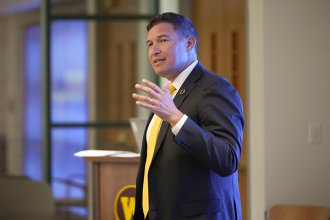
WMU President Russ Kavalhuna spoke about this rare synergy when he joined the professionals during the training session, “This is exactly what Western should be doing,” he said. “Universities have an important role in bringing together academic and industry experience to address what is happening in the world right now. This training is a great example—taking an established industry framework and asking how it must evolve in an AI-powered environment. At Western, we want students to work on real problems, alongside people doing the work, and develop the judgment, adaptability and other uniquely human skills they will need throughout their careers as they work with emerging technology in evolving fields.”
Intent Ai has gifted its AiRICA platform to WMU’s food marketing program so that students can have the same access to the platform as professionals in the field.
Learn more about food marketing at WMU.
For more WMU news, arts and events, visit WMU News online.