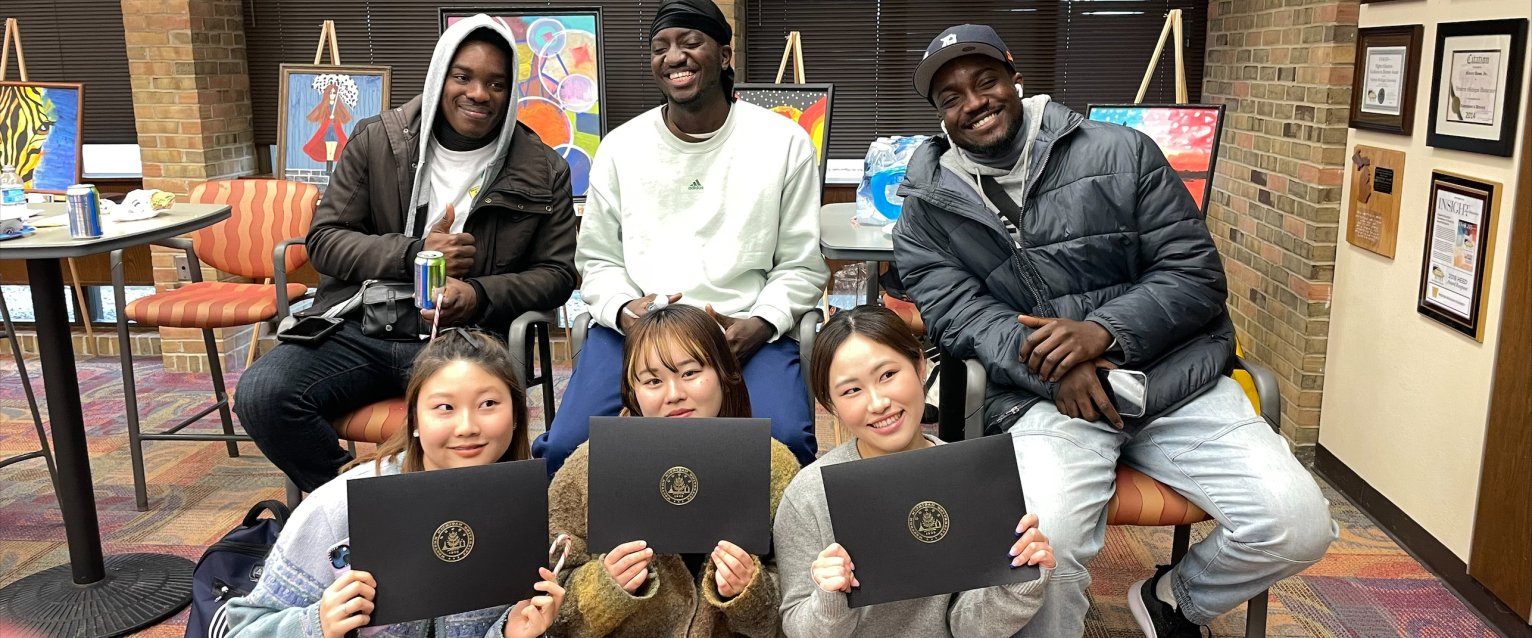
Six English language learning students sit and smile for a group photo while holding up their certificates.

Academics

The Center for English Language and Culture for International Students (CELCIS) curriculum prepares non-native English speakers to use English effectively in their university study or careers.

The Center for English Language and Culture for International Students (CELCIS) classes emphasize a holistic approach to language learning. Students participate in activities that simulate those that they will experience in their future academic or professional environments. 

CELCIS offers in-person courses 45 weeks of the calendar year in two semesters (Fall, Spring) and two sessions (Summer I, Summer II). In-person instruction is available for all proficiency levels. CELCIS helps students meet University English proficiency requirements while studying on the WMU campus. 
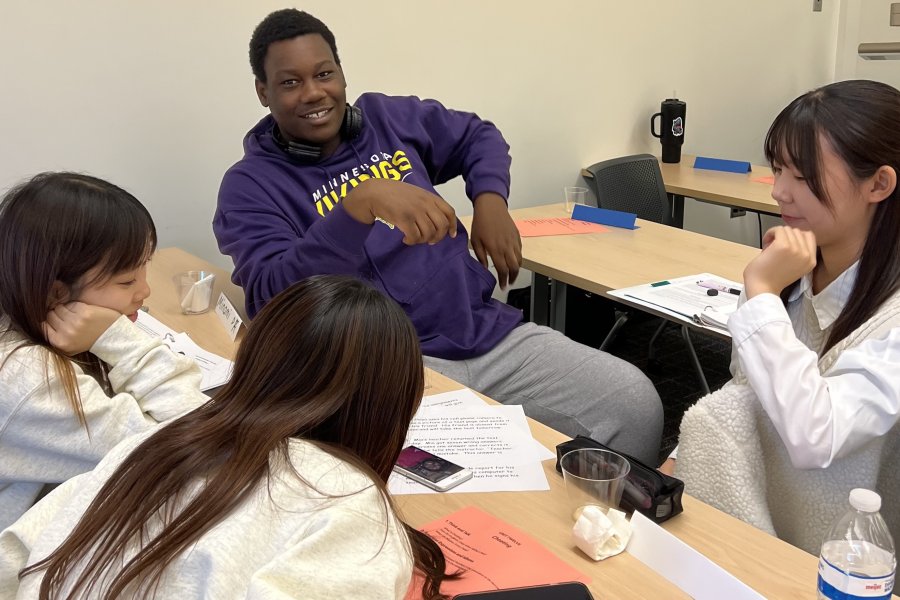
Four English language learning students sit at a desk and converse with each other.

Curriculum

CELCIS curriculum description by proficiency levels.
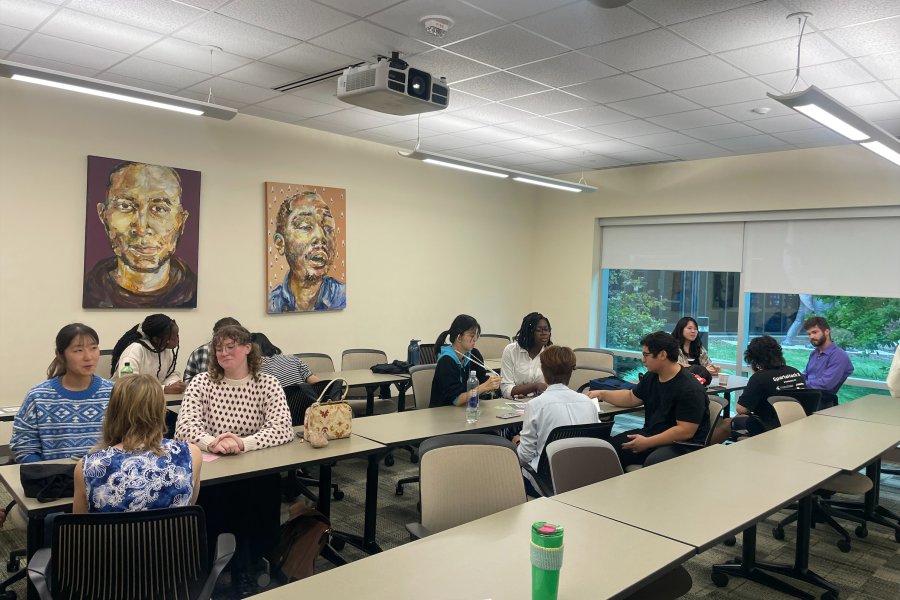
English language learning students in class practicing their English.

Class Schedule

Outline of student schedule, hours of instruction and course offerings.
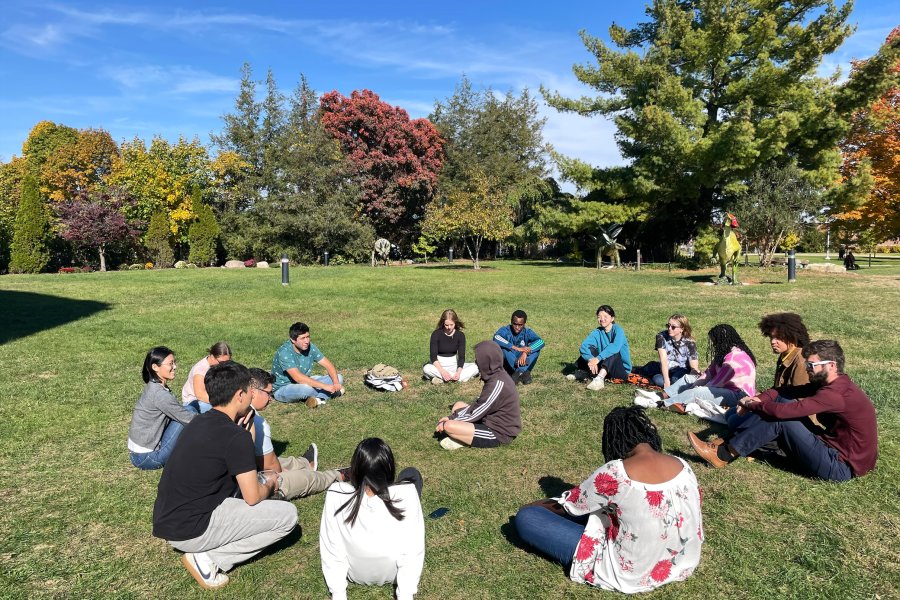
English language learning students sit outside in a circle in a grass park while practicing English.

Learning Resources

Resources for students who need assistance with class assignments. 

Four English language learning students smile and eat donuts together.

Costs and Dates

View CELCIS costs and important dates. 

Curriculum

CELCIS classes prepare students to study at Western Michigan University and other U.S. American colleges and universities. Additionally, CELCIS classes can help professionals improve their English for work. 

CELCIS offers in-person ESL courses 45 weeks of the calendar year in two semesters (Fall, Spring) and two sessions (Summer I, Summer II*). In-person instruction is available for all proficiency levels CELCIS helps students meet University English proficiency requirements while studying on the WMU campus. 

*Please note, new students beginning in the Summer II session may be required to retake courses or take a placement test to advance to the next level*

Instruction is divided into four classes: 1-Speaking/Listening, 2-Grammar/Communication, 3-Reading/Writing I and 4-Reading/Writing II

Levels

Elementary

Coursework required for the elementary level.

Speaking/Listening (ESL 0110)

  • Develop fluency in speaking
  • Learn basic communication skills in English.
  • Learn to participate in small group and whole class discussions.
  • Practice giving short talks.
  • Learn to to use basic note-taking skills.

Grammar/Communication (ESL 0120)

  • Develop fluency in speaking and writing.
  • Learn basic English grammar.
  • Learn to self-edit for grammatical accuracy in speaking and writing.
  • Develop awareness of the relationship of grammar to meaning.

Reading/Writing (ESL 0130 & 0140)

  • Develop fluency in reading and writing.
  • Develop vocabulary skills.
  • Develop the ability to use text organization for comprehension.
  • Learn conventional writing mechanics.
  • Develop the ability to react to readings.
  • Develop basic research and library skills.

Intermediate

Course work required for the intermediate level.

Speaking/Listening (ESL 0210)

  • Communicate with and comprehend English speakers.
  • Participate in small group discussions in academic situations.
  • Participate in whole class discussions and activities.
  • Give oral presentations.
  • Take comprehensible notes.

Grammar/Communication (ESL 0220)

  • Develop fluency in writing and speaking.
  • Increase grammatical accuracy in writing and speaking.
  • Self-edit for accuracy in writing and speaking.
  • Develop awareness of the relationship of grammar to meaning.

Reading/Writing (ESL 0230 & 0240)

  • Read and comprehend texts.
  • Write academic papers.
  • Create study guides.
  • Write essay exam answers.
  • Use research and library skills.

Pre-Advanced

Coursework required for the Pre-Advanced Level.

Speaking/Listening (ESL 0310)

  • Communicate with and comprehend English speakers.
  • Participate in small group discussions in academic situations.
  • Participate in whole class discussions and activities.
  • Give oral presentations.
  • Take comprehensible notes.

Grammar/Communication (ESL 0320)

  • Develop fluency in writing and speaking.
  • Increase grammatical accuracy in writing and speaking.
  • Self-edit for accuracy in writing and speaking.
  • Develop awareness of the relationship of grammar to meaning.

Reading/Writing (ESL 0330 & 0340)

  • Read and comprehend texts.
  • Write academic papers.
  • Create study guides.
  • Write essay exam answers.
  • Use research and library skills.

Advanced

Coursework required for the Advanced Level.

Speaking/Listening (ESL 0410)

  • Communicate with and comprehend English speakers.
  • Participate in small group discussions in academic situations.
  • Participate in whole class discussions and activities.
  • Give oral presentations.
  • Take comprehensible notes.

Grammar/Communication (ESL 0420)

  • Develop fluency in writing and speaking.
  • Increase grammatical accuracy in writing and speaking.
  • Self-edit for accuracy in writing and speaking.
  • Develop awareness of the relationship of grammar to meaning.

Reading/Writing (ESL 0430 & 0440)

  • Read and comprehend texts.
  • Write academic papers.
  • Create study guides.
  • Write essay exam answers.
  • Use research and library skills.

Achievement Scale and Interpretation (Plus Prerequisites)

CELCIS has four levels which range from Elementary to Advanced.

Level 1 (A1-A2)Elementary

Student has shown mastery of the outcomes for level ESL 0110

Placement by diagnostic

Level 2 (B1)Intermediate

Student has shown mastery of the outcomes for level ESL 0210

Prerequisite: ESL 0110 or placement by diagnostic

Level 3 (B2)Pre-Advanced

Student has shown mastery of the outcomes for level ESL 0310

Prerequisite: ESL 0210 or placement by diagnostic

Level 4 (B2 plus)Advanced

Student has shown mastery of the outcomes for level ESL 0410

Prerequisite: ESL 0310 or placement by diagnostic.

Level 1 (A1-A2)Elementary

Student has shown mastery of the outcomes for level ESL 0120

Placement by diagnostic

Level 2 (B1)Intermediate

Student has shown mastery of the outcomes for level ESL 0220

Prerequisite: ESL 0120 or placement by diagnostic

Level 3 (B2)Pre-Advanced

Student has shown mastery of the outcomes for level ESL 0320 

Prerequisite: ESL 0220 or placement by diagnostic

Level 4 (B2 plus)Advanced

Student has shown mastery of the outcomes for level ESL 0420

Prerequisite: ESL 0320 or placement by diagnostic.

Level 1 (A1-A2)Elementary

Student has shown mastery of the outcomes for level ESL 0130

Placement by diagnostic

Level 2 (B1)Intermediate

Student has shown mastery of the outcomes for level ESL 0230

Prerequisite: ESL 0130 or placement by diagnostic

Level 3 (B2)Pre-Advanced

Student has shown mastery of the outcomes for level ESL 0330 

Prerequisite: ESL 0230 or placement by diagnostic

Level 4 (B2 plus)Advanced

Student has shown mastery of the outcomes for level ESL 0430

Prerequisite: ESL 0330 or placement by diagnostic.

Level 1 (A1-A2)Elementary

Student has shown mastery of the outcomes for level ESL 0140

Placement by diagnostic

Level 2 (B1)Intermediate

Student has shown mastery of the outcomes for level ESL 0240

Prerequisite: ESL 0140 or placement by diagnostic

Level 3 (B2)Pre-Advanced

Student has shown mastery of the outcomes for level ESL 0340

Prerequisite: ESL 0240 or placement by diagnostic

Level 4 (B2 plus)Advanced

Student has shown mastery of the outcomes for level ESL 0440

Prerequisite: ESL 0340 or placement by diagnostic.

Note on Promotion:

Students must receive the C grade of 75% or higher in grade to progress from one level to the next. 

Grading Scale

75% and higher = Satisfactory (pass)

74% and below = Unsatisfactory (fail)

95-100%   A85-89%   B75-79%   C65-69%   D
90-94%     BA80-84%   CB70-74%   DC64-0%     E

Class Schedule

CELCIS instruction is divided into four classes. 

Each level is composed of four hours of instruction per day, five days a week (Monday through Friday) from 9 a.m. to 1 p.m. Please review the CELCIS weekly schedule for more details. 

Weekly Schedule for the CELCIS program showing daily meeting times/days of week of classes during fall and spring semesters and the summer I and II sessions.

Elementary/Intermediate/Pre-Advanced/Advanced Levels

TimeMondayTuesdayWednesdayThursdayFriday
9 to 9:50 a.m.

Reading/Writing I

(Focus: Comprehension) 

Read/Writing IRead/Writing IIRead/Writing IRead/Writing II
10 to 10:50 a.m.

Reading/Writing II

(Focus: Research) 

Read/Writing IRead/Writing IIRead/Writing IRead/Writing II
11 to 11:50 a.m.Grammar/CommunicationGrammar/Comm.Speaking/ListeningGrammar/Comm.Speaking/Listening
12 to 12:50 p.m.Speaking/ListeningGrammar/Comm.Speaking/ListeningGrammar/Comm.Speaking/Listening

Co-Curricular Activities

CELCIS provides co-curricular activities to help students learn English in informal settings and get involved in the local community. These activities may be required for certain courses or service-learning programs. 

Contact @email for more information. 

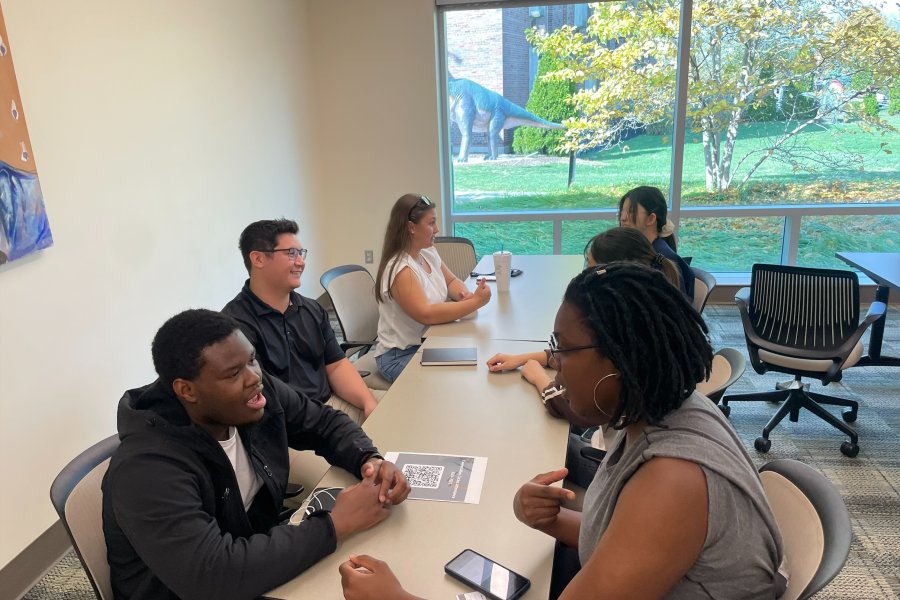
Six English language learning students sit at a long desk and practice conversing in English.

Conversation Circles

Help international students make connections and practice conversational English. Conversation Circles are open to all WMU students, faculty and staff, as well as the general community.

Two students at International Bazaar, smiling and wearing bright colors and traditional clothes to represent their home countries.

Global Events

WMU Global Education plans numerous service-learning, cultural and recreational activities to help international students engage with the campus and local community.  

Learning Resources

Resources available at Western Michigan University that can offer help to CELCIS students who need assistance with research, writing or other assignments. 

Costs

Tuition and fees depend on the ESL structure that students will pursue. At CELCIS, students may study ESL full-time or in a WMU (Dual Enrollment) Pathway Program.

Tuition and fees (Intensive English Program)

Prices below are approximate costs in United States currency and may change slightly without prior notice. 

Fall 2025 (August 27 - December 5)
*Approximate costs. 
Application fee$100
Program fees$5,685
Student fees$390*
Books$200*
Residence hall (shared room, unlimited meals)$6,395.50
Internet Fee (students living on campus)$80
Hospital/medical insurance$827*
Personal expenses$1,023*
Total$14,700.50
Spring 2026 (January 12-April 24)
*Approximate costs. 
Application fee$100
Program fees$5,685
Student fees$390*
Books$200*
Residence hall (shared room, unlimited meals)$6,395.50
Internet Fee (students living on campus)$80
Hospital/medical insurance$827*
Personal expenses$1,023*
Total$14,700.50
Summer I and II Sessions 2026 (May 11 - August 14)

NOTE:

Returning students MUST take both Summer I and II to complete a level.

New students may begin in either Summer I or Summer II.

*Approximate costs. 

Application fee$100
Program fees$5,685
Student fees$390
Books$200*
Residence hall (shared room, unlimited meals)$6,395.50
Internet Fee (students living on campus)$80
Hospital/medical insurance$827*
Personal expenses$1,023*
Total$14,700.50
Summer II Session ONLY 2026 (July 2- August 14)

NOTE:

Returning students MUST take both Summer I and II to complete a level.

New students may begin in either Summer I or Summer II.

*Approximate costs. 

Application fee$100
Program fees$2,842.50
Student fees$195
Books$200*
Residence hall (shared with food)$TBD
Internet Fee (students living on campus)$80
Hospital/medical insurance$661.60*
Personal expenses$1,023*
TotalTBD

Learn more about the Pathway Program including benefits, structure and costs.    

Tuition discounts may be available for spouses or dependents of full-time students at Western Michigan University, students studying online, domestic students, and students coming from one of WMU's partner universities. Discounts and eligibility are subject to change. Contact CELCIS to find out if you are eligible. 

Dates

CELCIS offers courses 45 weeks of the calendar year in two semesters (Fall, Spring) and two sessions (Summer I, Summer II). In-person instruction is available for all skill areas and proficiency levels

CELCIS Academic Calendar Spring 2026Summer I 2026Summer II 2026Fall 2026Spring 2027
CELCIS first day of classesJan 12May 11Jun 29Sep 2Jan 11
CELCIS last day of classesApr 24Jun 26Aug 14Dec 11April 30

CELCIS offers in-person in two semesters (Fall, Spring) and two sessions (Summer I, Summer II) each year.

Semester/SessionDatesImportant Notes
Fall Semester

August—December

(15 weeks)

  • All new students are required to participate in International Student Orientation the week before classes begin. For more information, visit the Arrival and Orientation webpage.
  • The CELCIS program administers 20 contact-hours of ESL education per week. 
Spring Semester

January—April 

(15 weeks)

Summer I Session

May—June

(7.5 weeks)

  • Returning students MUST take both the Summer I and Summer II session to complete a full level. New students may complete a full level by beginning in the Summer II session. Learn more about program completion.
  • All students studying in Summer I session are required to study in the Summer II session. For more information about mandatory (required) semesters, sessions, contact a WMU immigration advisor.
  • All new students are required to participate in International Student Orientation. Students beginning in the Summer II session will attend a special orientation just for CELCIS students. For more information, visit the Arrival and Orientation webpage.
  • The CELCIS program administers 20 contact-hours of ESL education per week. 
Summer II Session

July—August

(7.5 weeks)


Visit the Registrar's Calendar for information on important dates for each semester or session, including registration dates, refund dates, withdrawal dates, finals, midterm grading, final grading and more.

Accreditation

The Center for English Language and Culture for International Students (CELCIS), Western Michigan University is accredited by the Commission on English Language Program Accreditation for the period August 2015 through August 2025 and agrees to uphold the CEA Standards for English Language Programs and Institutions.* CEA is recognized by the U.S. Secretary of Education as a nationally recognized accrediting agency for English language programs and institutions in the U.S.  For further information about this accreditation, please contact CEA, 801 North Fairfax Street, Suite 402A, Alexandria, VA 22314, (703) 665-3400, www.cea-accredit.org

CELCIS complies with the guidelines and regulations of the following professional organizations: CEA, Teachers of English to Speakers of Other Languages, University and College Intensive English Programs, American Association of Intensive English Programs, and NAFSA: Association of International Educators.

*CEA accreditation provisions apply to in-person, core instruction. 

About the Haenicke Institute for Global Education

Your journey at Western Michigan University is a global one. Through transformative events, immersive classes and Experience-Driven Learning, the Haenicke Institute for Global Education connects Kalamazoo to the world—and the world to Kalamazoo. We assist over 1,000 international students and alumni at home and abroad with admissions, immigration support, student success and post-graduation job training. We host 80+ study abroad programs and bring students, faculty and staff to 30 countries, on average, each year.  From fostering academic opportunities to showcasing cultural events and providing K-12 outreach, the Haenicke Institute promotes learning that transcends borders and takes you wherever you want to go.  

A student wearing a study abroad map tshirt while making a W symbol with his hands. He is posing in downtown Kalamazoo.

International Student and Scholar Services

International Student and Scholar Services is responsible for international student recruitment, admissions and immigration support.

A student proudly holding a Western flag during a study abroad adventure in another country. He stands in front of an historic building.

Study Abroad

WMU Study Abroad supports more than 80 programs around the world, sending students, faculty and staff to 30 countries, on average, each year.

Students talking to each other outside at a picnic table in downtown Kalamazoo. They wear tshirts promoting global eduction at Western Michigan University.

Global Engagement Program

The Global Engagement Program provides opportunities for all  students at Western Michigan University to become globally engaged. 

Students working together at a table. They are both looking a paper, as if they are studying together.

English Language Learning

The Center for English Language and Culture for International Students offers short- and long-term intensive English language study.

A member of the WMU Asian Initiatives staff working with children at a community outreach event.

Asian Initiatives

WMU Asian Initiatives enhances scholarship and knowledge of East Asia on campus and throughout southwest Michigan.

Robert Brown, an instructor at the Haworth College of Business, sitting side-by-side talking to a student as he teaches an Applying Business Fundamentals class in Schneider Hall.

Faculty Enrichment

The Haenicke Institute supports partnerships with more than 100 international institutions, offering options to faculty who are interested in collaboration and exchange.