The Elementary Education major within the College of Education and Human Development prepares new educators to meet the unique needs of learners in Pre-Kindergarten to third grade (PK-3) and in third to sixth grades (3-6) with an emphasis on diversity, equity, and inclusion. Graduates of this program will be eligible to teach all subjects in PK-3 and 3-6 and will qualify to take the Michigan Test for Teacher Certification (MTTC) PK-3 (ZO) and/or 3-6 (ZP) endorsement.
Program Stats
97%
of College of Education and Human Development graduates working full time have a job related to their degree
98%
of College of Education and Human Development graduates participated in Experience-Driven Learning
95%
of College of Education and Human Development graduates working are satisfied with their job
Pursue a Bachelor of Science in Elementary Education
Do you want to make a difference in children's lives? Do you want to prepare students for success on their academic journey? Then the Bachelor of Science in Elementary Education is right for you.
Through the Department of Teaching, Learning and Educational Studies, you will be prepared for a successful career in an elementary school classroom. As an elementary education major, you will be equipped with the skills needed to teach culturally diverse student in the PK-6th grade based on current research, theory and standards.
The elementary education program is accredited by the Council for the Accreditation of Educator Preparation, and offers up to six credits for your high school Career and Technical Education courses that align with our academic programs.
What you’ll learn
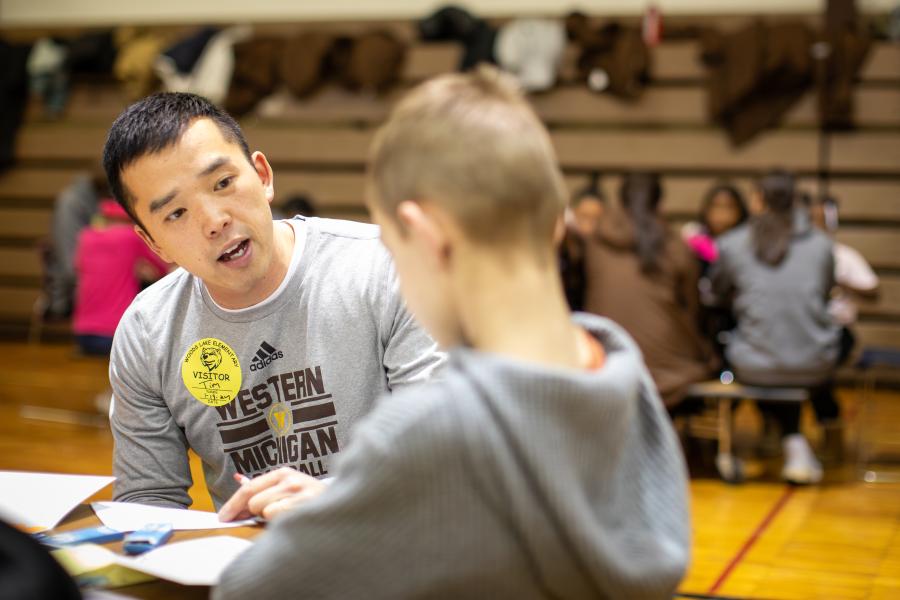
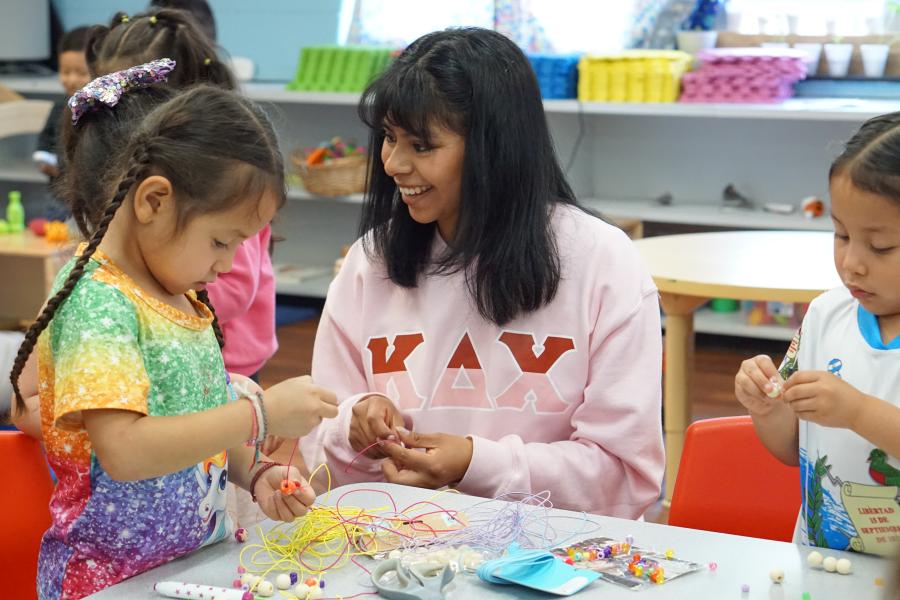
You will engage with diverse communities, both on and off campus, throughout coursework and experiences. This engagement fosters a deepening commitment to anti-racist, anti-bias, and inclusive instruction. You'll begin yout required coursework upon entering the university, whether as first-year or transfer student, and are immersed in schools and field experiences each year. These experiences, in urban, suburban, and rural settings, allow students to apply theory to practice by working directly with children.
The program includes 17 "pre-education" courses, requiring a minimum 3.0 GPA for admission to the professional level. The subsequent "professional-level education" component consists of 16 courses, each requiring a grade of CB or better. The program culminates in a full-time internship within a partner school during the student's final semester.
Student quote
In class we are learning from previous teachers, who have taught people and who've been in the same situation that we're going to be in.
Where you’ll be after graduation
Graduates of the elementary education program will be eligible for certification to teach:
- Pre-Kindergarten to 3rd grade with ZO endorsement: All subjects (English language arts, mathematics, science, and social studies) for PK-3 students
- 3rd - 6th grade endorsement (ZP): All subjects (English language arts, mathematics, science, and social studies) for 3-6 students in self-contained or departmentalized instruction.
- And while Michigan is experiencing a severe teacher shortage, teachers with a PK-3 endorsement can temporarily be placed in self-contained classrooms up to 6th grade. Additional endorsements are needed to teach early childhood.
For 95% of College of Education and Human Development grads, they got that job or got into that graduate school program after graduation. That is because your journey of self-discovery begins the moment you step on campus. At WMU's Career and Student Employment Services, career specialists help you align your passions and abilities with future careers and advanced degrees. They will connect you to practical experiences like internships, job shadowing, research projects and professional mentors.
What others have achieved
Learn about the successful journeys of recent program graduates and the advice they have to share for prospective WMU students.

Meet Allison
President of the Aspiring Educators of Michigan at WMU, Allison has been gaining valuable experience in class and is preparing to teach abroad in New Zealand.

Meet Elise
While she may no longer be managing college students as a R.A., Elise is staying busy by managing her own classroom in Royal Oak as a second grade teacher.
Making the most of your learning experience
In the College of Education and Human Development, you'll embark on an incredible journey of experiential learning that goes beyond textbooks. Collaborating closely with faculty members, you'll dive into cutting-edge research, fieldwork and professional pursuits. Pushing the boundaries of the traditional classroom, you'll gain practical skills and make a tangible impact.
The program is designed to immerse you in experience-driven learning opportunities that bridge theory and practice. From early field experiences in diverse classroom settings to student teaching residencies, you will gain experience with students of different ages and backgrounds.
Long Photo

Are scholarships available?
Yes! You've put in the hard work—now it's time to see your reward.
Scholarships are an excellent way to help the reduce the costs of higher education. Whether you are entering college for the first time, transferring to WMU from another institution or returning from a gap in your education, be sure to check out our scholarship options. Students earn scholarships for financial need, academic success and promoting multicultural awareness. Most are offered on a competitive basis.