
State-of-the-art EV and semiconductor technical learning program expansions
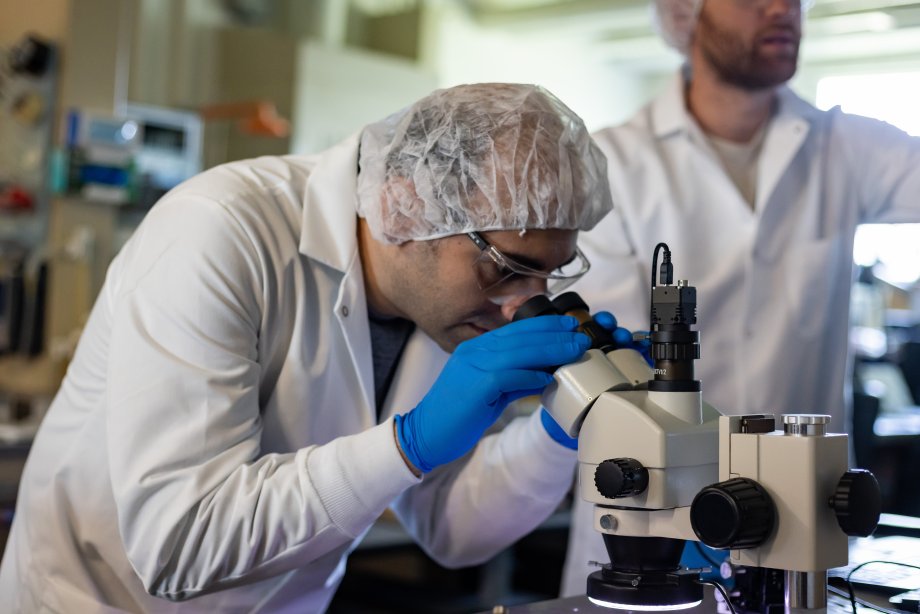
KALAMAZOO, Mich.—Western Michigan University’s College of Engineering and Applied Sciences is at the forefront of a first of its kind public-private effort to amp up electrical vehicle and semiconductor talent. A nearly $700,000 investment is helping WMU develop a robust pipeline for Michigan’s advanced manufacturing sector, ultimately aiming to fill the talent gap.
The goal—announced by leaders with Western Michigan University, Kellogg Community College and the Michigan Economic Development Corp. (MEDC), as well as representatives of Ford, General Motors and DENSO—is to develop a world-class skilled workforce pipeline in Southwest Michigan and Greater Grand Rapids to help fill jobs in the state’s surging EV and semiconductor industries.
“With this new effort, Western is proud to further our most important endeavor—creating opportunities through education that transform and improve lives,” says Dr. Steve Butt, dean of the College of Engineering and Applied Sciences.
“The developments unveiled also demonstrate how public and private collaboration can foster innovation and elevate our communities for the benefit of Michigan residents and our shared economic prosperity,” says Butt. The need for talent is crucial. The Semiconductor Industry Association anticipates a 33% increase (to 460,000) in jobs in the field with 80% of projected new technical jobs at risk of going unfilled.
“WMU’s faculty expertise in batteries, semiconductors, and advanced manufacturing, as well as modern labs and research facilities, places us in a unique position to provide training that is both rigorous and directly relevant to industry needs,” says Dr. Massood Atashbar, professor of electrical and computer engineering, who is leading the charge at WMU.
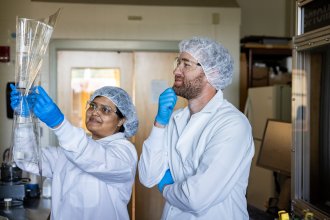
By providing focused, employer-aligned training that gets students workforce-ready in a shorter time frame, WMU’s effort is guided by direct input from industry collaborators and specifically designed for in-demand priority roles such as electrical engineers, semiconductor technicians, and EV processing technicians, ensuring graduates meet current hiring needs through in-depth training in areas of battery technology and semiconductors.
“By helping to train the next generation of Michigan’s EV and semiconductor technical experts, we can strengthen the efforts of global battery and semiconductor industry partners to meet urgent workforce needs,” says Atashbar.
WMU's battery and semiconductor offerings
Western’s effort involves offering courses in key areas to enhance talent—electric vehicles and semiconductors. Courses cover topics most in need by employers and are available not only for WMU students but also industry technicians, community college students, or those already in professional roles.
Electric Vehicles: The rapidly growing electric vehicle industry requires specialized training in battery systems, energy storage, and high-voltage applications. WMU coursework covers topics in energy storage and high voltage systems and battery packaging and management, blending laboratory demonstrations with hybrid delivery to connect theory and practice.
Semiconductors: Talent needs in semiconductor technology encompasses fundamental concepts and advanced manufacturing processes. These topics prepare employees for Michigan’s growing semiconductor industry.
For more WMU news, arts and events, visit WMU News online.