

Math 1090 Pre-Algebra
COURSE PURPOSE
The purpose of all of the developmental mathematics courses is to support student success academically and beyond by advancing critical thinking and reasoning skills. Specifically, in pre-algebra as a team we will examine final answers in terms of reasonableness to the given problem and to determine if the answer addresses the original problem (Polya step 4). In addition, we will explore the power of estimation as a tool to determine accuracy of solutions to numeric and or real world problems.
Math 1090 in the Developmental Math Program in the Department of Mathematics at Western Michigan University is a mastery-based course designed to sharpen computational skills involving whole numbers, fractions, decimals, percents, geometric figures and word problems.
Since Math 1090 is a remedial course, these two credits do not towards graduation. Your final letter grade will be calculated into your gpa, so use this as an opportunity to boost your gpa.
Course Pack
The course pack contains all of the worksheets for the course and the writing assignments. The materials in the course pack will be used every day, so it is vital to purchase one as soon as possible. To lower the cost of the course pack, we are working with R J's Printing rather than the bookstore.
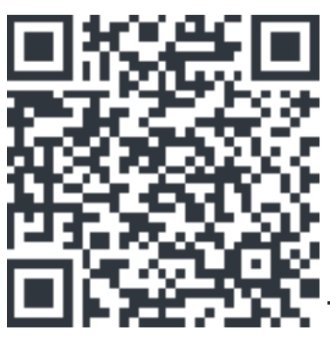
The course pack cost $40 including tax and credit card surcharge. To purchase the course pack, use the following QR code below and fill out the required information. Once you pay for the course pack, It will be delivered to you in class. If you do not have access to a credit card or need an alternative way to obtain the course pack, contact Dr. Eisenhart providing her with specifics about your situation: Developmental Mathematics Program <math-dev@wmich.edu>
COURSE INFORMATION
- Course learning outcomes and goals
- Course syllabus
- How to use the activity learning outcomes and goals to improve your grade
- Multiplication table
- Tips for success
- WMU Writing Center
EXAM DATES FOR FALL 2026 BY EXAM NUMBER
- Monday, Sept. 21; 25 minutes
- Wednesday, Oct. 14; 50 minutes
- Friday, Nov. 13; 25 minutes
- Wednesday, Dec. 2; 50 minutes
Final Exam: Monday, Dec. 14
If you are unable to attend class on any exam day you must notify Dr. Eisenhart (269) 387-4117 or (269) 873-8194 before the exam, so that she can assist you in a timely manner.
TENTATIVE SCHEDULE BY WEEK NUMBER
Class will be held on Wednesday, Nov. 25, so plan to start Thanksgiving recess after class.
- Sept. 2 through Sept. 4: Problem solving worksheet (Polya method), whole numbers and E-Learning Demo
- Sept. 9 through Sept. 11: Meanings of operators, and use the distributive property to simplify calculations
- Sept. 14 through Sept. 18: Order of operations, and writing both addition and subtraction statements given an illustration
- Sept. 21 through Sept. 25: Exam 1, decimals, and variable sense,
- Sept. 28 through Oct. 2: Combining like terms and using variables for problem solving (Polya method), area verses perimeter and expressions and equations
- Oct. 5 through Oct. 9: Finish expressions and equations, evaluate, and solve
- Oct. 12 through Oct. 16: Factor vs multiple, Exam 2, definition/meaning of fraction, equivalent fractions, and comparing fractions
- Oct. 19 through Oct. 23: Ratios and proportions and fall break (no class on Wednesday Oct. 21 or Friday, Oct. 23)
- Oct. 26 through Oct. 30: Finish proportional reasoning, adding fractions, and subtracting fractions
- Nov. 2 through Nov. 6: Multiplying fractions, comparing fraction additions and multiplications, and dividing fractions
- Nov. 9 through Nov. 13: Revisit number properties and variable sense with fractions, signed number meaning, and Exam 3
- Nov. 16 through Nov. 20: Comparing signed numbers, adding signed numbers and subtracting signed numbers, Revisit number properties and variable sense with signed numbers, and signed numbers to a power
- Nov. 23 through Nov. 25: Multiplying signed numbers, and Thanksgiving recess
- Nov. 30 through Dec. 4: Dividing signed numbers, Exam 4, meaning of mixed numbers,
- Dec. 7 through Dec. 11: adding and subtracting mixed numbers, multiplying mixed numbers, partial products, comparing decimals by using mixed numbers, and unit conversions
- Monday, Dec. 14: Final exam is in our regular classroom at 8 a.m.
LAST DAY TO WITHDRAW
Monday, Nov. 16 is the last day a student can process an official withdrawal from a class to avoid a failing grade.