


Minor in User Experience/Human-Computer Interaction
Design technology that works for people. The UX/HCI minor at Western Michigan University prepares students to research, design and evaluate digital experiences across emerging technologies like AI, bots and interactive media.
Why a minor in UX/HCI at WMU?
The UX/HCI minor gives students the skills to understand, design, and improve how people interact with digital technologies. Taking an interdisciplinary approach, the minor covers a breadth of emerging technologies: AI, bots, social robots, web-based interfaces, and interactive and immersive media.
- One of the fastest-growing, highest-demand career fields today.
- A natural fit for students in Business, Health Sciences, Multimedia Arts, Digital Marketing, Psychology, Computer Science, Graphic Design, and Communication.
- Brand new XD Lab with 3D printing, AR/VR, social media monitor systems, workstations, and eye tracking technology.
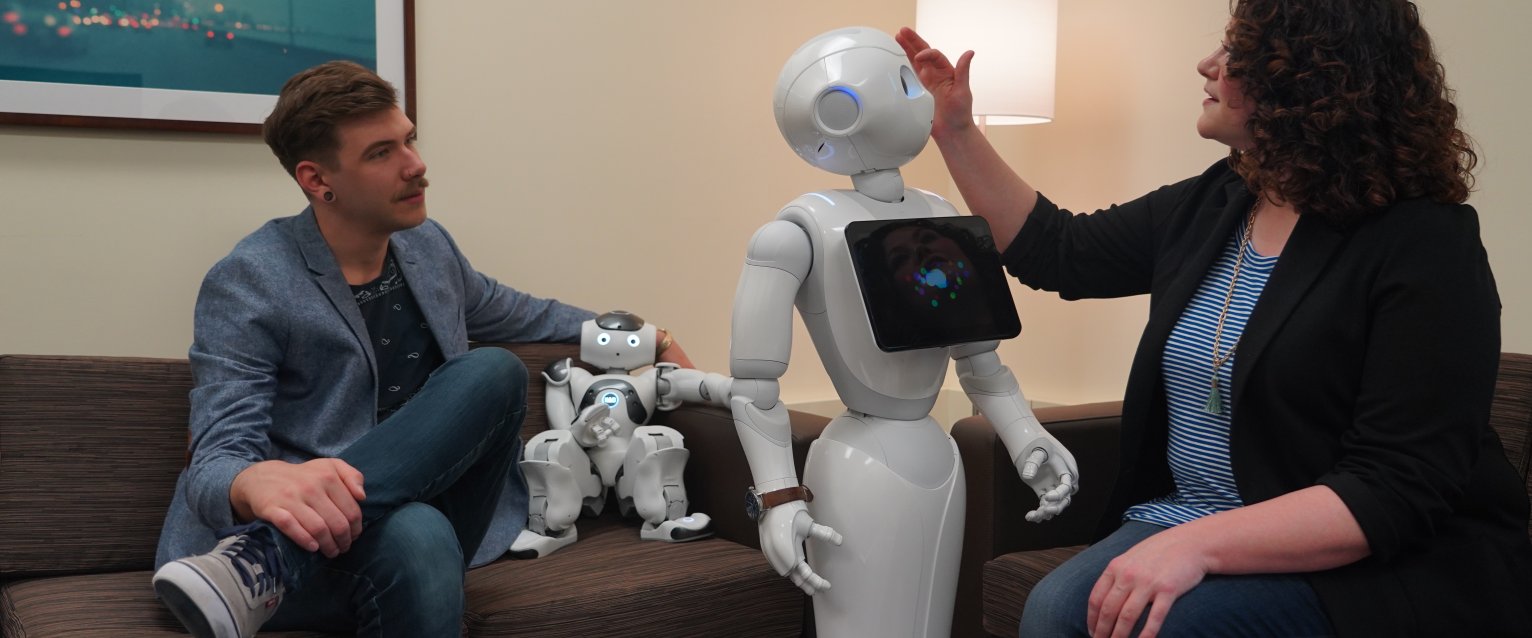
- Intern in our Communication and Social Robotics Labs -- part of a worldwide lab spanning Germany, India, and the USA, headquartered at WMU and the University of Central Florida.
- Learn from world-class faculty who are leading voices in UX and human-machine communication.
What You'll Learn
- Understand how and why people engage with digital systems
- Analyze user needs and behaviors using communication and behavioral science methods
- Design digital experiences including websites, apps, and interaction flows
- Evaluate usability and make evidence-based recommendations for improvement
- Work with emerging technologies: conversational AI, social robots, bots, and immersive media
- Apply communication thinking to design, meaning, trust, and user experience
Careers in UX/HCI
The minor prepares you for roles across four career tracks.
- UX Research: Studying how people interact with technology to identify user needs and inform design decisions
- UX Design: Shaping the structure, flow, and feel of websites, apps, and digital products
- Product and Strategy: Guiding digital products from concept to launch across design, engineering, and business teams
- Creative Technology: Bridging visual design and technical implementation to build working digital systems
UX/HCI professionals are in demand across technology, healthcare, media, government, education, and nonprofits — with growing opportunities in AI, immersive media, digital health, and robotics.
The UX/HCI minor broadened my career in digital communications by helping me better understand how to design, write, and communicate for users, giving me the tools to create more thoughtful digital experiences using new technology.
Resources for current UX/HCI students
For students currently enrolled in the minor, download our guide featuring internship opportunities, certificate programs, and other helpful resources to support your journey.
Undergraduate Course Requirements
Ready to declare as your minor?
You may declare a user experience/human-computer interaction (UX/HCI)minor online at any time. If you have questions about the declaration form or your requirements, please contact the School of Communication academic advisor.