

Three Midwest Poets Laureate Share WMU Beginnings
Three university literature professors, all with WMU roots, have recently added state poet laureate to their curricula vitae. While the selection process differed for each of them, the universal charge for the paid position is to act as a literary ambassador, promoting access to and awareness of poetry as an art form with residents across their state. The three poets laureate are all Bronco alumni, but each of them charted a different path to their current positions.
Mark Turcotte (Turtle Mountain Band of Anishinaabe) was named poet laureate of Illinois in 2025 and was the very definition of a nontraditional student when he began his MFA program in 2005 at age 47. Michigan laureate Melba Joyce Boyd, also named in 2025, was part of Detroit’s vibrant Black arts scene in the 1970s after leaving WMU with bachelor’s and master’s degrees in 1972. The most recent Bronco of the three, having earned her doctorate at WMU in 2014, is Traci Brimhall, currently in her fourth year as Kansas laureate. She spent last year as poet-in-residence at the Guggenheim in New York.
These alumni have a plethora of awards, accolades and publications to their credit, with their work appearing in eminent publications including Guernica, Georgia Review, Kenyon Review, The Nation, The New Republic, The New Yorker, The New York Times Magazine, Orion, Ploughshares and TriQuarterly. Each poet notes that they are grateful for – and busy with – opportunities as state poet laureate to engage new audiences with poetry.
Michigan Poet Laureate Dr. Melba Joyce Boyd
Only the third poet laureate to be named in Michigan, Dr. Melba Joyce Boyd had just retired as a distinguished professor of African American studies at Detroit’s Wayne State University when she was nominated for the laureate post in 2024.
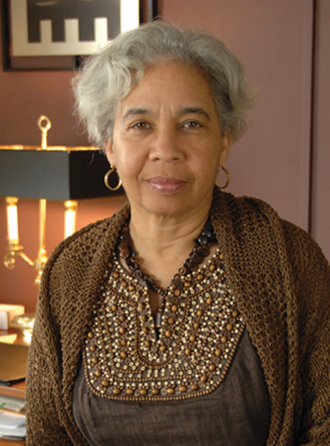
“Melba Joyce Boyd's creative spirit, remarkable achievements and strong ties to Michigan's cultural heritage will enrich the state's literary arts scene,” said then-laureate Nandi Comer in Boyd’s appointment announcement by the Michigan Department of Education and Library of Michigan.
Boyd remembers being alerted that she would get a call from state capital librarian Randy Riley.
“I was told that this would be an interview, but when he called he said, ‘I just finished reading five of your books, and I’d like to know if you would serve as the next poet laureate for Michigan?’ That felt really good, because it meant the books did the work for him,” recalls Boyd, who adds that she didn’t start writing poetry until she was at WMU.
“I thought I might be an essayist, and then I took a creative writing class. My poems weren’t very good — they were pretty terrible, actually. But I just kept coming back to it,” she says, remembering Robert Stallman as a professor who had a major influence on her development as a writer.
“He was very progressive, having us read Black writers — and he was not Black himself. His classes were not easy, but I learned so much. He encouraged me, and showed me that you can write literature and also write about literature at the same time.”
Boyd realized she wanted to be an educator while still an undergraduate.
“I remember thinking, ‘This professor thing is really cool; I think I'd like to do this.’ I knew I had to go to grad school, so I started looking for places. Then I learned about graduate scholarships for students of color right here at Western, so I stayed for another year.”
Boyd had a taste of publishing success even before she graduated.
“One of my sorority sisters had a cousin who was an editor for Ebony. He connected me with Hoyt Fuller, who was editor of Black World magazine, and Fuller published my master’s essay on the Black author Chester Himes. It showed me what a big circle the world is.”
Continuing the circle, Fuller had attended Wayne State University with writer, publisher and Detroit poet laureate Dudley Randall (1914-2000), who hired Boyd at his Broadside Press when she returned to Detroit after leaving WMU in 1972. Boyd taught at Detroit’s Cass Technical High School and Wayne County Community College before completing her doctorate at the University of Michigan. She has held faculty positions at the University of Iowa and Ohio State University, and has served as the director of the African American Studies Program at the University of Michigan-Flint. Boyd was also an adjunct professor at the University of Michigan-Ann Arbor.
Along the way, Boyd’s essays, poetry and creative nonfiction have appeared in anthologies, academic journals, cultural periodicals and newspapers in the U.S. and Europe. She has published 13 books, nine of them poetry. With official state laureate engagements booked through 2026, Boyd says her favorite part of serving is engaging the audiences.
“The first reading I ever did as an aspiring poet was at the Highland Park Library, and I love hanging out with librarians and with book audiences — people who love reading — they're open, progressive and appreciative. When reading in libraries, there's something about the mood, the groove, the ambiance of the space. Everybody's talking about words, and it's a very nurturing environment for me as a writer.”
However, Boyd notes that poets are not always universally appreciated.
“You know, poets are kind of weird, and our scholarly colleagues often look at us a little askew. I always say that critics prefer their poets dead, because that way we can't talk back,” she says with a smile.
Boyd will publish two books within the next year. One is a biography, “Politics and Poetics: The Legacy of Frances E. W. Harper” (Wayne State University Press, 2026); and the other is a poetry collection, “We See We” (The University of Michigan Press, 2027).
Kansas Poet Laureate Dr. Traci Brimhall
A distinguished professor of creative writing at Kansas State University, Dr. Traci Brimhall is in her last year of a four-year term as Kansas poet laureate. She says she wrote her first poem as a child and was an avid journal writer as a “teenager with a lot of feelings.” Poetry for Brimhall was solidified as her “love of a lifetime” while an undergraduate at Florida State University.
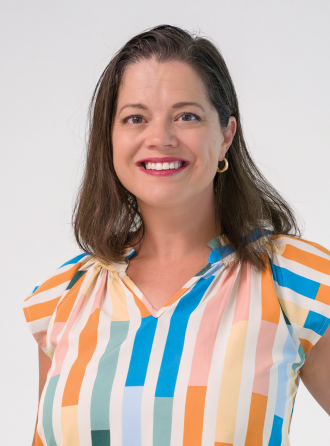
“I thought I would be a fiction writer, as that was what I was familiar with, but a great college teacher introduced me to my first living poets, and I got very excited about poetry,” Brimhall says.
She went on to earn an MFA from Sarah Lawrence before joining WMU’s Ph.D. program in 2010.
“A couple of decades later, it continues to be poetry that keeps me in love with being alive. It's the thing that helps my soul sit up straight in my body,” she says. “It makes me curious about my life and helps me understand myself. I think everybody needs something to be profoundly in love with. It could be somebody's faith, somebody's creative practice, scientific research, but something to devote yourself to that makes you more of yourself, and that's what poetry does for me.”
Brimhall embraces sharing her love of words with audiences throughout Kansas — who she says are the best part of her duties as laureate.
“I genuinely like people. I like having conversations, and I really love talking to somebody new, and going somewhere new” she says. “I have also gotten to learn how people are passionate about art everywhere — and how people are playing music and painting murals and writing poems everywhere. It’s fun to celebrate our love of the arts together.”
Along the way, Brimhall discovered that small rural readings often brought bigger audiences than she expected.
“In a more urban location, my events might not be as well attended. But 100 people might show up to a small library for their lunch hour because that's the big show in town,” she says. “I really like seeing art thrive and realizing all the ways there are to share the arts and build community. It's really fun to dream up even more ways for people to find each other through what they make.”
In terms of nurturing talent among her students and seeing them succeed, Brimhall humbly suggests that little credit is due
to her work as a professor.
“I think people achieve success on their own steam. Hopefully I give them good ideas for ways to write or things to write about. But I can't teach what your voice is or what your vision is. I can only teach them the tools,” she says, recalling the teaching tools she acquired during her time at WMU.
“I learned so much about how to be a good teacher from Gwen Tarbox, who mentored me in pedagogy. She gave me so much more time and energy than was reasonable. Now that I am a teacher myself, I see just how outrageously generous she was, and I’m grateful.”
As to nurturing her own muse, Brimhall says she tries to write almost every day.
“A few observations, a scrap of word-music that I'm tossing around. I try to stay in touch with that side of myself because it's a relationship, and I want to treat myself well; I deserve to be treated well. If you keep your coals warm, you can toss some fresh kindling on and build a fire back up pretty quick — but if you let your coals go out, it's so much harder to get back to a roaring fire.”
Brimhall’s first collection of essays, “The Grief Artist,” will be published by Sarabande Books in 2026.
Illinois Poet Laureate Mark Turcotte
Mark Turcotte’s appointment as Illinois poet laureate was announced at an April 29, 2025, event by Illinois Gov. J.B. Pritzker at the governor’s mansion in Springfield. Turcotte began his position as laureate on July 1, joining a historic roster that includes Pulitzer Prize winners Carl Sandburg and Gwendolyn Brooks (the first Black American to win a Pulitzer), who had served as the state’s laureate for 32 years until her death in 2000.
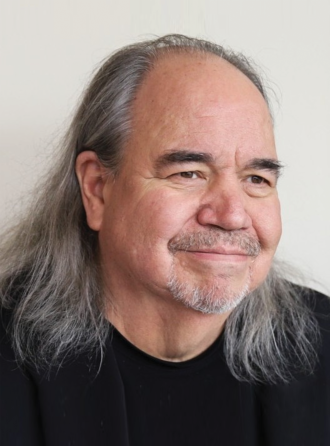
“Gwendolyn set a precedent that is hard to live up to and to be included on that list with her is an amazing and challenging thing,” says Turcotte, who was told he had been nominated by several people. “Accepting the nomination meant I had to apply, but I had to be convinced to do that. Ultimately my wife reminded me of the five-year-old boy that used to play on the reservation and suggested that maybe I should do it for him, as a way of acknowledging and paying respect to my own journey,” he says.
Turcotte’s journey began in Michigan. Born in Lansing, he spent his earliest years on North Dakota's Turtle Mountain Chippewa Reservation and in migrant camps across the western United States before returning to Michigan with his mother and sister. He says he first discovered the joy of words as a child under the drawings in his Yogi Bear coloring book.
“I began taking apart and reassembling the captions to make them more interesting to my mind and my ear,” he says, adding that teachers and friends always thought of him as “the writer.” “I let that passion ebb through much of my 20s, then rediscovered it when I landed in Chicago.”
That 1993 arrival in the Windy City came after a year of college and 15 years of traveling the country and working on the road. Once in Chicago, he earned a living doing carpentry and remodeling while building a reputation as part of the city’s poetry scene. That summer, he won the first Gwendolyn Brooks Open-Mic Poetry Award, which included a $500 prize funded by Brooks “that was enough to help me stay in Chicago,” he says.
At readings, hosts often expressed surprise that Turcotte didn’t have a college degree. Friends and family encouraged him to return to school.
“I had to pay rent and take care of my family, though, and I wasn’t sure how that would work,” he says, adding that a divorce prompted him to rethink his future.
“I thought the best thing I could do for my future, and for taking care of my son, would be to improve my situation in the world,” says Turcotte, who chose Western Michigan University in part because his friend Stuart Dybek taught there, and because he still had family in Michigan.
“I started when I was 47, and it changed my life,” says Turcotte, who earned his MFA from WMU in 2008.
“My degree made me eligible to do more than lifting and toting,” he says, expressing gratitude for the teaching of professors Bill Olsen, Nancy Eimers, Daneen Wardrop, Scott Slawinski and Jon Adams.
After a year as a visiting writer at the Institute of American Indian Arts in Santa Fe, he began a 17-year tenure at DePaul University in Chicago, first as visiting assistant professor and now as distinguished writer-in-residence teaching creative writing and Native literature. Turcotte looks forward to an October visit to WMU when he will engage with students and share
his work with the broader community in one or more public poetry readings and says the best part of the laureate post is reaching new audiences through the 70-plus events he has headlined in his first year.
“I’m very grateful to be in front of people who might not have access to someone like me, and it’s important to make these events inclusive. I always ask my hosts to find local people to read as well. You get local people involved, then they invite two or three people, or their mom comes to hear them. I like that aspect of it, because that’s the definition of making community, of being an ambassador.”