Program Intro
The Fashion Design and Development major within the College of Education and Human Development (CEHD) prepares students for careers in the dynamic, fast-paced fashion industry. Students learn how apparel and soft goods move from concept to finished product while gaining knowledge of industry processes and products. Through design, merchandising, and business courses, students develop the skills needed for careers in fashion design, product development, sourcing, production, quality management, styling, and related areas of the fashion industry.
Program Stats
100%
of fashion design graduates are working or continuing their education after their degree
100%
of fashion design graduates working full time have a job related to their degree
100%
of fashion design graduates participated in Experience-Driven Learning
Pursue a B.S. in Fashion Design and Development
Today’s fashion industry brings together design, product development, merchandising, and business. Our Fashion Design and Product Development major reflects this reality through an integrated curriculum that combines creative, technical, and business-focused coursework. You’ll develop the ability to think beyond the design of a product and consider how it meets consumer needs, fits the marketplace, and moves through the development process. Through this interdisciplinary approach, you’ll gain a broader understanding of the product design and development and how different areas of the fashion industry contribute to bringing products to market. This foundation prepares you to collaborate across disciplines and contribute to the design and development of apparel and soft goods in today’s fashion industry.
The program’s integrated approach is supported by accreditation from the Textile and Apparel Programs Accreditation Commission (TAPAC) and the National Association of Schools of Art and Design (NASAD). These accreditations recognize the program’s commitment to established professional standards in textile and apparel education and provide an important foundation for your academic and professional preparation.
What you’ll learn
You'll learn to communicate design ideas through illustration and develop original designs using research, creative thinking, and design principles. Through hands-on coursework, you’ll build technical skills in pattern making and garment construction while learning about textiles, materials, and industry-relevant technology. You’ll also examine fashion trends and apply your knowledge to product and collection development, while gaining an understanding of the business and industry practices that shape fashion products. As you progress through the program, you’ll build a professional portfolio that showcases your creative, technical, and product development skills.
All of the apparel construction and design classes here really build on top of each other. Everything that I've learned has cumulated into me not only having the confidence but skill set to construct intricate garments.
Where you’ll be after graduation
Upon completion of this Bachelor of Science degree, you'll be equipped for diverse roles within the industry, with the most direct path being a fashion designer creating apparel and accessories. However, the blend of creative and technical skills also opens doors to careers as a technical designer, focusing on garment construction, or a textile designer, developing fabric designs. Furthermore, understanding the fashion market and trends makes graduates suitable for roles in fashion merchandising, retail buying, styling, and forecasting.
For 100% of fashion design and development graduates, they got that job or got into that graduate school program after graduation. That is because your journey of self-discovery begins the moment you step on campus. At WMU's Career and Student Employment Services, career specialists help you align your passions and abilities with future careers and advanced degrees. They will connect you to practical experiences like internships, job shadowing, research projects and professional mentors.
What other have achieved
Learn about the successful journeys of recent program graduates and the advice they have to share for prospective WMU students.
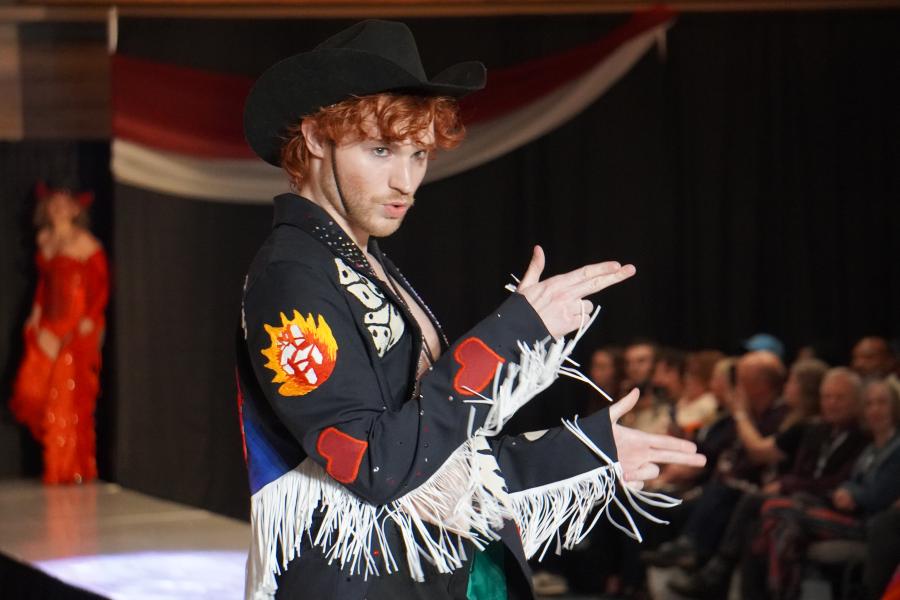
Meet Peter
Fashion designer and trend setter; Peter rocked the runway during MODA's spring fashion show, "Rhythm N' Runway", with his Western inspired line—winning himself a scholarship award.

Meet Genesis
Winning Western's New York Fashion Week Competition, Genesis traveled to the Big Apple for a VIP experience meeting with top designers and attending The Blonds show.
Making the most of your learning experience
In the College of Education and Human Development, you'll embark on an incredible journey of experiential learning that goes beyond textbooks. Collaborating closely with faculty members, you'll dive into cutting-edge research, fieldwork and professional pursuits. Pushing the boundaries of the traditional classroom, you'll gain practical skills and make a tangible impact.
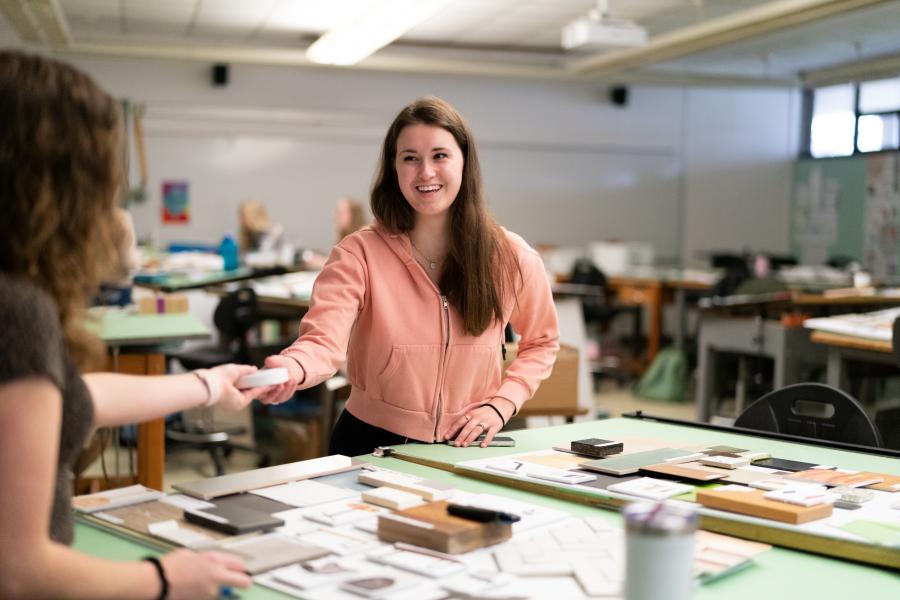
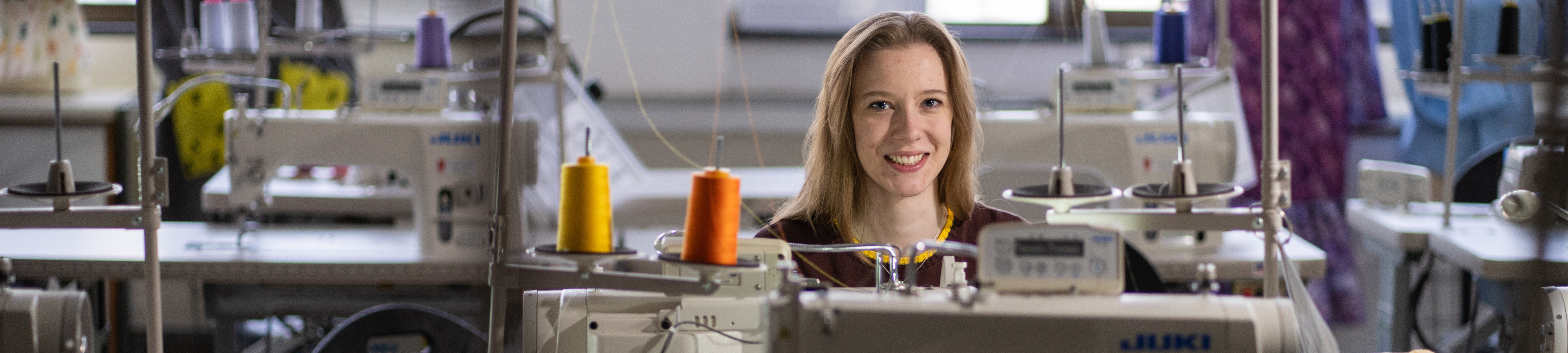
As a Fashion Design and Development major, you’ll gain hands-on experience developing design and technical skills through coursework and practical projects. In the apparel lab, sewing lab, and technology lab, you’ll develop skills in sketching, patternmaking, sewing, and garment construction while learning about textiles, materials, and apparel production.
You’ll also have opportunities for field experience and internships with local businesses and national brands, giving you real-world experience to build your portfolio and prepare for a career in the fashion industry. Fashion students are also encouraged to participate in study abroad opportunities, including major-specific programs in New York, London and Florence, Italy. Students can also participate in the fashion show hosted by the student organization Merchandising Opportunities and Design Association (MODA) to showcase their work and connect with the fashion community.
Image Banner
Are scholarships available?
Yes! You've put in the hard work—now it's time to see your reward.
Scholarships are an excellent way to help the reduce the costs of higher education. Whether you are entering college for the first time, transferring to WMU from another institution or returning from a gap in your education, be sure to check out our scholarship options. Students earn scholarships for financial need, academic success and promoting multicultural awareness. Most are offered on a competitive basis.
Frequently asked questions
Accreditation
Accreditation is essential to the program as it serves as a validation of the quality and credibility of the program. It ensures that the program has met the established standards and criteria for education, including the faculty qualifications, the curriculum’s relevance, the school’s resources, and student learning outcomes assessment.