

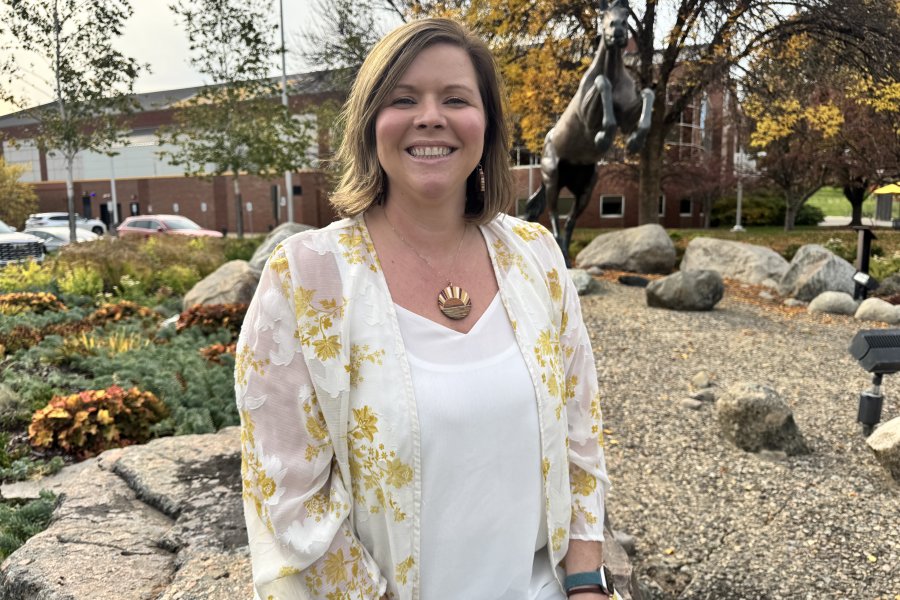
Amie Powers, M.A.' 17, founder of Empowering Wellness Services, LLC.
I will forever be grateful to WMU’s Counselor Education and Counseling Psychology department. I viewed my master’s program as more than an academic experience; I saw it as a journey, one that each student must navigate and make their own.
Q&A with Amie
Where do you currently work, and what services do you provide? In 2025, I opened my own private practice, Empowering Wellness Services, LLC. I currently practice as a solo clinician, with hopes of expanding the practice over the next several years. I work with clients experiencing a range of mental health concerns, including neurodevelopmental disorders, anxiety and mood disorders, and developmental trauma.
As a relational therapist, I emphasize the importance of the therapeutic relationship and recognize how early relational experiences can shape an individual’s emotional well-being, patterns of connection, and sense of self. My approach is grounded in helping clients develop greater self-awareness, strengthen interpersonal relationships, and build the skills needed to navigate life’s challenges with greater confidence and resilience.
How did WMU prepare you for your career? How did WMU prepare me for my career? How did it not?! I received an incredible education at Western Michigan University, where I earned both of my undergraduate degrees in biomedical sciences and French before returning for my graduate education. I am, without a doubt, a Bronco for life!
I will forever be grateful to WMU’s Counselor Education and Counseling Psychology (CECP) department. I viewed my master’s program as more than an academic experience; I saw it as a journey, one that each student must navigate and make their own. I took that journey seriously and was fortunate to learn from exceptional professors who challenged me, guided me, and helped shape my development as a clinician.
My education at WMU provided me with the foundation to work with diverse populations and integrate a multimodal approach to counseling. Beyond clinical preparation, my time at WMU also equipped me with the skills and confidence to establish my own private practice, identify the populations I wanted to serve, and build a professional identity within the counseling field. WMU did more than prepare me for a career. It helped shape the clinician, business owner, and professional I would become. For that, I will always be grateful.
How did your hands-on clinical training and significant moments at WMU help shape your identity as a counselor? Some of the most significant experiences in shaping my identity as a counselor came through the practical application of skills in both Counseling Practicum and Group Counseling. During practicum, I worked with real clients in the clinic and was videotaped conducting counseling sessions. I was then required to review those recordings and evaluate my own performance as a counselor. This process was instrumental in my growth, teaching me to recognize both my strengths and areas for improvement. Even today, I reflect on those recordings and the lessons I learned about nonverbal communication, body language, and the ways in which our presence can influence the therapeutic relationship.
Group Counseling provided another meaningful opportunity to develop my clinical identity. Our professor observed us facilitating groups in small-group settings, with each student taking a turn as the group leader. We received feedback and were evaluated on our performance, allowing us to practice and refine our skills in a supportive learning environment. I still remember Dr. Anderson telling me, “You’re a real natural.” As a new counselor who was both excited and terrified to step into the profession, those words were incredibly meaningful. They offered reassurance at a time when I was still developing confidence in my abilities and learning to trust myself as a clinician.
These experiences reflect what I valued most about WMU’s counseling program: the balance of practical, hands-on learning with guidance, encouragement, and constructive feedback. The program challenged us to look critically at ourselves, grow through experience, and develop our own clinical identities while knowing we had faculty members invested in our success. Those early experiences helped lay the foundation for the counselor I am today.
What specific areas of counseling are you most passionate about, and how do you integrate them into your practice? I have a particular interest in attachment theory and the Internal Family Systems (IFS) approach to treating developmental trauma. These frameworks inform much of my clinical work, as they provide a deeper understanding of how early relational experiences shape an individual’s sense of self, emotional regulation, and patterns of connection throughout adulthood.
In my practice, I incorporate these approaches to help clients explore how early experiences may continue to influence their present-day relationships, beliefs, and responses to stress. Through this work, clients can begin to recognize and understand the different parts of themselves, develop greater self-compassion, and build more secure and adaptive ways of relating to themselves and others. I find this work particularly meaningful because it allows clients to move beyond simply managing symptoms and begin addressing the underlying patterns that contribute to their distress.
Are there any emerging counseling trends or concerns that you are addressing in your work with families? One emerging area of counseling that I incorporate into my practice is psychoeducation regarding screen time and its potential impact on children with neurodevelopmental disorders. I have training in working with children and parents in this area, and I believe it is increasingly important to help families understand how screen use may affect children, particularly those with ADHD and sensory processing differences.
I work collaboratively with families to explore how screen time fits into their daily routines, establish appropriate boundaries, and navigate digital safety. My goal is to help parents make informed decisions about screen use while considering their child’s individual developmental needs, sensory experiences, and family dynamics.
I believe it is essential to approach this topic without judgment or a one-size-fits-all solution. Every family has unique needs, values, and circumstances. My role is to provide evidence-informed education, support thoughtful decision-making, and help families implement strategies that are realistic and appropriate for their household. Ultimately, I want parents to feel empowered to make decisions that best support their child’s well-being and their family as a whole.