

Registered Student Organization Handbook
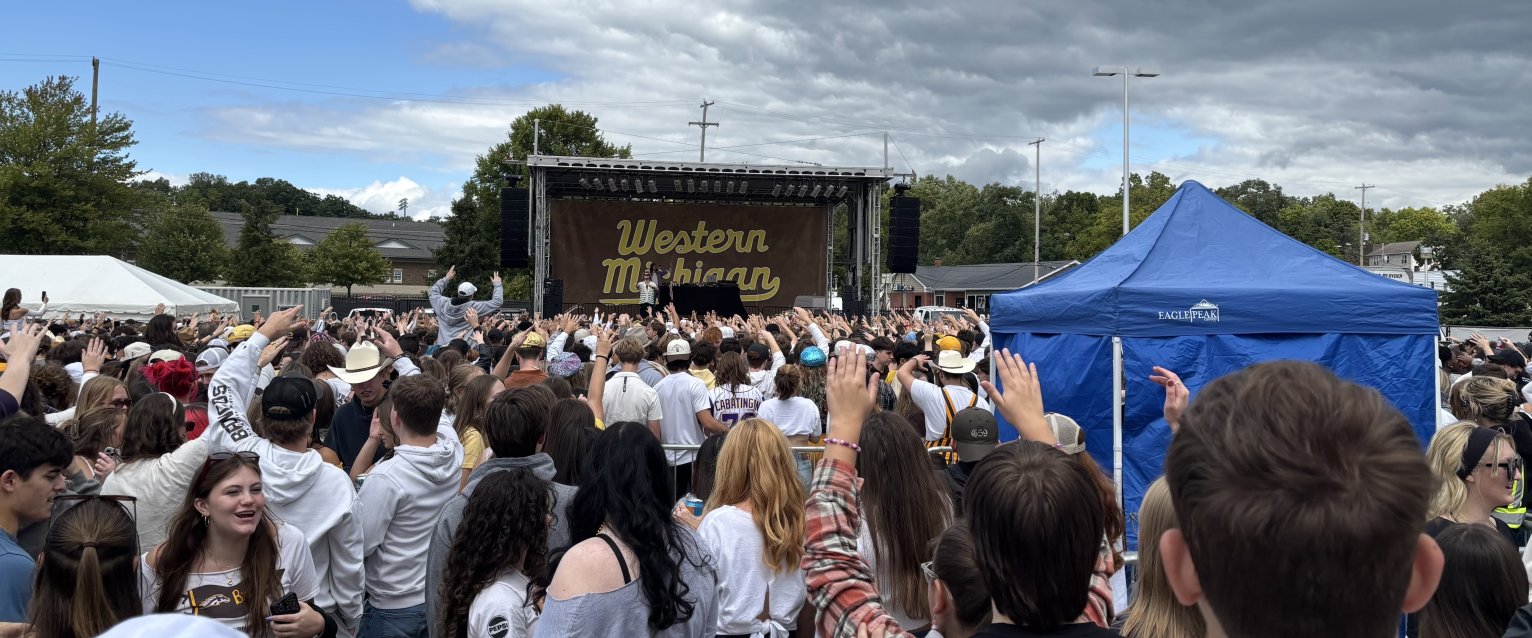
The Office of Student Engagement (OSE) exists to engage campus, empower students, and develop leaders.
Office of Student Engagement Staff Directory
Office of Student Engagement (OSE) Main Office
1070 Arcadia Loop
Kalamazoo, MI 49008-5356
Phone: 269-387-2115
Fax: 269-387-2185
Website: wmich.edu/studentengagement
Student Organization Center (SOC)
WMU Student Center
Student Media Group (SMG)
The Student Media Group was created in 2013, bringing together the Western Herald and WIDR 89.1 FM the SMG umbrella to serve the media needs of the students at WMU. Located in the Student Organization Center.
Website: wmich.edu/studentengagement/studentmedia
Faith and Spiritual Development
OSE
Phone: 269-387-2119
Website: wmich.edu/student-center/kanley
Student Center
A vibrant community center for campus life. Students and community members can visit the Student Center to eat, buy textbooks, use the computer lab, attend RSO meetings, and more.
Phone: 269-387-4860
Website: wmich.edu/studentcenter
Division of Student Affairs (DOSA)
Envelops all areas of student services (residential life, student conduct, student activities, recreational sports, wellness, career development, counseling and testing services, multicultural affairs, campus police, Student Center, etc.)
Website: wmich.edu/studentaffairs
Academic Resource Center
WMU offers multiple academic support services to all students, as well as specialized programs available to certain populations of students.
Website: wmich.edu/tutoring
Career and Student Employment Services
This is your home base for exploring career options, job searching, interviewing, negotiating and finding internships. All these resources are available to WMU students, employers hiring Broncos, WMU alumni, student-employee supervisors, WMU faculty and staff, and students’ families.
Website: wmich.edu/career
Registrar’s Office
The mission of the Registrar's Office is to support learning, discovery, and global engagement at Western Michigan University by maintaining the accuracy, integrity, and security of student records, ensuring compliance with academic policy and higher education regulations, and serving the diverse and changing needs of the campus community. Services provided by the Registrar's Office include course record management, classroom assignment, final exam scheduling, publication of the University's Undergraduate and Graduate Catalogs, academic record creation and maintenance, student registration information, grade processing, transcript issuing, degree auditing, and graduation.
Website: wmich.edu/registrar
Office of Diversity and Inclusion
ODI provides leadership and accountability in guiding systemic change in order to be equitable in access, resources, and opportunities for all in the WMU community.
Website: wmich.edu/diversity
Multicultural Center
The Multicultural Center at Western Michigan University provides the university student population with spaces for study, meetings, projects, and conversation. It also provides information on diversity and ethnic and cultural issues through speakers, events, exhibits, and displays scheduled by university groups and organizations.
Website: wmich.edu/diversity/center
Multicultural Affairs for Students
Multicultural Affairs for Students helps students identify their unique purpose and potential by providing them with opportunities to discover and develop talents and interests. We strive to create an environment that enables them to grow and thrive intellectually, culturally, professionally, and personally throughout their college experience. We foster community involvement and promote a campus climate that respects and appreciates the history, culture, and traditions of all students.
Website: wmich.edu/multicultural
Disability Services for Students (DSS)
Disability Services for Students at Western Michigan University strives to make education accessible and remove barriers to student success.
Website: wmich.edu/disabilityservices
LBGT Student Services
The Office of LBGT Student Services offers support, education and advocacy around issues of gender identity/expression and sexual orientation to the WMU community. We collaborate with student organizations, university departments and local organizations to provide our campus community with access to healthy resources, activities, and support services.
Website: wmich.edu/lbgt
International Student and Scholar Services
On this page, you will find resources for prospective international students, including information about virtual tours and meetups, funding opportunities, and how to apply.
Website: wmich.edu/internationaladmissions
Aira access in WMU
Website: wmich.edu/disabilityservices/accessibility/aira
ExperienceWMU Website
Discover unique opportunities at Western Michigan University to get involved in Registered Student Organizations (RSOs) and event opportunities.
Website: https://experiencewmu.wmich.edu/
Sindecuse Health Center Counseling Services
Sindecuse staff serve Western Michigan University in diverse ways. Nursing services include, but are not limited to, international travel consultation, immunizations, allergy injections, pregnancy testing, EKGs, drug screening, suture removal, ear lavage, and blood pressure checks.
Website: wmich.edu/healthcenter
Counseling and Testing Center
Counseling Services provides psychotherapy and mental health assistance to enrolled WMU students only. Students with full- or part-time status, including those at regional campuses may use our services.
Website: wmich.edu/healthcenter/counseling
WellTrack Self-help App
Free online self-help resource available to all WMU students, faculty, and staff. WellTrack users are able to assess their personal well-being and access resources tailored to address symptoms of stress, anxiety, and depression.
Website: wmich.edu/healthcenter/counseling/useful-apps/welltrack
Montgomery Essential Needs
Montgomery Essential Needs can support you with meeting your basic needs, like groceries, personal care items, unexpected bills and more.
Website: wmich.edu/essential-needs
WMU Department of Public Safety (DPS)
Focuses on four main areas: police, parking services, environmental health and safety, and security administration.
Website: wmudps.wmich.edu
Uwill
Uwill offers free access to teletherapy that is open 24 hours a day, seven days a week throughout the year to all enrolled WMU students, regardless of their location.
All students have access to 30-minute sessions. After three initial appointments, students can access two additional sessions. WMU mental health staff will then work with students to explore options going forward, given the spectrum of support on campus.
In addition to those resources, Uwill offers unlimited 24/7 year-round access to a crisis hotline by calling (833) 646-1526.
Website: wmich.edu/students/health/uwill
The Office of Student Engagement (OSE) recognizes hundreds of Registered Student Organizations (RSOs) at WMU. Currently enrolled WMU students come together to form RSOs around common interests and communities. An RSO must include a minimum of four (4) students, but some consist of hundreds. OSE staff members engage students in learning and personal development by advising, not supervising, student organizations.
Registered Student Organizations (RSO)
The purpose of registering student organizations is to give them access to university facilities, funding, and opportunities for leadership development.
The university will officially recognize student organizations and agencies that meet the criteria below. However, such recognition does not imply that WMU is liable for the actions of an organization because of its association with the university. Furthermore, the student organization agrees to assume responsibility and indemnify and hold harmless WMU, its trustees, employees, and agents for any and all liability that may result from actions conducted on or off campus, including, but not limited to judgment costs, attorney’s fees, discovery costs, or other expenditures.
In the event that an RSO engages in behavior or sponsors an event or an activity, which, in the judgment of the university, is adverse to the best interests of the university, the university may intervene and take appropriate corrective action. In such an event, the university will, to the extent practicable, work with the RSO to minimize disruption and to provide guidance on appropriate RSO behaviors and activities.
Organizations that promote and/or involve drugs, alcohol, and/or intentional discrimination of any group will not be approved or recognized by the OSE. Additionally, any organization with goals or objectives that do not support the mission of the OSE and the University will not be approved.
Student Assessment Fee Agencies
Student Assessment Fee (SAF) Agencies are student-led organizations that receive funding through the SAF to provide programs, services, events, and opportunities that benefit the broader Western Michigan University student community.
Unlike most RSOs, SAF Agencies typically serve a larger campus wide purpose and are entrusted with managing allocated student funds to support their operations and impact. These agencies help create engagement opportunities, build community, provide leadership experiences, and enhance student life outside of the classroom.
Each SAF Agency has a distinct mission and area of focus, but all are expected to:
- Support and enrich the student experience
- Operate responsibly and steward student funds effectively
- Provide opportunities that are accessible to the WMU community
- Maintain accountability through university policies and reporting processes
SAF Agencies play an important role in shaping campus culture and creating experiences that contribute to student success, belonging, and engagement. Our current SAF Agencies are:
- Campus Activities Board
- Graduate Student Association
- Sports Club Council
- Student Media Group
- Western Student Association
Acknowledged Student Organizations (ASO)
Acknowledged Student Organizations (ASOs) are student groups recognized by WMU for their desire to gather and build community, but who prefer to operate with minimal requirements. ASOs are ideal for small, interest-based, or informal groups that want a simpler path to organizing on campus without the formal structure of a Registered Student Organization.
Requirements for ASOs:
- Membership: Must maintain a minimum of three (3) currently enrolled WMU student members.
- Constitution: Must submit a basic constitution outlining the organization’s purpose, membership, and meeting guidelines.
- Acknowledgement Process: Must complete a brief acknowledgement process through ExperienceWMU each academic year.
- ASOs are not required to have an advisor or attend leadership training.
Benefits for ASOs:
- Room Reservations: May be eligible to reserve campus spaces for meetings and events; however, not classrooms.
- Community Building: Opportunity to create a social or identity-based space for students with shared interests.
- Simplicity: Less administrative burden allows for greater flexibility and independence.
Limitations of ASOs:
- Not eligible for Student Assessment Fee (SAF) allocations.
- Not eligible for official WMU email accounts
- Not eligible for Student Organization Center (SOC) space.
- Not eligible to apply for leadership development programming, Golden Bronco Awards, or university-sponsored marketing tools.
- May not access certain resources reserved for RSOs or SAF-Funded Organizations.
RSO Classifications
- Academic
- Cultural-International
- Faith/Spiritual
- Fine & Performing Arts
- Fraternity
- Honorary
- Media
- None
- Political & Social Action
- Service-based
- Sorority
- Special Interest
- Sports & Recreation
- Student Government
RSO Registration Requirements
To become a Registered Student Organization recognized by WMU, RSOs student groups must complete the following steps:
- Register (or re-register) on the ExperienceWMU website. A minimum of four (4) members with wmich.edu email addresses must be listed before the organization can be approved. Students who are listed as members or officers of an organization must be currently enrolled WMU students, should be in good academic and disciplinary standing with the university, and should meet the criteria stated in the organization’s charter or constitution.
- Create or update a current constitution that includes:
- The organization’s name
- The organization’s purpose
- Finances section
- This exact statement: “{Name of RSO} will follow and be subject to all University policies, procedures, and practices regarding student organization accounts and finances.”
- Statement of disposition of funds if the organization ceases to exist. Usually, this statement says funds will be given to a nonprofit, WMU department, another RSO, or a headquarters organization. Funds cannot be left in an account for any period of time or given to members. This statement must be present regardless of the organization’s plans to acquire/not acquire funds.
- This exact statement of compliance: “{Name of RSO} will comply with all OSE and University policies, procedures, and practices and all local, state, and federal laws.”
- This exact nondiscrimination statement: “{Name of RSO} will not discriminate on the basis of race, color, religion, national origin, sex (including sex stereotypes, sex characteristics, pregnancy and related conditions), sexual orientation, gender identity, age, protected disability, protected veteran status, genetic information, height, weight, familial status, or marital status.”
- Nondiscrimination statement modeled on the University’s nondiscrimination policy. Website: wmich.edu/policies/non-discrimination.
- The organization’s name
- Example: RSO Sample Constitution.
- Identify an RSO Advisor. All RSOs must have an advisor (a WMU faculty member, staff member, graduate assistant, or qualified community member) to register or re-register. The advisor must be a faculty, staff, or graduate student of WMU or a community member with a vested interest and skills relevant to advising the RSO. You will need to work with them to complete two required forms: the RSO Advisor Expectations form and the RSO Advisor Letter of Intent form.
To become an Acknowledged Student Organization (ASO) recognized by WMU, all student groups must complete the following steps:
- Register (or re-register) on the ExperienceWMU website. A minimum of three (3) members with wmich.edu email addresses must be listed before the organization can be approved. Students who are listed as members of an ASO must be currently enrolled WMU students and must be in good academic and disciplinary standing with the university.
- A simple constitution is required. Example: ASO Sample Constitution
- No advisor required.
- No orientation required.
- No officers required.
Each academic year, RSOs and ASOs must complete this process to register with WMU officially. A club or organization will not be officially recognized as an RSO and cannot receive benefits unless it is registered. Best practice is to re-register existing organizations between Spring Break and finals, but new organizations can begin the registration process at any time. ExperienceWMU will save your information from the previous year, so you do not need to start from scratch.
To begin, use the ExperienceWMU website. Type in the name of your existing RSO and click “Re-register,” or if you are starting a new RSO, scroll down to “Register a New Organization.” The portal will guide you through the process step by step. You will be prompted to upload your required documents, including the updated RSO Constitution, RSO Advisor Letter of Intent, and RSO Advisor Expectations form, so be sure you have those ready when you go to register. If you have any questions or need help registering your organization, contact the RSO Development Specialist: @email
For an RSO to remain a registered and recognized student organization, all of the executive-board members must be current WMU students. A current student is defined as an undergraduate or graduate student taking at least 3 credits. The names of the president and financial officer must be provided each year during the re-registration process or if they change at any point throughout the academic or calendar year.
Serving on Multiple Executive Boards
To protect the integrity of student organizations at WMU, groups may not create additional organizations with the same executive board. This policy is in place to prevent students from manipulating the system, reduce the risk of burnout among student leaders, and create fair access to leadership roles for all students.
Student organizations cannot register new groups if the core leadership positions (such as president, vice president, treasurer, and secretary) are held by the same individuals in both organizations. This includes any attempt to duplicate or mirror the executive board of an existing organization.
All new organizations must submit a proposed executive board when applying for registration. OSE will review the list to confirm it does not duplicate leadership from another group. If a duplicate executive board is found, the new organization will not be approved. In some cases, the status of the existing organization may also be reviewed and changed based on the circumstances.
Academic Standards for RSO Officers
This guideline is intended to closely align RSOs with the mission and academic goals of WMU and to ensure that all student leaders appreciate and uphold the value of scholarship while being actively involved in the campus community.
OSE recommends that all RSO executive board members adopt a minimum 2.3 GPA standard for elected or appointed positions. Organizations with a pre-existing academic standard above 2.3 are encouraged to maintain their own higher standard. OSE can check grades for RSOs with an official request by the president or advisor of the organization. (Requests will take approximately 10 business days to complete, so please plan accordingly.)
Form: RSO Grade Waiver
Once your organization meets the basic registration requirements (including good standing with the university), it will be granted active status. Active status will allow your organization to take advantage of the privileges granted to Registered Student Organizations.
ExperienceWMU Database
ExperienceWMU also has a database that allows students to explore other registered organizations and learn how to connect with them. ExperienceWMU can also be used as a way to create surveys, other forms, and election ballots for organizations while also providing the opportunity to create and advertise campus events. Also available to ASOs.
Student Organization Center Information
We invite all RSOs to apply for a space in the Student Organization Center (SOC). In this space, there are offices, desks, and storage lockers that RSOs may apply for. In addition, we have larger storage spaces available for large items belonging to registered student organizations. Please know that ALL these spaces must be applied for each year, and that your engagement in the space, if you previously had one, will be considered when reviewing your application. Your RSO may apply for spacing in the SOC through this link (https://experiencewmu.wmich.edu/forms) starting March 1st of every year.
Mailboxes
RSOs can receive a mail cubicle with their SOC space in the Student Center. If the OSE happens to receive mail on behalf of an RSO, we will work to distribute it to the cubicles provided on an as-needed basis. For questions about mail, please call the OSE at 269-387-2115.
WMU Email
RSOs can request a WMU email address. (Or request a reset to an existing RSO WMU email.)
Request form: Email Request Form
All email holders must follow the policies and rules governing the use of WMU email accounts.
Website: wmich.edu/it/rules/emailaddress
Representation at Western Student Association
Every organization has the option to participate in campus issues via the Western Student Association (WSA). All organizations are granted one representative position in the WSA Senate. WSA representation is mandatory for RSO allocations.
Website: wmuwsa.org
Mediation and Conflict Resolution Services
Periodically, RSOs may have an internal issue that requires mediation from an unbiased, outside entity. OSE has professionals who can assist an organization in achieving a resolution diplomatically. However, OSE will not intervene unless asked by all parties to enter as a mediator.
To set up a meeting, please contact the Director of Student Engagement: @email.
Accessibility
For questions about building accessibility, please contact the appropriate Building Coordinator by navigating to this website and selecting the name of the building in question.
Website: fm.wmich.edu/ap/bldg/buildingList.php?sort=code
Reservation Process for Academic Buildings
- Advance Notice: Requests must be submitted at least 5 business days in advance. (Note: We are closed on Saturdays and Sundays.)
- Email Requirement: All requests must come from a wmich.edu email address. Personal email accounts (e.g., AOL, Gmail, Yahoo) will not be accepted.
- Advisor Eligibility: Advisors must be active WMU faculty or staff members. Student members, friends, or community members cannot serve as official advisors in this specific capacity.
- By Student: Reservation cannot be made by the advisor.
- Building Hours: Academic buildings (Sangren, Brown, Dunbar, Kohrman, Rood, Schneider, and Wood) close at 9 PM Monday–Thursday and 5 PM on Friday. They are not available on weekends.
- Reservation Method: Reservations cannot be made in person or by phone. All requests must be submitted through the online form
- Form: RSO Request for Academic Classroom Space
Student Center Reservations
There are several meeting rooms available for conferences, events, and meetings for all Registered Student Organizations (RSOs), university departments, professional organizations, and the community. The Student Center is wheelchair accessible and has an elevator. Specific guidelines and procedures on how to reserve a room in the Student Center can be found on their website.
Website: wmich.edu/studentcenter/reservation
Multicultural Center
The Multicultural Center (MCC) at WMU provides the university student population with spaces for study, meetings, projects, and conversation. The MCC is located in the Trimpe Building on campus. For reservations, see the Office of Diversity Inclusion website.
Website: wmich.edu/diversity/center
Residence Halls
Residence hall spaces are not open to the public. Lounge and meeting room space is intended for use by the residents of the hall. As such, outside groups and individuals are not able to use the space for meetings and other purposes. Resident requests for space are fielded by Hall Directors.
- Residents can host a group/organizational meeting in the halls, but not on a regular basis. The residence halls are not intended to be a regular meeting place for RSOs, mentoring, or informal groups. RSOs need to make arrangements via the Student Center or academic buildings (Registrar’s office).
- Internal (created by residence hall students) faith-based study groups that meet on a weekly basis can be approved. It is recommended that a suitable space be found for them to meet that balances their needs while leaving large programming/academic space open and available.
- Dance groups should not meet or practice in the residence halls.
For questions about these procedures, please contact Laura Darrah, Assistant Director of Engagement and Assessment, Housing and Residence Life: @email or 269-387-4463.
Student Recreation Center
The Student Recreation Center at Western Michigan University is 240,000 square feet of fun! We allow imagination to flourish as you create the right setting or ambiance for a successful event. Hosting your event at the rec center is affordable and convenient and provides a safe, interactive environment. We can customize a rental package to meet your organization's needs—small or large, indoor or outdoor. Our space is equipped with storage for decorations and supplies, along with walkie-talkies for communication with on-site participants. Ask about the various equipment available for rent.
Outdoor Space
Reserving outdoor space is done through the Student Center main office. Procedures to reserve outdoor space can be found on their website
Website: wmich.edu/studentcenter/outdoor-reservation
Outdoor Space Locations
- Goldsworth Valley Pond
- The Fountain Plaza (Approval from Miller, Dalton, and Shaw staff may be required.)
- The Pavilion
- Board of Trustees Plaza
- Sun-Dial Area
- Campus Center, W Plaza (flagpoles)
- Amphitheater
- Grass Area in front of the Student Center (Approval from Student Center staff may be required.)
- Faunce Student Services Building Courtyard
- Outdoor Field Areas: A field permit is required for the use of outdoor university recreation grass spaces. For more information about obtaining a field permit, contact Chris Voss, University Recreation: @email or 269-387-3772.
Student Assessment Fee Allocation Agencies
Western Student Association
The Western Student Association Allocation Committee (WSAAC) is a standing committee of the Western Student Association (WSA), with the primary function of allocating a portion of the funds collected through the Student Assessment Fee. During the fall and spring semesters, WSAAC distributes guidelines and procedures for applying for available funds.
For the most current guidelines and procedures, please visit their website.
Website: wmuwsa.org/funding
Contact WSAAC at @email.
Graduate Student Association
The Graduate Student Association (GSA/GFAC) is a committee of and for graduate students at WMU. GFAC is the Graduate Financial Allocation Committee, a standing subcommittee of GSA. GFAC is charged with the allocation of Student Assessment Fee funds to primarily graduate-level RSOs.
For the most current guidelines and procedures, please visit their website.
Website: wmugsa.org
Contact GFAC at @email.
Sports Club Council
Sports Club Council (SCC) is committed to promoting sports clubs at WMU by providing resources and support to help ensure the growth of club teams. For complete funding rules and responsibilities, contact the Student Recreation Center.
For the most current guidelines and procedures, please visit their website.
Website: wmich.edu/rec/sportsclubs/sportsclubcouncil/allocationprocess
Contact Kyle Belback at @email.
Student Sustainability Fee Funding
The Student Sustainability Grant Allocations Committee (SSG-AC) is an all-student grant review committee for the Student Sustainability Grant (SSG). SSG-AC supports the sustainability initiatives of individuals and RSOs. The SSG-AC holds deliberations once per semester (fall and spring).
For the most current guidelines and procedures, please visit their website.
Website: wmich.edu/sustainability
Contact @email.
Golden Broncos
Golden Bronco awards are a way to recognize your RSO or specific student leaders for a year of outstanding accomplishment and achievement. Nominations can be submitted through ExperienceWMU during the spring semester. Some examples of past Golden Bronco Awards include:
- RSO of the Year
- Most Improved RSO of the Year
- Best New RSO
- Greek Emerging Leader of the Year
For questions regarding Golden Bronco awards, please contact the RSO Development Specialist at @email.
RSOs are encouraged to utilize the Wellbeing Wheel for their personal and interpersonal wellbeing within their RSO. Please reference the Well-Being Wheel Brand Guide to learn more on how to best utilize the Well-Being Wheel for your RSO's purposes. The brand guide is a useful tool to promote RSO events according to which dimension(s) of wellness each event aims to enhance for its attendees.
View the Wellness Wheel Branding Guide.
RSO advisors are important because they are role models for students, and their involvement in the organization provides learning experiences that are transferable to situations beyond college. Advisors are not required for ASOs. To assist the RSO and the advisor, the OSE offers the following list of responsibilities:
Advisor Responsibilities to the RSO
- Serve at the discretion of the organization.
- Assist officers in understanding their duties, administering programs and plans, organizing projects, and making appropriate transitions.
- Preserve the continuity of the organization through the constitution, traditions, files, and minutes.
- Encourage the use of procedures to ensure that the meetings run in an efficient, orderly, and consistent manner.
- Encourage students to understand and apply democratic principles, including the recognition of diverse opinions and rights.
- Attend as many organization meetings and events as possible.
- Articulate campus policies and procedures and help cut through “red tape” when necessary.
- Support officers and be available for the evaluation of ideas.
- Facilitate discussions among officers and between officers and members.
- Assist with resolving disputes within the organization.
- Be familiar with the national structure and services if relevant.
- Assist with specific university services, for example, obtaining an organization account or obtaining facilities.
- Consult on programs.
- Advise individual students when necessary.
- Advise on financial matters, but do not directly apply for allocations.
- Assist the organization as needed.
- Provide historical context of RSO to new leadership/information necessary for leadership transitions.
RSO Responsibilities to the Advisor
- Notify the advisor of all meetings and events.
- Confer with the advisor on plans, projects, and events.
- Consult with the advisor before making structural or policy changes.
- Understand that although the advisor has no vote, they should have speaking privileges.
- Remember, the responsibility for the success or failure of group projects rests ultimately with the group, not the advisor.
- Acknowledge the advisor’s time and energy and express appropriate appreciation.
- State clearly and openly the expectations of the advisor.
- Evaluate the advisor and periodically give appropriate feedback.
Source: Reinhardy, G. Training organization advisors. Student Activities Programming, 1981, 14(1), 39-41. Appendix A.
Any student who chooses to enroll at WMU assumes the obligation for conduct that is compatible with the university's mission as an educational institution. While students have the privilege to enroll at the institution of their choice, choosing to enroll at WMU requires a student to become aware of, and abide by, the behavior standards of the university. Ignorance of acceptable boundaries of student behavior as contained in the RSO Handbook and/or the Student Code is not a basis for excusing inappropriate behavior.
Website: wmich.edu/studentrights/code
OSE has the official role of recognizing student organizations at WMU. Members of RSOs must adhere to all current university and OSE guidelines and procedures, and all those developed in the future.
Flyer and Poster Guidelines
Flyer and poster guidelines website: wmich.edu/policies/posting
Electronic distribution guidelines website: wmich.edu/policies/mass-email
Social media posting website: wmich.edu/policies/social-media
Student Center posting guidelines website: wmich.edu/studentcenter/policies/flyer
Residence Life posting guidelines website: wmich.edu/housing/postingpolicy
Student Recreation Center posting guidelines website: wmich.edu/rec/about/policies#posting
Academic Buildings
Contact the Building Coordinator about the requested building.
Use of the university's name in the identification of the organization and in the sponsorship of activities and events requires that the organization list its name first and the university's name or abbreviation second. For example, “Student Club at WMU” is acceptable, but neither “WMU Student Club” nor “Western Michigan Student Club” are allowed.
The rocks between Goldsworth Valley Pond and Gilkison Avenue have been designated for painting by Registered Student Organizations on campus. No other painting of any sort is permitted on any other university property. Violators will be subject to full restitution in accordance with the Student Code of Conduct. Guidelines for painting the rocks:
- Painting the rocks is on a first-come, first-use basis. All organizations have equal access to the rocks.
- Clubs and organizations may not cover or “guard” the rocks after painting them and thus may not prevent other organizations from painting over their work.
- The purpose is to promote RSOs.
- All drawings and words must be appropriate.
When developing a logo for your RSO, refer to MarCom for compliance with university expectations. Submit your logo or apparel designs for approval by MarCom.
For promotional items or apparel featuring your organization’s logo, please use one of the university's approved licensed vendors to ensure proper branding and quality.
If you have questions, email Kim Nelson at @email, Director of University Creative Services.
Please review RSO logo and tradmark policies.
RSOs interested in organizing philanthropic donations (food drives, clothing collections, Toys for Tots, etc.) must work directly with the coordinator(s) of the building(s) in which donation bins will be placed. RSOs must comply with all guidelines and procedures set forth by the building(s)’ coordinator(s).
Contact the Building Coordinator about the requested building.
Screening of Copyrighted Movies on Campus
The Federal Copyright Act (Title 17 of the United States Code) governs how copyrighted materials, including films, television programs, and streamed content, may be used and displayed.
Purchasing, renting, borrowing, subscribing to, or accessing a film or streaming service does not automatically include the right to show that content in a public setting. In most cases, showing copyrighted audiovisual content outside of a private residence is considered a public performance and may require permission or a public performance license from the copyright holder.
Educational and Instructional Use
Federal copyright law provides a limited exemption for certain instructional activities. To qualify for this exemption, the showing of a film generally must:
- Occur in a classroom or similar instructional setting.
- Be directly connected to face-to-face teaching activities.
- Be part of the systematic instructional activities of a course.
- Be limited to students enrolled in that course.
- Use a lawfully obtained copy of the work.
Showing a movie for entertainment, social engagement, recruitment, club activities, celebrations, residence hall programming, or other non-instructional purposes typically does not qualify for this exemption and may require licensing.
Streaming Services
Personal streaming subscriptions (for example Netflix, Hulu, Disney+, Max, Amazon Prime Video, YouTube TV, etc.) generally do not grant public performance rights for campus events, organization meetings, residence hall programs, or public gatherings. Even if content is accessed through a personal or university-affiliated account, additional permissions or licensing may still be required before showing content publicly.
Public Performance Licensing
When a public performance license is required, permission must be obtained from the copyright holder or an authorized licensing agency before the event occurs.
Common licensing providers include:
- SWANK Motion Pictures: www.swank.com
- Criterion Pictures USA: www.criterionpicusa.com
- Other licensing agencies or distributors, as determined by the rights holder
Building and Space Requirements
In addition to copyright compliance, university buildings and spaces may have additional operational requirements or restrictions related to audiovisual content, event approval, technology use, occupancy, or licensing. Event organizers should consult with the building coordinator or facility contact before scheduling any screening or showing copyrighted material.
Questions
Questions regarding film screenings, streaming content, or public performance licensing may be directed to:
Office of Student Engagement
269 387 2115
wmich.edu/studentengagement/contact
Office of Marketing and Strategic Communication
269 387 8400
wmich.edu/marcom/contact
This information is provided as general guidance and does not constitute legal advice.
Any RSO or university affiliate interested in sponsoring and organizing a ball or dance should contact the assistant director of campus engagement to set up a meeting at least one month in advance. All event and security procedures apply.
Contact Tyler Maruschak at tyler.maruschak@wmich.edu
As an open community, WMU protects freedom of expression and powerfully affirms civility. As such, all members of the university community and all those who visit our community are expected to respect the rights and dignity of others. All event and outdoor space guidelines apply.
For the full policy on the First Amendment on campus, please visit the website.
Website: wmich.edu/freespeech/first-amendment
Fundraising and Solicitation
Registered Student Organizations may conduct fundraising activities to support their mission, programs, travel, events, or organizational operations, provided all university policies and applicable laws are followed.
Office of Student Engagement Role
The Office of Student Engagement supports student organizations in navigating university processes but does not manage organization funds or fundraising activities. Specifically, the Office of Student Engagement:
- Does not collect, hold, deposit, or distribute fundraising proceeds on behalf of student organizations.
- Does not process payments for organization fundraisers.
- Does not promote or distribute fundraising campaigns through official fundraising channels.
- Is not responsible for tracking, reconciling, or safeguarding funds collected by student organizations.
Student organizations are responsible for independently managing fundraising activities and complying with university, local, state, and federal requirements.
Residence Hall Fundraising and Solicitation
All fundraising activities taking place within residence halls must receive approval from the Office of Housing and Residence Life. No fundraising or solicitation by student organizations may occur in residence halls or cafeteria foyers without explicit permission. Sales of food by non-residence hall groups are not permitted in residence halls.
Leafleting, distribution, and solicitation by university organizations for non-revenue-producing purposes must also be approved by the Office of Housing and Residence Life.
At no time may postings be placed under residence hall room doors except for materials authorized by Housing and Residence Life.
The following conditions apply to activities occurring in residence hall lobbies and cafeteria foyers (not within cafeteria dining spaces):
- Approval has been obtained from the Office of Housing and Residence Life.
- The time and duration are established and approved prior to the activity.
- Activities do not interfere with normal residence hall operations.
- The area is restored to its original condition following the event.
Additional Building Requirements
Individual university buildings and departments may maintain additional requirements related to fundraising, solicitation, sales, reservations, or event approvals. Student organizations are responsible for checking with the appropriate building coordinator or facility contact before conducting fundraising activities in any campus space.
Questions
For fundraising and student organization questions, contact the Office of Student Engagement at 269-387-2115 or wmich.edu/studentengagement/contact.
For residence hall approvals and policies, contact the Office of Housing and Residence Life at 269-387-4735 or wmich.edu/housing/contact.
For detailed event safety and security measures, please review WMU’s Public Events Policy.
Event Checklist
Funding and Payment
- Make a budget
- Identify potential funding sources/allocating bodies
- Contact RSO Financial Advisor for assistance with paperwork, including contracts
- Determine paperwork deadlines in advance and plan accordingly
Transportation and Lodging
- Connect with agent/artist/for arrival/transportation information
- Transportation rental
- Hotel confirmation
Promotional Considerations
- Complete marketing plan
- Get advertising materials approved and distributed
- Use campus media and advertising sources: WIDR 89.1 FM, EduCABLE, MTV U, Western Herald, Student Events Calendar
Venue/Event Space
- Check with the venue about the reservation/set up/catering (if needed)
- Reserve all for outdoor space reservations
- Check on any special requirements (security, stage, room set-up, etc.)
- Technical issues
- Notify Student Engagement if attendance will be larger than 100
Volunteers
- Setup/Tear Down/Clean Up
- Greeters/Tickets/Counters
- On-Stage/Sound Help/Announcements
Statement of Date Auctions
The purpose of this statement is to briefly discuss four aspects of date auctions that make them inappropriate (in the opinion of the OSE). It is not our intent to propose that the organizations that have sponsored date auctions in the past had any intentions of promoting or endorsing these issues. Rather, it is our intent to promote awareness of these concerns and point out potential problems and liabilities for future consideration.
Racial Insensitivity
Date auctions tend to have the appearance of and the “trappings” of slave auctions. Slave auctions were a very real and tragic part of the history of this country. Regardless of the intent of a date auction, it still involves one person “bidding” for the services of another person. Whether the services consist of work or time or something else, an auction of this type consists of one person paying a second person (or organization) for the services of a third person. The bidding process invariably involves a comparison of the relative “value” of each person being auctioned. On a campus where equality, openness, and sensitivity are valued, any activity that suggests the auctioning of one human being’s services to another is inappropriate.
Perceived Entitlement
An extension of the issues above is the need for us all to respect the rights of others and to know that a person cannot be bought. One of the dangerous attitudes that continues to exist between people is the concept of “whoever pays is entitled.” Many date rapes result from the assumption on the part of the individuals that whoever pays for the “date” is entitled to more than what the other person wanted. Date auctions can tend to create an environment where those expectations may be used to the disadvantage of one or the other participants.
Gender Dynamics and Sexuality
It is important to consider societal presumptions regarding gender dynamics when thinking about date auctions. Generally speaking, heterosexual cisgender men often feel entitled to the time and attention of women, which can lead to unsafe situations for women being auctioned as dates. Furthermore, date auctions can lead to normative assumptions about the gender identity and/or sexuality of the person being auctioned. The date would go to the highest bidder, regardless of the sexual and gender identity of either party. Therefore, there is always the potential for discriminatory and exclusive practices regarding gender identity and sexuality in date auctions.
Personal Safety
A date auction often involves a “well-known” person spending time with a stranger on a “date” that an individual otherwise might not have chosen to spend time with at all. The organization sponsoring the auction has no way of knowing the motivations of the people doing the bidding. A “fatal attraction” circumstance is possible, where the date auction becomes a very convenient means by which a person has the opportunity to “buy” some time with the person to whom the individual is attracted. Although the possibility of this scenario may seem extremely remote, it has considerable liability implications for the organization sponsoring the event. Date auctions are usually held to raise money for good causes. The organizations have very good intentions in sponsoring the activity. Given the above concerns, which expose the potential for persons and/or groups to be offended or hurt, date auctions may be perceived to be an ill-conceived way to raise money.
If an organization wants to hold an auction, we would encourage the auctioning of items, such as tickets to an event or dinners at a particular restaurant, rather than auctioning individuals.
Developed by Texas A & M University (used with permission)
The purpose of WMU’s Alcohol on Campus policy is to ensure the safety of the University community and compliance with State law and university policy when serving or consuming alcohol on the campus of WMU, and to limit the liability of the University due to the consumption and serving of alcohol on WMU’s campus.
Institutions of higher learning face increased accountability relating to the safety of minors on campus. As such, it is the Policy of Western Michigan University that all existing and future University programs and activities involving minors must be developed and administered so as to provide a safe and protective environment for participating minors.
Please review the WMU Minors on Campus policy.
RSOs that host, sponsor, or participate in programs, activities, or events involving minors on campus are responsible for complying with all applicable WMU policies and procedures related to minors. This includes events in which minors are invited participants, attendees, guests, or members of an organization. RSOs should review university requirements regarding minors before advertising, registering participants for, or hosting an activity involving minors and complete any required registration, training, supervision, background-check, or other safety requirements. RSO leaders are responsible for communicating these requirements to organization members, volunteers, advisors, and other individuals involved in the activity. Questions regarding whether an RSO activity falls under the University’s Minors on Campus policy should be addressed with Enrollment Management before the activity takes place.
WMU is a weapon-free school. By order of the Board of Trustees: "No person shall possess on university property any firearms or other dangerous weapons with the exception of police officers, transfer agents licensed to carry weapons and persons using any such weapons for class instruction when authorized by the dean of the appropriate college."
Please review the WMU Weapons Policy.
PROCEDURES FOR REVOCABLE LIMITED EXEMPTIONS OF THE WEAPONS POSSESSION USE POLICY
In order for a limited exemption request to be considered, a student or student organization (the applicant) must submit a written application to the Dean of Students via the office of OSE. Upon receipt of the request, the Dean of Students will convene a review committee to discuss the request. The committee will include staff from OSE, student conduct, WMU Department of Public Safety and others as designated by the Dean of Students, based on the specifics of the request. Before the review committee will consider a request, the applicant must provide documentation of the following:
- Verification of its status or application to obtain status as a currently registered student organization or as an enrolled student. The process for attaining organization recognition is outlined in the “RSO Handbook,” the guide for student organizations and agencies at WMU.
- Articulation of the educational benefits to be gained from participating in said activity. Examples include: The activity or exercise encourages teamwork, the activity or exercise promotes health and fitness, the activity or exercise increases self-respect, the activity or exercise encourages discussion and exploration, or any other potential benefits which may result from this out-of-the classroom experience should be included.
- Verification that the activity or exercise is performed and administered in a way that demonstrates effective citizenship. Applicants are expected to responsibly participate in the event or activity and to adhere to the rules, regulations, and policies of WMU.
- Documentation that the applicant(s) obtained insurance (if applicable) in keeping with the national standards of any relevant professional associations as well as any insurance requirements of the University.
- Participation in a comprehensive training session in regard to the student code. The means through which this training session will be administered will be approved by the director of student conduct and must be attended by the individual applicant and at least 80% of the active members of the club or organization, if the applicant is an organization.
- Written acknowledgement that, excluding certified professionals and teachers, only currently enrolled WMU students will participate in the exercise or activity that takes place on WMU property or in connection with any university facility.
- Agree to comply with all local, state and federal laws as well as all WMU procedures.
- Updated copy of any national standards on file associated with said activity in the OSE. Participation of said activity or exercise on WMU property does not excuse the applicant from adhering to any and all recognized national standards.
- Arrangement for objects* and/or structure to be stored in a location acceptable to the review committee. There will be zero tolerance policy for any objects* and/or structure being stored in any residence halls or automobiles parked in university facilities. The applicant is responsible for all costs and fees incurred in the storing of equipment. Note: *Objects are those items identified by the review committee.
- Objects and/or a structure with accompanying accessories will be moved or transferred in a way that promotes safety for the applicants and the WMU community members not involved in the activity or exercise.
- Agree to adhere to the requirements of the designated WMU facility/space. Written authorization from the facility manager is required (if applicable).
- Each applicant will submit the assumption of risk form/waiver of liability, as well as appropriate releases for individual assumptions of risk as requested by WMU.
- The review committee retains the discretion to deny a request under this procedure for any reason it deems appropriate. Nothing in this procedure creates entitlement for any applicant to utilize weapons on campus. The committee may consider any factor it deems relevant in determining whether the request is appropriate, so long as such factors do not violate university policy, state or federal law.
In addition:
- The review committee has the freedom to accept or deny requests after this discussion and ruling. A written record of the review committee’s decision will be presented to the applicant of the club organization’s president within one week of its decision. Any appeals to the review committee’s decision must be sought through the dean of students or their designee.
- If the requested event includes sparring or contact, the following additional criteria apply: 1) Appropriate protective gear for the exercise or activity must be worn at all times. 2) Appropriate levels of physical skill must be demonstrated before new members may participate in the said activity or exercise. 3) The sparring or contact must be conducted in a manner that adheres to any and all nationally required standards. (Note: each applicant is responsible for developing a mechanism that will demonstrate the completion of these requirements.)
- Each applicant must agree to adhere to any other requirements (additionally) added by the dean of students.
- Each applicant must recognize that failure to comply with the instruction of the dean of students and the review committee will result in immediate suspension of privileges and may result in conduct action through the WMU student code.
- The review committee has the right to revoke, suspend, limit, and alter any previously approved exemption. This list is not exhaustive.
- The review committee reserves the right to alter or amend these requirements.
Note: Applicants seeking restricted use of weapons for academic presentations need to obtain permission from the appropriate college dean. Applicants seeking restricted use of weapons for entertainment purposes must obtain permission from the dean of students. In all instances, WMU’s department of public safety will be consulted prior to a final decision being made. (November 2014)
During the event, it is required that the applicant provide the following (when applicable):
- Arrangements for the exercise or activity to be conducted in an area designated and set aside by the review committee and recognized by the WMU for such use;
- A WMU facility manager to be present for the duration of the activity (if applicable). The facilities manager is responsible for the facility and is in no part responsible for the activity;
- Arrangements for an on-site, certified supervisor present during the duration of the activity or exercise that is responsible for the activity or exercise;
- Arrangements to have a WMU police officer and/or an emergency medical technician present as deemed appropriate for the duration of the activity. (Note: the applicant is responsible for all costs, licenses, and fees that are incurred from the provision of these safeguards).
It is the policy of WMU and its Board of Trustees to foster and encourage a wide variety of political views and to provide all political organizations and candidates equal access to university facilities. The freedom to speak and to listen are central conditions of a university and are inseparable parts of academic freedom. The appearance of political organizations or candidates on campus implies neither approval nor disapproval by the University of those persons, organizations, or their views.
Please review the WMU Political Activities Policy.
Due to the nature of RSO activities, certain types of risk are more prevalent than others. It is important for you to be aware of risk management and consider potential risks.
Any possibility of loss, harm, or damage to individuals, property, or organizations associated with an activity or event would be considered to be a risk. The goal of risk management is to identify, control, and minimize the negative impacts to your organization. It is expected that RSOs take the steps necessary to manage the associated risks.
Please note that the students within your RSO (and not WMU) would be held liable for any incident since RSOs are not affiliated with the institution.
You do not need to have every risk management policy memorized. However, it may be helpful to refer back to this information (or to have this information on hand) while planning an event/activity.
AREAS OF RISK MANAGEMENT
- Financial: Contracts, verbal agreements, budget, and spending
- Personal: Travel, events
- Physical and Emotional: Hazing, Title IX
QUESTIONS TO CONSIDER:
- Does a contract need to be signed for anything associated with this event?
- If this event is held in the community, how will the activity affect the neighborhood?
- What liability does the organization run the risk of incurring?
- What state laws or city ordinances have the potential of being violated?
- What safeguards will be used to keep these laws from being violated?
- List possible problem situations that could present themselves at your activity.
- List how you will resolve each of the situations listed above.
- Do you have an established procedure to follow in case of emergencies?
- Could you convince a reasonably prudent person that your event is not dangerous?
- Is the potential liability for the organization worth the potential benefits to the organization?
Financial risk management includes contracts, verbal agreements, and spending and varies from high to low risk. For example, bringing a speaker to campus for $250 is relatively low risk. Bringing a large act or musician for $1,000 is generally going to be a higher-risk financial commitment. However, put this broad spectrum into the context of your RSO. If your RSO’s annual budget is $2,000, a fee of $500 is 25% of the budget.
VERBAL AGREEMENTS
In terms of verbal agreements, ensure that you use language with contractors, agents, or acts that are noncommittal, such as "I'm looking for a quote” as opposed to "I'm looking to bring you to campus.”
CONTRACTS
Contracts are a binding agreement between two parties in which each gives something in return for something else. Registered Student Organizations (RSOs) routinely use contracts for various means, such as bringing speakers or performers to campus. In contract law, it is extremely important to have your agreement in writing and signed by all parties involved. Courts will generally look at a written contract signed by both parties, treating it as a final written expression of the involved parties. Contracts must be notarized.
RELATIONSHIP WITH THE UNIVERSITY
As an RSO, your student group is recognized by WMU but is not a designated representative to enter into binding agreements on behalf of the University. Although RSOs cannot act as University representatives, your conduct and decisions reflect on the University, so it is important that you conduct yourselves and your affairs in an appropriate manner. When working with third parties and vendors while identifying yourself as a RSO at WMU, the recommendation to avoid the possible misperception as to your group’s authority to act in a contract setting (either with direct or apparent authority) is to say:
“______ organization is a recognized student organization of the university and does not represent the university. The organization cannot contractually obligate the university. As a (member/officer) of _____________ organization, I enter into this (contract/agreement) on behalf of the organization in my role as President/Treasurer/etc.”
Including language like this, both orally and in writing, helps avoid any possible links between your activity and the university. Given the autonomy of student leadership, you must be willing to take responsibility for your decisions as they apply to yourself and your group. By signing contracts, you and/or your RSO, not the university, will be held accountable.
STANDARD SECTIONS OF CONTRACTS
RSOs are encouraged to work through contracts with their advisor and the OSE prior to entering into a contractual agreement. It is important to seek help before signing the contract. If you wait until after the contract is signed, it may create problems for the organization. You are always welcome to contact the OSE for assistance (particularly the RSO Development Graduate Assistant: @email).
- Description: Indicates what the contract covers, such as “Contract for T-Shirts."
- Caption: Indicates who the contracting parties are and when the contract was made.
- Background: Indicates what each party’s business or purpose is, like “Busters T-Shirts, located at 101 Main St. is in the retail business of selling T-shirts.”
- Duration: Indicates how long a contract is valid (often found early in document)
- Definitions: Indicates what the meaning of commonly used words in the contract are like “they” means “Jack's Beans Club” or “late” means “any promise fulfilled after the expiration of the time limit agreed to by both parties.” It is important to define terms that have subtle differences in their meaning like “must” (absolute), “shall” (contingent upon), and “may” (permissive).
- Obligations: Indicates what each party is responsible for in the contract, like “Busters T-Shirts shall supply Jack's Beans Club with 500 T-shirts on September 30 at $5.00 a shirt. Jack's Beans Club must pay Busters T-Shirts $2,500 on the date of delivery.”
- Operative Provisions: Indicates what other provisions are included in the contract, such as any warranties or exclusions that may apply. Often, this is the section of the contract where a disclaimer and limiting language is used to give the party who wrote the contract an advantage over the party that signs the contract.
- Enforcement Provisions: Indicates the part of the contract that deals with “What happens if...” (someone does not fulfill their end of the agreement, something not in the contract is causing problems, where to go if there is a dispute, what happens if the other party said we agreed verbally but it is not in the written contract).
- Closing: Indicates that both parties agree to the contract upon signing the binding document.
ENTERTAINMENT/SPEAKER CONTRACTS
OSE staff members can provide assistance with university entertainment contracts to organizations sponsoring an act. All entertainment contracts funded through the Student Assessment Fee (i.e., GFAC funded, WSAAC funded, etc.) must be reviewed by the OSE. Some contracts may need further authorization from other university entities. Please allow 7–10 business days for review and authorization. The university policy is not to provide checks any earlier than the day of the event.
FINANCIAL PROCEDURES
Student organizations must adhere to all university and OSE accounting policies, guidelines, and procedures. Organizations that violate university and/or OSE financial guidelines, policies, and procedures are subject to disciplinary procedures.
NON-WMU BANK ACCOUNTS
If your RSO collects and/or manages self-generated funds such as membership fees or donations, RSOs can open a non-WMU bank account. Banks encourages anyone who is interested in opening an account to stop by their branch to receive all the necessary paperwork prior to setting up an appointment.
Apply for an Employer Identification Number (EIN) to use on the bank account rather than an individual student’s Social Security Number (SSN). You can apply for an EIN from the IRS (www.irs.gov) by completing Form SS-4. It is recommended that at least two students have signature authority for the bank account.
You will also need to request a verification letter from the RSO Development Specialist: @email or the OSE: https://wmich.edu/studentengagement/contact.
Bring two valid forms of identification (driver's license, state ID, passport, etc.) with you when you go to the bank. They will give you a copy of their Student Organization Certification Form for you to fill out and return. In most cases you will need a deposit of between $100 and $500 to open an account.
Please note: PNC is a separate entity from WMU, and their policies and procedures are subject to change based on their own discretion.
Non-WMU bank account names cannot have reference to WMU.
RSOs are solely responsible for their non-WMU bank account matters. WMU is not responsible in any way for such transactions unless an authorized university official has developed a contractual relationship with the RSO. In addition, WMU will not provide vendors and/or creditors with any information beyond that which is considered public information.
Outstanding invoices or balances with businesses are unacceptable and are the responsibility of the RSO and/or students involved, not the university. Students and RSOs may be held accountable through the WMU Student Code. Additionally, legal action may be taken by businesses to resolve outstanding balances.
FALSIFICATION OF INFORMATION
Providing false information in the process of seeking reimbursement is a violation of law and university policies. Any student who submits documentation that is false will be referred to WMU Public Safety and the Office of Student Conduct to face formal charges.
Personal risk management includes travel and events. Both areas cover a broad spectrum of high- and low-risk activities. Students hosting and/or attending off-campus events will be subject to the same rules and regulations as if they were on campus. Consider factors such as travel distance, event venue rules, local laws/restrictions, event security, and proximity to urgent care. Please view the Clery Information and Links available on the WMU Public Safety website for more information about off-campus travel.
Events can be high- or low-risk. A high-risk event could be a controversial musician or a large-scale event with inflatables. A low-risk event could be simply bringing a noncontroversial speaker to campus. Consider factors such as projected attendance, cost, food, venue, security needs, contracts, activities, and attractions to evaluate the degree of risk to the event.
As set forth in the WMU Code of Conduct: All social events sponsored by organizations or university-affiliated groups, on or off campus, must comply with university alcohol regulations. In addition, the Student Assessment Fee may not be used in whole or in part for the purchase of alcoholic beverages for any purpose.
The WMU Code of Conduct includes policies on alcohol use or possession, drug possession or use, and weapon possession or use.
Please review WMU's Code of Conduct.
Please review WMU’s Public Events Policy.
WMU strictly prohibits all hazing.
Western Michigan University is committed to creating and maintaining a safe campus community that is free from all violence, including hazing. Hazing is in direct opposition to WMU’s values and educational mission. WMU strictly prohibits all hazing—hazing will not be tolerated within any campus organization, athletic program, student group, or other WMU-affiliated activities as a requirement for membership, advancement, or continued good standing in such organizations or activities.
If you need emergency assistance, please dial 911 or call WMU Public Safety at (269) 387-5555, 24 hours a day.
You have a duty to report hazing at WMU.
Anyone who becomes aware of hazing at or related to WMU is strongly encouraged to promptly report the incident to law enforcement and/or to WMU—see “How to Report” (below).
Anyone directly impacted by hazing may report the hazing to law enforcement, to WMU Administration, to both, or to neither.
How to report
- Emergency Assistance: Any hazing incident involving a crime, an emergency, or imminent threat to the health or safety of any person should be reported immediately to the police: WMU Department of Public Safety (DPS) 511 Monroe St., Kalamazoo, MI 49006
Emergencies: 911, (269) 387-5555 - Report Non-Emergency Hazing Acts (or potential acts)
- WMU Department of Public Safety (DPS): Call (269) 488-8911 and ask for a WMU Police Officer.
- Hazing Report Form: Report an incident using the WMU Hazing Prevention Team and Response Taskforce online reporting tool.
- Office of Student Rights and Responsibilities: Faunce Student Services Building, Room 2305, (269) 387-2160, contact online
- Student Complaint Form: For student complaints, concerns or problems, please use the Formal Student Complaint Form.
- Student Concern Form: Report your concern regarding a WMU student who has experienced hazing using the Student Concern Form.
- Anonymous Hotline: Concerns about hazing may also be reported anonymously through the WMU EthicsPoint Hotline.
- Campus Security Authorities (CSAs): University employees and volunteers designated as Campus Security Authorities (CSAs) under the Clery Act may have additional reporting responsibilities upon learning of hazing concerns.
Hazing is against the law. Both state and federal law prohibit hazing.
Federal Hazing Law – The Stop Campus Hazing Act – WMU Policy
WMU defines hazing as – any intentional, knowing, or reckless act or situation committed by a person (whether individually or in concert with other people), whether on or off campus, against another person or persons regardless of the willingness of such other person or persons to participate, that:
- is committed in the course of an initiation into, an affiliation with, or the maintenance of membership in, a student organization; and
- causes or creates a risk, above the reasonable risk encountered in the course of participation in the institution of higher education or the organization (such as the physical preparation necessary for participation in an athletic team), of physical or psychological injury including:
- whipping, beating, striking, electronic shocking, placing of a harmful substance on someone’s body, or similar activity;
- causing, coercing, or otherwise inducing sleep deprivation, exposure to the elements, confinement in a small space, extreme calisthenics, or other similar activity;
- causing, coercing, or otherwise inducing another person to consume food, liquid, alcohol, drugs, or other substances;
- causing, coercing, or otherwise inducing another person to perform sexual acts;
- any activity that humiliates, degrades, or endangers another person;
- any activity that places another person in reasonable fear of bodily harm through the use of threatening words or conduct;
- any activity against another person that includes a criminal violation of local, State, Tribal, or Federal law; and
- any activity that induces, causes, or requires another person to perform a duty or task that involves a criminal violation of local, State, Tribal, or Federal law.”
Apathy or acquiescence in the presence of hazing are not neutral acts; they are violations of this rule. WMU defines a student organization as – an organization at the University (such as a club, society, association, varsity or junior varsity athletic team, club sports team, fraternity, sorority, band, or student government) in which two or more of the members are students enrolled at the University, whether or not the organization is established or recognized by the institution.
WMU defines a student organization as – an organization at the University (such as a club, society, association, varsity or junior varsity athletic team, club sports team, fraternity, sorority, band, or student government) in which two or more of the members are students enrolled at the University, whether or not the organization is established or recognized by the institution.
Michigan Hazing Law – “Garret’s Law”
Hazing is against the law in Michigan, per “Garret’s Law,” which is defined under M.C.L.A 750.411(t). Hazing may result in criminal prosecution resulting in fines and imprisonment.
“Garret’s Law” defines hazing as an intentional, knowing, or reckless act by a person acting alone or acting with others that is directed against an individual and that the person knew or should have known endangers the physical health or safety of the individual, and that is done for the purpose of pledging, being initiated into, affiliating with, participating in, holding office in, or maintaining membership in any organization. Hazing includes any of the following that is done for such a purpose:
- Physical brutality, such as whipping, beating, striking, branding, electronic shocking, placing of a harmful substance on the body, or similar activity.
- Physical activity, such as sleep deprivation, exposure to the elements, confinement in a small space, or calisthenics, that subjects the other person to an unreasonable risk of harm or that adversely affects the physical health or safety of the individual.
- Activity involving consumption of a food, liquid, alcoholic beverage, liquor, drug, or other substance that subjects the individual to an unreasonable risk of harm or that adversely affects the physical health or safety of the individual.
- Activity that induces, causes, or requires an individual to perform a duty or task that involves the commission of a crime or an act of hazing.
WMU investigates all hazing reports. Anyone involved may be subject to disciplinary actions.
WMU Hazing Investigation/Resolution Process
Upon receipt of a report of hazing, the WMU’s Hazing Prevention Team and Response Taskforce will review the report and conduct an assessment in a timely and appropriate manner.
Assessment: The Taskforce’s assessment will likely include Taskforce members following up with the reporting party and/or complainant to learn more about the reported incident(s) and discuss relevant options, resources, and processes.
Possible Taskforce Actions: Depending on what is learned from the report and initial follow-up, the Taskforce may institute one or more of the following:
- Offering Supportive measures for the complainant
- Student Conduct may issue a Cease and Desist order to the students and/or student organization alleged to have engaged in hazing – the goal being to prevent additional harm during the Taskforce’s investigation/resolution process.
- Investigation: The Taskforce may conduct an investigation of the Hazing Complaint or allegation to determine whether the student organization and/or individual students have acted in violation of WMU’s hazing policy or policies. Following the Investigation, the Taskforce will determine whether sanctions and/or disciplinary actions may warranted for the student organization and/or individuals involved.
- Consultation and/or Referral: If the Taskforce determines that hazing most likely did occur and that sanctions and/or disciplinary actions are likely warranted, the Taskforce will refer the matter to the appropriate WMU offices and/or departments, as well as to the appropriate law enforcement agencies, where appropriate.
- WMU Internal Referrals: WMU may refer the matter to the appropriate WMU office(s) to initiate the RSO conduct process, student conduct process, and/or other relevant resolution process, which will proceed to determine whether the student organization and/or individual students violated WMU policy, and if so, whether sanctions/ actions are warranted.
- Student organization conduct will be addressed via the RSO Conduct procedures in RSO Handbook.
- Individual student conduct will be addressed via the Student Conduct Process in the Student Code.
- External Referrals: Where appropriate, the Taskforce will contact law enforcement officials to report the alleged acts of hazing.
- WMU Internal Referrals: WMU may refer the matter to the appropriate WMU office(s) to initiate the RSO conduct process, student conduct process, and/or other relevant resolution process, which will proceed to determine whether the student organization and/or individual students violated WMU policy, and if so, whether sanctions/ actions are warranted.
- Clery Act Reporting: If a report of hazing involves behavior that may constitute a Clery Act crime, the University will evaluate and handle it in accordance with applicable federal regulations. When appropriate, the University will provide timely notifications to the campus community consistent with Clery Act requirements.
- Campus Hazing Transparency Report: In accordance with The Stop Campus Hazing Act, WMU summarizes the activities of any student organizations found to be in violation of the campus hazing policy. This report is updated biannually and can be found at: https://cm.maxient.com/chtr.php?WesternMichiganUniv
WMU is committed to creating, encouraging, and maintaining hazing prevention and awareness programs.
The WMU Community provides a variety of opportunities for its students, staff and faculty to gain hazing awareness by receiving hazing prevention education. Hazing education and prevention work is a continual effort to educate and empower students to better understand what hazing is, how to report it, and how to speak out and stand up to change hazing culture within their organizations.
WMU Hazing Prevention and Awareness Programs include – (1) research-informed campus-wide prevention programs designed to reach students, staff, and faculty, which includes the information regarding WMU hazing policies; and (2) primary prevention strategies intended to stop hazing before hazing occurs, which may include skill building for bystander intervention, information about ethical leadership, and the promotion of strategies for building group cohesion without hazing.
Examples: Some of WMU’s current and past Hazing Prevention and Awareness Programs include:
- Office of Student Engagement: Each year, the Office of Student Engagement hosts several events throughout National Hazing Prevention Week (NHPW) to educate campus on the definition and spectrum of hazing, prompt dialogue around building and maintaining healthy student communities, and encourage students to take the Hazing Prevention Pledge. In 2023 and 2024, NPHW events included a resource fair, viewing of the documentary “Hazing”, dialogue around healthy relationships and a talk from Hazing Prevention Speaker, Travis Apgar, from CAMPUSPEAK.
- Registered Student Organizations (RSOs): Throughout the academic year, Registered Student Organizations (RSOs) may integrate hazing education into their new member processes and regular meetings.
- Campus Departments: Additionally, campus departments offer hazing education, such as Greek 101 and Western H.E.R.O.E.S. bystander intervention training.
- WMU Hazing Prevention Team and Response Taskforce
Western Michigan University’s Hazing Prevention Team and Response Taskforce works to formally and effectively provide hazing prevention efforts to campus and create a streamlined process for responding to and investigating hazing reports. In part, the WMU Hazing Prevention Team and Response Taskforce was officially established in response to the passing of The Stop Campus Hazing Act (S.2901, H.R.5646).
Members of this team include:
- Eva Hughes, Assistant Director of Fraternity and Sorority Life
- Associate Dean of Students and Director of Student Rights & Responsibilities
- At Large Members
We are committed to the safety and wellness of the members of our community. If you need emergency assistance, please contact your local police or hospital.
Sexual misconduct policy and grievance procedures
Western Michigan University encourages all members of our community to participate in the process of creating a safe, welcoming and respectful environment on campus. With the Sexual Misconduct Policy, we affirm the commitment of the university and our community to the values of transparency and timely communication, and accountable and responsible behavior within an ethical, compassionate, diverse and respectful environment.
Please review WMUs sexual misconduct policy.
Pleave review WMUs sexual misconduct grievance procedures.
RSO Conduct
RSOs should not adjudicate university policy without consultation from the Office of Student Engagement. This includes removal of any members of the organization for alleged violations of the Student Code of Conduct.
RSOs are expected to abide by all OSE and University guidelines and procedures as well as federal, state, and local laws. A statement of compliance must be included in each organization’s constitution or charter.
Further, all RSOs approved by or recognized through the OSE acknowledge and agree to uphold the organization’s commitment to good and proper conduct.
Poor conduct includes but is not limited to financial debt, use or possession of alcohol or drugs, dishonesty (furnishing false information, forgery, acting as an agent of the university without authorization), unauthorized posting, and violations of the law and/or university procedures and guidelines.
Members of an organization shall be accorded fair proceedings for a review of the information brought forward regarding alleged violations of the RSO Handbook/Student Code. During the RSO Hearing, members of the RSO will be given an opportunity to respond to the alleged violation(s). The RSO Hearing will be initiated and coordinated by the Assistant Director of OSE or their designee. The administrator coordinating the hearing may expand the review panel to up to three people at their discretion. The Assistant Director or their designee has the responsibility to make decisions and interpret the procedures pertaining to the guidelines in the RSO Handbook regarding alleged violations.
Members of an RSO could be charged with an alleged violation of university and/or OSE procedures when one or more of the following apply:
- One or more members of an RSO or its officers permit, encourage, aid or assist in committing the violation
- One or more members of the organization fail to report to appropriate university authorities knowledge or information about a violation
- One or more officers or authorized representatives of the RSO, acting in the scope of their organizational capacities, commit the violation
- One or more of the RSO’s members are found responsible/admit responsibility for the violation after the activity was approved by a vote of the organization or was part of a committee assignment of the organization
- The violation is committed at an event funded by the organization
- The violation occurs as a result of an event sponsored by the organization
- When one or more members of an organization fail to satisfactorily complete sanctions given by the OSE Assistant Director/designee or hearing body
- OSE staff determines an activity or circumstance relating to an organization appears to be a violation of university or OSE policies, guidelines and procedures.
The RSO conduct procedures are not analogous to, equivalent to, or conforming to criminal law processes. When members of an RSO have allegedly violated university and/or Student Engagement procedures, the university will provide members of the RSO with fundamental fairness by adhering to the following procedure:
- The appropriate staff in the OSE may conduct an investigation to determine if the information has merit and/or if the situation can be resolved administratively by mutual consent of the parties involved on a basis acceptable to the appropriate staff in Student Engagement. The nature and size of student organizations and the alleged violation(s) affect the length of the investigative process. Such resolution shall be final and there shall be no subsequent proceedings. If the situation cannot be resolved by mutual consent, the appropriate staff in Student Engagement may later serve as the conduct body or a member thereof for the same matter. If the student admits responsibility for violating university policies but sanctions are not agreed upon, subsequent processes, including a hearing if necessary, shall be limited to determining the appropriate sanctions.
- The RSO will be notified in writing of the charge(s). It is the responsibility of the RSO president or another officer of the RSO to schedule a pre-hearing meeting with the appropriate Student Engagement staff by the deadline stated in the notification letter.
- At this initial meeting between the RSO president or RSO officer and the Student Engagement staff member, the RSO member will be informed of (1) the charges against the members of the organization with sufficient details to enable the members to prepare their case, including a review of the file of information regarding the alleged violation; (2) a notice of possible sanctions; (3) the RSO Conduct Process proceedings. The RSO officer will complete the Fundamental Fairness Form, acknowledging that they understand the proceedings.
- The administrator coordinating the RSO Hearing may expand the review body up to three people at their discretion.
- An RSO may have one support person present during the RSO conduct hearing to observe and advise the organization. Members of the RSO are responsible for presenting their own case, and therefore, support persons may not actively participate in the RSO hearing. Once the RSO hearing is called to order, the support person may not speak on behalf of the RSO charged with a violation(s), but may consult solely with their advisee. Student Engagement staff must be notified in writing not less than 24 hours before the RSO hearing with the name and position of a support person, as well as the names of witnesses who will appear on behalf of the organization’s members. University legal counsel may also be present at the RSO hearing to advise the RSO conduct proceedings coordinator but may not actively participate.
- RSO conduct proceedings shall be closed.
- The RSO charged with an alleged violation and the person(s) bringing the information involving the RSO forward, may call witnesses and/or present information in support of their position; however, admission of any person to the conduct proceedings shall be at the discretion of the RSO conduct proceedings chair.
- The RSO hearing body is not bound by statutory definitions of offenses or court rules of evidence in conducting the RSO hearing or determining responsibility or whether evidence should be admitted. Information having reasonable value shall be admitted. The chair of the RSO hearing body shall have the sole authority to determine what information may or may not be admitted.
- Members of the RSO will have an opportunity to review the file for the case between the prehearing and hearing by making an appointment with the Assistant Director.
- If the RSO fails to send a representative to the RSO conduct hearing, the hearing will proceed. A conclusion will be reached, and, if found responsible, sanctions assigned based on the information presented during the RSO conduct hearing and the original previous violations (if any).
- All parties involved will be notified in writing of the results and findings of the RSO hearing and any assigned sanctions.
RSO hearings are based on a preponderance of evidence standard. That is, the RSO conduct hearing body’s determination shall be made on the basis of whether a reasonable person would conclude that it is more likely than not that the accused RSO/members violated University policy/procedure from a hearing, the hearing panel will determine:
- Not Responsible–A preponderance of evidence does not exist to prove a violation of a policy, guideline or procedure.
- Responsible–A preponderance of evidence does exist to prove a violation of a policy, guideline or procedure.
Sanctions may be imposed upon any RSO or individual student found to have violated university and/or Student Engagement policies, guidelines or procedures. Determination of sanctions shall be based on the severity of the current offense, and/or previous offenses. The following sanctions may be used independently or in combination, depending on the circumstances of the violation:
- Warning: verbal or written notice that specific inappropriate conduct is unacceptable. An official written censure containing three components: A reprimand for inappropriate behavior; notice that the conduct associated with the violation must stop immediately and permanently; and notice that additional violations shall result in more severe sanctions.
- Discretionary Sanctions: Service to the University, attendance at educational seminars, classes, or workshops, written assignments, or other activities deemed appropriate by the hearing body.
- Restitution: Compensation for loss, damage or injury. This may take the form of appropriate service and/or monetary or material replacement.
- Loss of RSO Privileges: Denial of specified privileges for a designated period of time.
- Probation: Probation requires that an RSO’s activities be monitored for a designated period of time. If during this period, the RSO is found to be in violation of any Student Engagement and/or university policy or procedures, additional, and more severe sanctions shall be applied.
- Suspension: Loss of recognition by Student Engagement for a defined period of time, after which the RSO is again eligible for recognition. Conditions for regaining recognition may be specified.
- Expulsion: Permanent loss of recognition for the RSO.
- Other: Additional sanctions may be used at the discretion of the RSO conduct proceedings chair or RSO hearing body.
When an RSO is sanctioned, the organization will receive a notice, a copy will be on file in the OSE, and copies will be sent to appropriate university offices.
Failure to Complete a Sanction
If the members of an RSO fail to complete a sanction(s) in the designated time period, the president or another officer of the organization will be notified. Members of the RSO may then be subject to a new conduct hearing to review the alleged failure to complete sanctions. If there is a finding of “responsible,” additional sanctions may be assigned.
All RSO conduct files are kept for a 10-year period. Past records of an RSO may be reviewed on a case by case basis to determine reinstatement and, when appropriate, to formulate a response for current offenses. Pertinent factors include, but are not limited to a) previous violations; b) the length of time that has passed since the previous violation(s); and c) current violations recorded by the OSE.
The RSO has the right to appeal the decision of the hearing body for the following reasons:
- New information that would redirect the outcome of the case has been identified.
- The finding of the conduct proceedings chair/hearing body was inconsistent with the information.
- The proceedings were conducted unfairly.
- The sanction imposed was unhealthy or unreasonable.
- The findings of the conduct proceedings chair/hearing body were based on a misinterpretation or misapplication of the university and/or Student Engagement rules and regulations.
Appeals Process:
- The appeal must be submitted to the Vice President of Student Affairs or designee within five university business days of the decision or an organization’s members’ rights to appeal shall be waived. The appeal must include, in writing, the reason(s) and supporting documentation for the appeal.
- The Vice President of Student Affairs or designee will review the appeal statement and all information upon which the decision was made.
- The Vice President of Student Affairs or designee may decide that on the basis of appeal there is not sufficient reason to review the case. The decision of the administrator or RSO hearing body shall then be final.
- The Vice President of Student Affairs or designee may decide that on the basis of appeal there is sufficient reason to review the case. The Vice President of Student Affairs or designee may then:
- modify (increase or lessen) the previous outcome.
- uphold the previous outcome.
- reverse the previous outcome.
- direct that a new conduct hearing be conducted.
- All decisions of the Vice President of Student Affairs or designee shall be final.
Unless otherwise noted and at the discretion of the conduct hearing administrator/RSO hearing body, sanctions are not imposed until the appeal is exhausted.
Interim Suspension
At the discretion of the designated OSE staff, an organization may be suspended for an interim period pending a conduct hearing for review of allegations when there is reasonable cause to believe that continued activities of the organization and its members may cause an immediate threat and/or excessive concern within the university community. Upon notification of interim suspension, the RSO is required to cease all organizational activities immediately.