

Turning practicum into practice with a Bronco who’s been there before
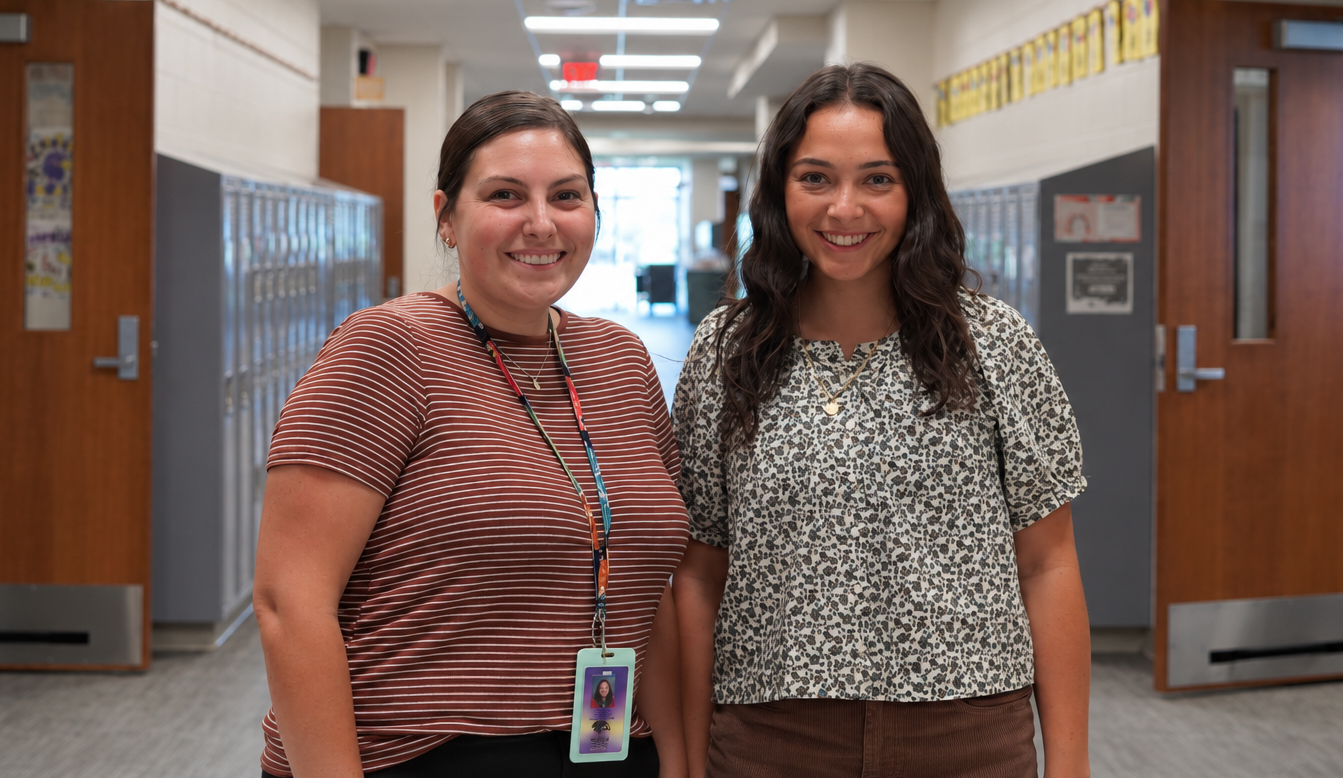
For elementary education student Elaine Teed, clinical experiences are about more than observing what happens in a classroom. They are a chance to try new things, build relationships with students and discover the small details that help turn a group of students into a classroom community.
Elaine is completing her final practicum before beginning her internship in spring 2027 with mentor teacher and Western Michigan University alumna Taylor Triemstra. Triemstra graduated from WMU in 2019 with majors in elementary education, K–8, and mathematics.
For Triemstra, mentoring a current Bronco is a meaningful opportunity to support a future educator who is now standing where she once stood.
“It’s been an amazing and full-circle experience,” Triemstra said. “Since I went to Western and was in the exact place that Elaine is in now, it’s really fun that I can help another student at Western.”
Learning by doing
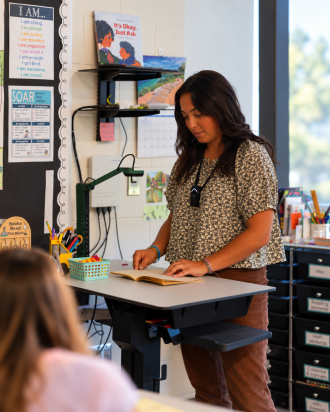
During her practicum, Elaine is learning how her mentor establishes classroom routines, plans lessons and responds to individual student needs. Spending two days each week in the classroom gives her opportunities to build relationships with students, observe their progress and begin putting what she has learned at WMU into practice.
One of the most unique parts of Elaine’s experience is a digital literacy and citizenship study she is conducting, Using Technology as a Tool, Not a Toy. Through the project, she is exploring how students use technology, how it affects their learning and how educators can help students make safe and responsible choices online.
The study gives Elaine an opportunity to move beyond simply observing the classroom and begin investigating a real issue affecting today’s students. She can gather information, reflect on what she is seeing and consider how those insights could shape her own future teaching.
It is exactly the kind of hands-on learning Triemstra says is difficult to replicate in a college classroom.
You learn really quickly about classroom management skills or little systems that you might not think of during these hands-on, early experiences. They’re just little, fine details that help a classroom community run more smoothly. Those are things that you can’t necessarily find in a textbook.
Elaine is also beginning to take a more active role with students. Triemstra said one of her favorite parts of the experience so far has been watching Elaine lead morning meetings and read books with the class.
“I think they’ve really enjoyed that too,” Triemstra said. “That’s been really, really fun.”
When mentoring becomes learning
While Elaine is gaining experience from an established educator, the learning does not stop with the teacher candidate.
Having a WMU student in her classroom gives Triemstra a reason to revisit the decisions she makes every day and think more intentionally about the practices she has developed since beginning her own teaching career. In that way, the partnership keeps her connected not only to WMU, but also to the questions, ideas and perspectives future educators are bringing into classrooms today.
“It makes me think more deeply about what I’m doing,” Triemstra said. “It kind of opens my eyes and makes me think more deeply about what I do in my classroom, why I’m doing it and the purpose of it.”
That exchange is part of what makes clinical experiences valuable for both educators. Elaine gains the benefit of seeing teaching unfold in a real classroom, while Triemstra has an opportunity to reflect on her own practice and help prepare the next generation of teachers.
For Elaine, every new classroom, lesson and experience is another opportunity to add something to what she calls her “teacher toolbelt.” After completing her practicum, she will continue building on those experiences when she completes her final internship in New Zealand in spring 2027.
For more WMU news, arts and events, visit WMU News online.