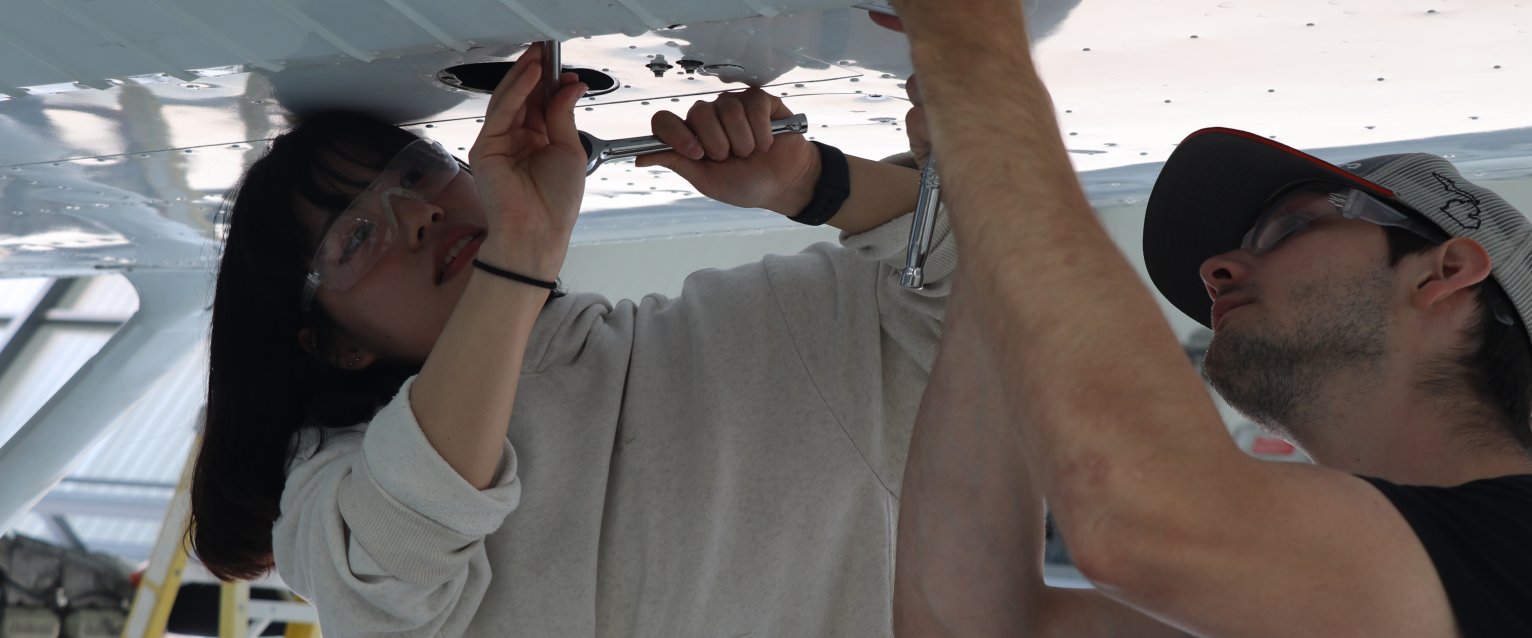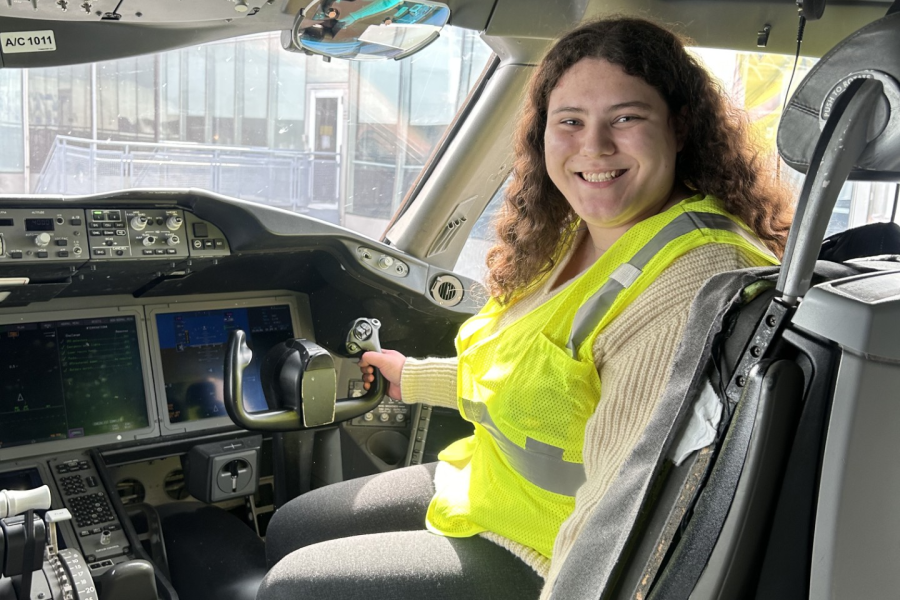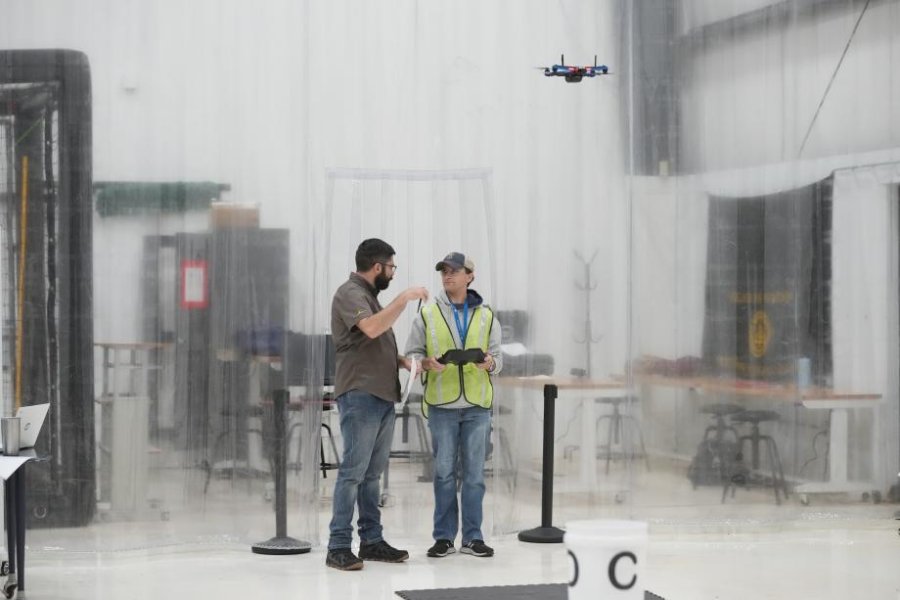
Students working on aircraft

Aviation Technical Operations Degree

Western Michigan University's Aviation Technical Operations Program (ATOJ) stands out because it doesn't just train students to be mechanics–it shapes them into the future leaders, managers, and executives of the aviation and aerospace industry. Dive into how you can leave your mark with the College of Aviation!

Pride points

Over 85 years

of aviation education

Top 6 in the world

ranked aviation program

—Study International

Best for vets

ranking each survey year since 2010

—Military Times
Skip to content

Pursue a B.S. in Aviation Technical Operations

The mission of the Tech-Ops program is to provide comprehensive high-quality education and training to individuals who aspire to become skilled aviation maintenance technicians and leaders in the aviation industry. We are committed to preparing our students to succeed in the competitive and ever-changing aviation industry by imparting knowledge, skills, and values that align with the highest standards of the industry.

What you'll learn

Western Michigan University is a Federal Aviation Regulation—FAR—Part 147 Aviation Technical Operations school. Upon completing the program, students qualify to take the examinations for the FAA mechanics license with airframe and powerplant ratings, which are considered to be the industry standard of aviation technical knowledge. The examinations consist of written, oral, and practical exams by a designated FAA examiner.

The first two years of the program are heavily focused on Airframe and Powerplant (A&P) training. This structure is intentional, as it allows students to earn their A&P certificate early and enter the workforce if they choose to do so. For those who aspire to take on leadership roles within the aviation maintenance industry, we strongly encourage continuing through to the completion of the degree. Given the competitive nature of the field, having a degree can provide a significant advantage in advancing one’s career.

Students at a conference

Student Quote

Each lab was something that tested my knowledge and applied to future work...what we did (in class) will apply to the practical exam for our Air Frame and Power Plant certificate.
— Natalie Smeltzer, Junior, Technical Operations (Far left in photo)

Where you'll be after graduation

Graduating with a degree from Western Michigan University College of Aviation opens up a dynamic trajectory built on experience-driven learning and industry demand. The combination of specialized academic preparation and hands-on learning ensures that Broncos seamlessly transition from the classroom into highly impactful, meaningful careers. Many recent technical operations alumni have gone to work for companies like Delta Tech Ops, SkyWest, Duncan Aviation, and many more. The sky's the limit!

Don't believe us? Just ask CoA graduate, Morgan Boyd, who is currently living her dream with Duncan Aviation as an airframe technician. You can read about her story and many other Bronco alumni by visiting the link below!

President and others recieving award.

Duncan Family Visit

In a recent visit to the College of Aviation, the Family Owners of Duncan Aviation flew into Battle Creek from Lincoln, NE. On this visit they explored the campus and strengthened our ongoing partnership with their company. In partnership with Duncan, there will now be a full-time professor from Duncan Aviation who will be dedicated to advancemnet of technology, learning, and career-growth at the College of Aviation.

Program Flow

Can shorten the program for students with experience (Up to 45 credits)

Experience that may shorten your program:

  • Military experience for credit 
  • Industry experience
  •  Not for education transfers 
  • A&P focused — General, Airframe, Powerplant 
  • Students may test for their A&P certification after 2 years if all courses are passed 
  • No testing at WMU (Can be taken at any certified location in the USA) 

Students take 12 credit hours of electives after 147 required classes, including: 

(for degree, not A&P certification process) 

  • Welding 
  • Advanced electrical (AWT Cert) 
  • Advanced engine overhaul 
  • Advanced structures
  • Non-Destructive Testing (NDT)
  • UAS certification & maintenance

Frequently asked questions

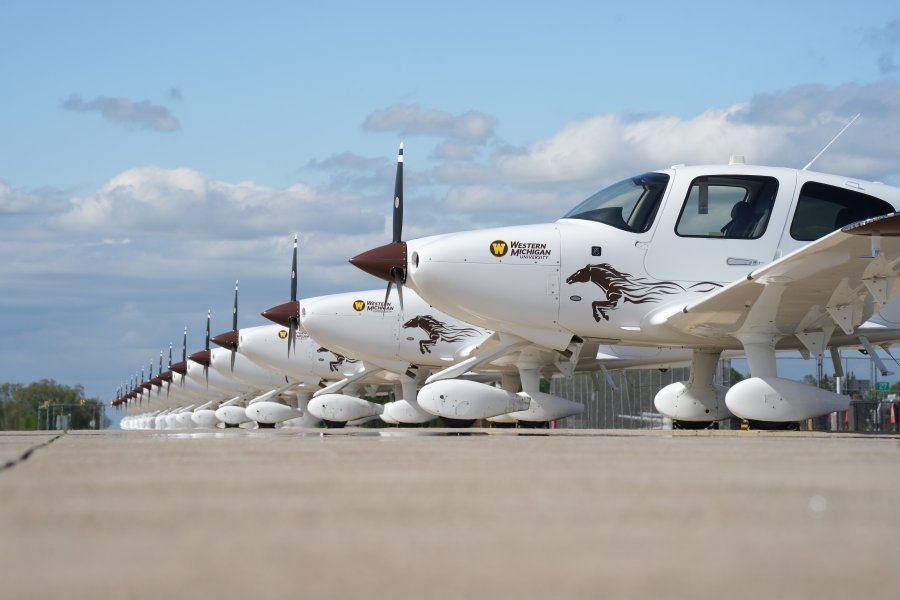
Our Tech Ops students have their own fleet of aircraft, including: 

  • Beechcraft Baron
  • Beechcraft King Air
  • Cessna 172
  • Cessna 182
  • Cirrus SR20 Gen 2
  • Mooney Executive

A&P stands for Airframe and Powerplant. An “A&P” is a colloquial term for an aircraft mechanic as well as the certificate aviation mechanics must have to work on airplanes.  Aviation Maintenance students at WMU take courses which prepare them for their A&P exam, or Airframe and Powerplant Exam. A student can complete their A&P in two years at Western and leave, or still complete their four-year degree on top of their certification. We recommend that students stay for their four years if they wish to acquire leadership roles within companies in the future.

Yes. Upon completing the program, students qualify to take the examinations for the FAA mechanics license with airframe and powerplant ratings, which are considered to be the industry standard of aviation technical knowledge. The examinations consist of written, oral, and practical exams by a designated FAA examiner.

WMU does offer an Aerospace Engineering degree, however not with the College of Aviation. The aerospace engineering degree is offered through the College of Engineering and Applied Sciences. Aerospace engineers design, develop, test, and help produce commercial and military aircraft, spacecraft, surface effect vehicles, missiles, and other related hardware and systems. They also design and develop hydrofoil ships, deep diving vessels for oceanographic research, and high-speed rail-type machines.

Scholarships

What scholarships are available for the College of Aviation?

You can find the updated list of the latest College of Aviation scholarships on Scholarship Universe. When applying for scholarships, it is important to follow the directions carefully. Scholarship selection committees are very particular, and attention to detail is usually one of the first sorting criteria followed. For more resources and scholarships related to Western, visit the link below!