
Bachelor of Science in Aviation Flight Science

Looking for state-of-the-art training in the skies and world-class facilities as well as resume-worthy internship experiences that will lead to a lifetime of career opportunities? An aviation flight science degree at Western is right for you. Move from zero flight experience to degree completion and career-readiness. Fly out of the Battle Creek Executive Airport at Kellogg Field at one of the nation’s top flight schools. Begin your training in the private pilot course on the second-longest runway in the state and the third-busiest airport in Michigan. Test your skills as a student at one of our partner airlines.

Pride points

Over 85 years

of aviation education

Top 6 in the world

ranked aviation program

—Study International

Best for vets

ranking each survey year since 2010

—Military Times
Skip to content

Pursue a B.S. in Aviation Flight Science

An aviation flight science degree from Western can take you around the globe through the largest, most well-known airlines, airports and aviation companies in existence. You could join fellow WMU graduates flying passengers and goods across the world. 

The mission of the aviation flight science program is to provide industry with a professional aviator who serves as a responsible leader within an organization. 

Graduates will exhibit high levels of technical skill, leadership ability, teamwork and global awareness that will make them effective problem solvers in a diverse and safety-oriented aviation industry.

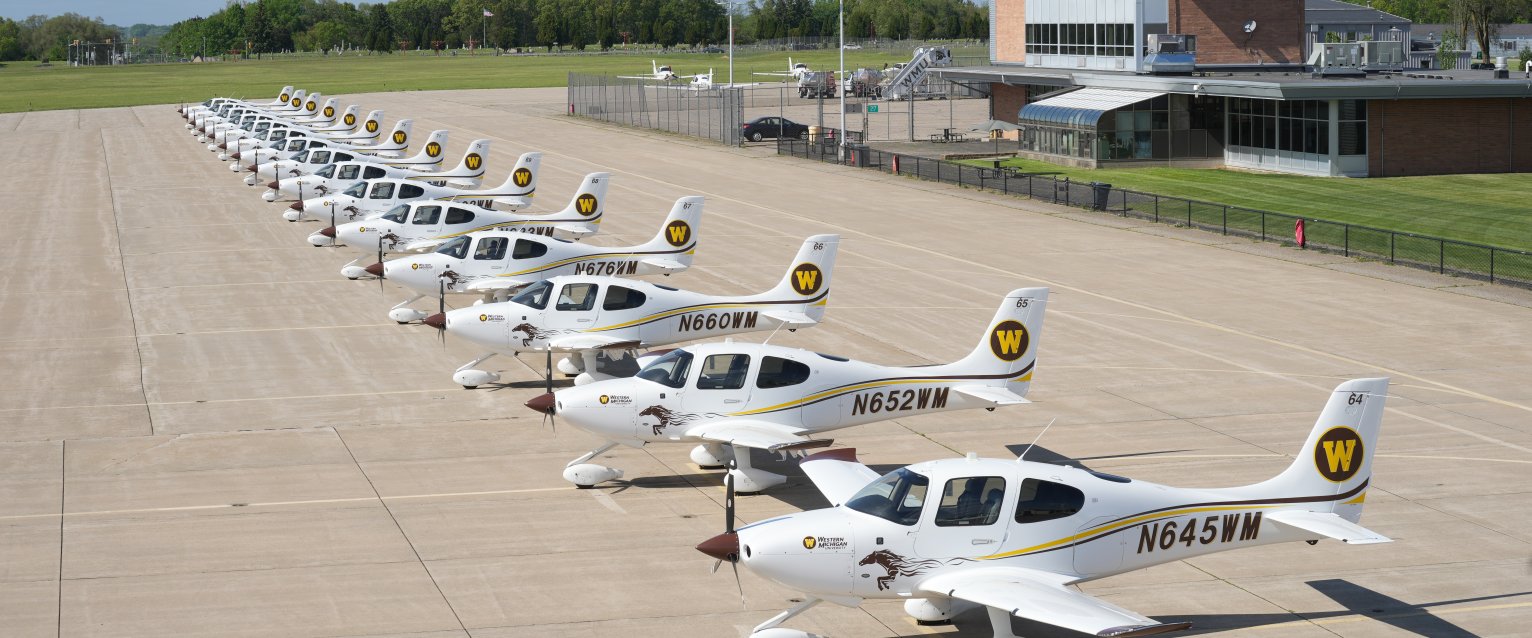
Students will train in one of the most advanced fleets in the country with a new fleet of:

  • 32 Cirrus SR20 Gen 7
  • 9 Piper Seminole
  • 1 Piper Super Cub on Amphibious Floats
  • 1 American Champion Super Decathlon

What you'll learn

The aviation flight science program prepares students for professional pilot careers, emphasizing leadership and management skills alongside technical expertise. The curriculum includes a broad range of subjects from basic sciences to airline operations and global navigation. Students gain hands-on experience with modern aircraft and flight systems and can participate in research. 

Graduates will possess strong technical skills, leadership abilities and global awareness, earning FAA Commercial Pilot certification and the qualifications to be effective leaders in the aviation industry. Students will have the opportunity to connect with many pathway programs during their time here at Western, and have the ability to strengthen their resume for their future career.

Student Quote

The lessons, skills and opportunities from the flight science program have built the foundation for my aviation career.
— Gideon Kipkemoi, Third-Year Student, Aviation Flight Science

Where you'll be after graduation

Graduating with a degree from WMU's College of Aviation opens up a dynamic trajectory built on Experience-Driven Learning and industry demand. The combination of specialized academic preparation and hands-on learning ensures that Broncos seamlessly transition from the classroom into highly impactful, meaningful careers. Many recent flight science alumni have gone to work for main-lines like Delta, United, American, while others choose to fly corporate, for companies like Stryker and Executive Jet Management. The sky's the limit!

What others have achieved

What others have achieved

WMU College of Aviation graduates are already hitting the ground running in their careers. Here's a look at some Broncos living their dreams.

Making the most of your learning experience

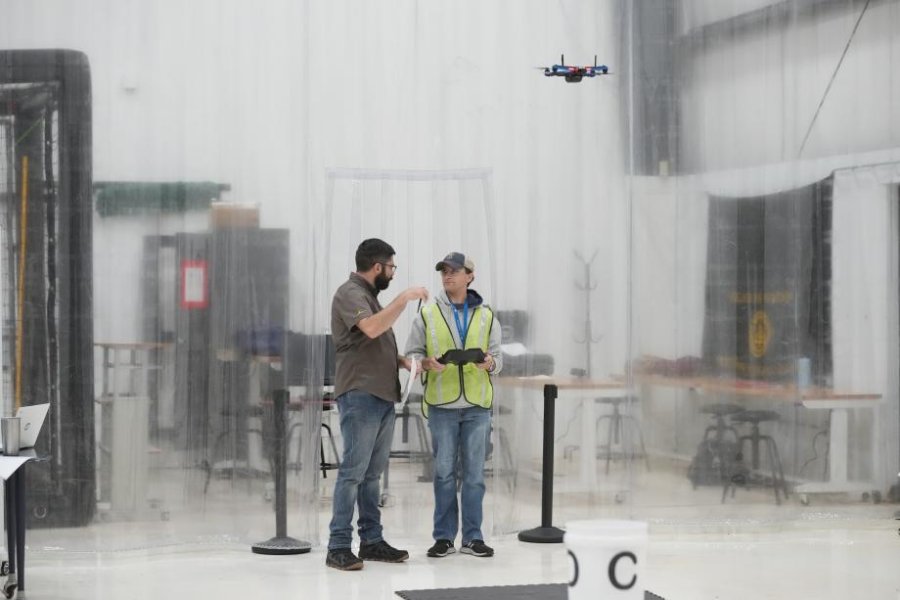
At WMU, the aviation flight science program transforms theoretical knowledge into elite operational skill through immersive, hands-on experiential learning. Students train in a state-of-the-art fleet equipped with advanced Garmin Perspective + avionics and hone their decision-making in high-fidelity flight simulators that replicate complex weather and emergency scenarios. Beyond the flight-deck, the curriculum embeds line-oriented flight training (LOFT) and crew resource management (CRM) directly into the curriculum, mimicking real-world commercial airline operations. By instructing peers, navigating diverse airspace, and collaborating within a structured, safety-first culture, graduates don't just accumulate flight hours, they build the command authority and multi-crew coordination demanded by the modern aviation industry.
Planes lined up

What scholarships are available for the College of Aviation?

You can find the updated list of the latest College of Aviation scholarships on Scholarship Universe. When applying for scholarships, it is important to follow the directions carefully. There are many different scholarships to choose from and almost anyone can find one that pertains to them. For more resources and scholarships related to Western, visit the link below!

Additional admissions requirements

Due to the strong interest in our program, we have implemented a rigorous and structured application process to ensure that individuals who apply, are truly committed to pursuing a career in aviation.
Frequently asked questions

An Aviation Flight Science degree from Western Michigan University is designed primarily to prepare students for professional pilot careers, earning them an FAA Commercial Pilot certification alongside their bachelor's degree. Many alumni go on to work for main airlines or corporate aviation, including Delta, United, Envoy, Endeavor, Pentastar, FlexJet and many more!

Yes, absolutely! The Aviation Flight Science program at Western Michigan University is highly focused on hands-on learning. With our state-of-the-art fleet and our amazing industry-oriented faculty, you will get a full hands-on experience.

Find updated College of Aviation scholarship opportunities on Scholarship Universe, as well as through WMU’s online resources. When applying, make sure to follow all guidelines and to also evaluate your resume and essay on clarity, organization, grammar, and relevant supporting detail.

Due to strong interest in our flight program, we use a selective application process to ensure candidates are genuinely committed to a career in aviation. To learn more visit first-year and transfer admissions criteria.

Obtaining a private pilot's license (PPL) before attending Western Michigan University (WMU) has mixed benefits. Here is a breakdown of how a PPL impacts your progress and acceptance at WMU:

Flight Slot Acceptance

  • Impact: Minimal. Flight slots are prioritized by WMU GPA (or High School GPA for incoming freshmen) and total completed credit hours.
  • Bonus: Having a completed PPL in hand when submitting your flight application adds 5 bonus points to your score, which can act as a tiebreaker between equal candidates.

Program Acceleration

  • Impact: Unpredictable. WMU operates under strict FAA Part 141 regulations, whereas most local flight schools train under Part 61. PPL holders do not skip directly ahead; they must first complete WMU's Private Pilot Transition Course.
  • Transition Course Goals: Standardizes skills to Part 141 levels, introduces WMU flight operations at a controlled airport, and trains pilots on the Cirrus SR20 (Garmin Perspective+ avionics).

Costs & Timeline

  • Minimums: 10–11 lessons, 4–6 weeks, and approximately $7,583.
  • Variables: Students with weaker preparation or gaps from Part 61 training may take 6–8 months and spend up to three times the minimum cost. In rare cases of severe underperformance, students have had to retake the entire private pilot program.

Recommendation: Evaluate local Part 61 flight schools carefully before enrolling. Inquire about instructor turnover, ground school quality, student success rates, and average total hours/costs to complete the course.

At WMU, we aim to get our students flying as soon as possible. While we cannot guarantee an exact start date, we are pleased to share that our flight training backlog has been significantly reduced. As a result, we expect most students to begin flight training within the first year after the completion of their first semester: which could be spring, or summer semester of their first year, or fall semester of their second. However, please note that the aviation industry can be volatile, so these plans may change unexpectedly. Rest assured, our goal is to get every student flying as quickly as possible, regardless of industry changes. 

Yes! We strongly recommend that students stay during at least one of our summer semesters to take advantage of Michigan’s best weather and continually progress the student’s flight training. WMU also offers academic courses throughout the summer semesters. Summer I is roughly May-June, while Summer II is roughly July-August.

This depends on the student and their desire to learn. The average is 2.5-3 years to obtain the private pilot license, instrument rating, and commercial multi-engine license with single engine add-on rating. However, depending on flight availability, weather, and students, this timeframe can vary.

There are over 40 planes in our fleet, consisting mainly of Cirrus SR-20s.

  • 32 Cirrus SR-20s Gen7 Equipped with the Garmin Perspective+
  • 9 Piper Seminoles
  • 1 American Champion Super Decathlon
  • 1 Piper Super Cub on Floats
  • 2 Cessna 150s

Check out our aircraft

The Cirrus is our primary training aircraft and is used in the private and instrument courses, while the Seminole is used for the Commercial multi-engine course. There are three required flights during the commercial portion of your training in the Super Decathlon. Our Sky Bronco Precision Flight Team uses the Cessna 150s for competition and practice.