

Connection, Change and Career: How Bryce Harden Built a Life in Aviation
Request Information about the College of Aviation
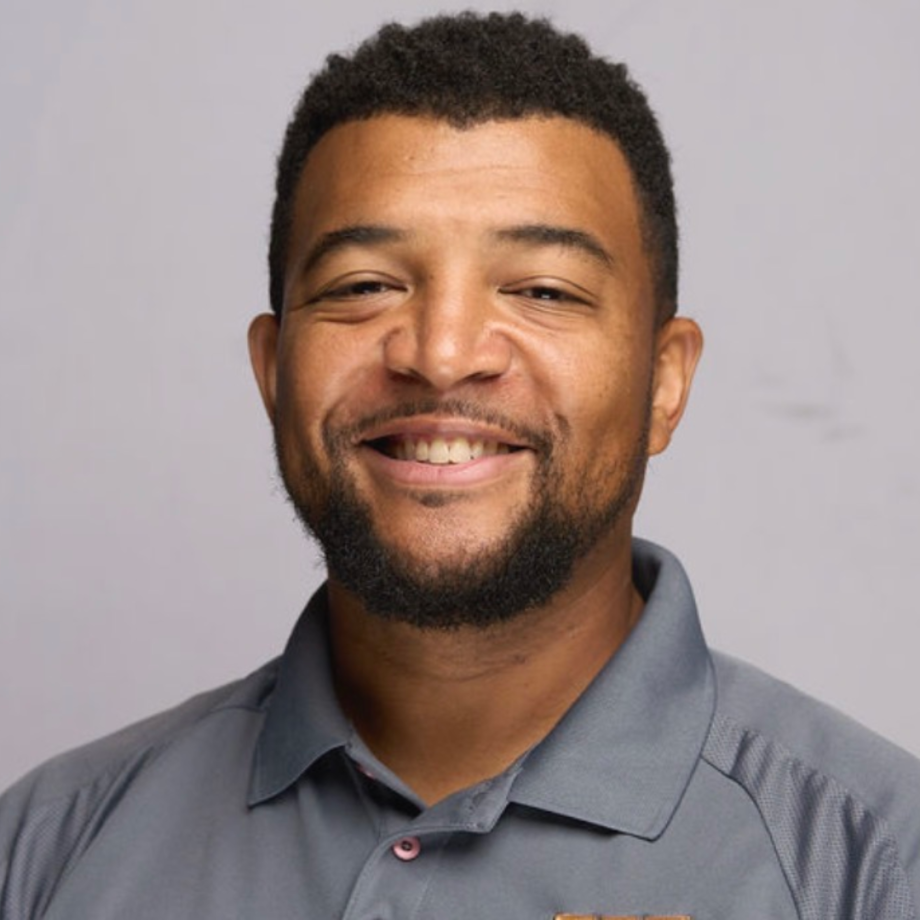
BATTLE CREEK,MI– Bryce Harden, a 2012 graduate of the WMU College of Aviation, believes he is a product of scores of folks who have crossed his path in life.
From parents Wanda and Willie growing up in a Flint, Mich., suburb to many members in the Harden clan's family tree.
From his peers at Grand Blanc High School (Class of 2005) to those with whom he shared class time as a flight-science and administration major at Western.
From his College of Aviation instructors to those calling the roll in chemistry courses on the Kalamazoo campus.
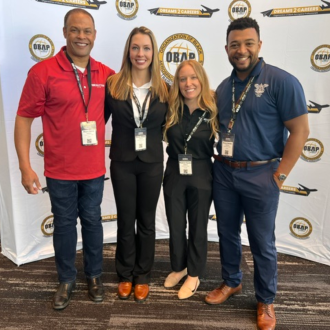
From aviation professionals he interacted with during internships to his current associates as an aircraft-dispatch trainer with Kalitta Air, a global cargo airlines and charter air service based at Willow Run Airport near Ypsilanti, Mich.
They have all had a piece in forging who Harden once was and who he has evolved into. Along the way, he says, the most important lesson to learn about aviation is that "change is constant."
But for Harden, one thing never really changed. "Since first grade," he says, "I wanted to be a pilot. That stemmed from my Mom being the public-relations coordinator for Bishop International Airport in Flint. I was forever running around the terminal watching the planes through the windows. I would throw foam models of airplanes from high places just to watch them dance through the air as they glided to the ground."
Harden started flying in high school and, upon graduation, sampled the aviation industry as a customer-service representative for American Eagle Airlines at Bishop, working the ticket counter, loading bags and tracking flights. That morphed into a year with Bishop's ground-maintenance team where he was something of a jack-of-all-trades guy.
Enter "change" and Harden decided to look at other pathways. "I spent several years in education and discovered a new love for teaching," he says. Any extra bucks were directed toward that childhood passion, and he eventually earned his pilot's license
So, what was next? How about a degree in aviation and Harden found himself in Kalamazoo. Why? Western's reputation in the industry and the "home-field advantage" of in-state tuition. And, during his Bronco years, he was no shrinking violet.
He served as a student assistant in the WMU Department of Chemistry. "I got to work with a number of awesome people in and out of the department," he says, with the late Michael Barcelona at the top of the list.
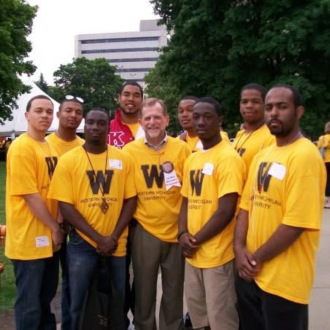
Harden was immersed in Western's chapter of Kappa Alpha Psi fraternity, the National Pan-Hellenic Council, the Young Black Males Support Network, the National Society of Black Engineers, the Japan Club at WMU, and what is now the Organization of Black Aerospace Professionals (OBAP).
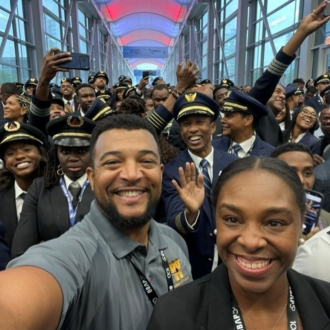
"Being a part of these organizations," he says, "added another dimension to my being and linked me to hundreds, if not thousands, of people with whom I otherwise would never have had any connection. These many ties give me perspectives from a bird's-eye view to see just how crazy-expansive the Bronco network really is."
His Bronco years included an internship at Kellogg Aviation's operations near the home of the College of Aviation in Battle Creek, complete with a range of duties from shadowing the mechanics to cleaning the hangar to restocking the galleys to servicing the restrooms.
On campus and at the Battle Creek aviation center, dozens of staff members played a role in Harden's development. "They all gifted me something," he says, "from listening ears to a quick word to hot meals to pre-test prayers to insightful information to proud advocation. These treasured individuals looked out for me and for people dear to me throughout my time at WMU."
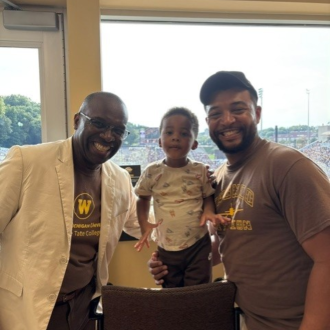
A personal higher-education highlight, he says, was attending his first OBAP national conference in Memphis, Tenn. "That was the same year that WMU was gifted a FED-Ex Boeing 727-200," he says. Another was being awarded a scholarship from Kalamazoo's alumni chapter of Kappa Alpha Psi, giving him the funds -- when added to earnings from working three summer jobs -- "to pay for my final lessons and checkride."
It was that comprehensive Bronco network that aligned Harden with Kalitta Air. "I got a call from fellow Bronco Durrell Turk," he says. "He told me about an opportunity at Kalitta and the rest is history."
Harden believes he was ready for that chance because of the diligence and teaching skills of aviation instructors such as William Rantz and Gil Sinclair, who kept "the class relevant to current events in aviation while always finding room for a story and a laugh."
Rantz and Felix Esquibel "challenged us with two projects where we had to start our own airline, choose the aircraft, establish routes, consider costs and choose a business model. Within a few weeks, we had to make a presentation to the class. We were forced to research and to imagine. I recall daydreaming about what my airline could look like."
Initially at Kalitta, an airline that was already well established and not a daydream, Harden served as an "international flight clearance coordinator" and then as an aircraft scheduler. Another position shift made him a "flight follower," which involved dispatching aircraft, working with pilots and maintenance personnel in troubleshooting issues both on the ground and enroute, and actively monitoring flights.
"I've had the opportunity to pursue more education at Kalitta in aircraft dispatch," he says. "It was my first time since WMU where I had to recall my old study habits and dig to pull out what information I could from hundreds of hours of study materials. It bore much fruit."
Harden says that what he experienced at the Sheffield School of Aeronautics in Fort Lauderdale, Fla., "was one of the most difficult series of tests (for becoming an aircraft dispatcher) I ever had to go through." And the role marries two of Harden's loves -- aviation and teaching.
"Everything I involved myself in at WMU," he says, "always led to another opportunity, connected me to somebody, and brought me to another place." Meaning, while at Western, do not stay in your room. Go out and sample. Get involved.
Harden still is. He is frequently a presenter at job fairs, in classrooms, on professional panels, and at high school assemblies. He tells his story and, on many occasions, how his days at WMU shaped a career and a life.
"It is important to reach people where they are," he says. "My interactions with people helped me find new and creativeways to understand, and show love to folks in ways they can understand."
And there is a personal payback. "You get out what you put in," Harden says. "I put a lot of time, money, blood, sweat and tears into WMU. And wouldn't you know it? I am still reaping."
One simple payback. "I love seeing WMU license plates when driving down the road."